Showing posts with label Theatre. Show all posts

Saturday, 8 November 2025

The art of memory


From: An Intuition of the Bare Two Oneness

I was thinking about Frances Yate's wonderful book, 'The Art of Memory' the other day. I haven't read it for many years but I was reminded of it because not long ago the artist Rosie Vohra had been asked to make a personal selection for exhibition within the Leeds Arts University library and she had chosen an artist's book that I made over 40 years ago, 'An Intuition of the Bare Two Oneness'. I wrote the text for it at a time when I was under the influence of Yates' book and some of the images directly reflect the types of structures she used as illustrations in the book. Looking at the images again I was reminded of the fact that I was also trying to make sense of computer technology. We had been trying out a new type of wax printer, that took wax coated paper sheets of cyan, magenta, yellow and black and ran them one after the other through a series of rollers that passed underneath a heater, whilst at the same time thousands of pins  pushed down on the sheets in the areas designated by your design, that had been converted into CMYK separations, thus transferring the wax to the print paper. It was a clumsy process and we only ever had that one printer and it was never replaced. However, because there were now four layers of wax, there was a certain richness to the surfaces laid down and I wanted to make use of that. The final images were printed off and bound together with a text that I had typeset also using a computer and that I thought was it. At the time I thought it was a very good piece of work, but now on re-examining the book I realise that I ought to have bound glassine paper into the book between pages, because over the years the wax has begun to rub off onto the facing pages. However the fact that the book was out on display gave me a chance to photograph it and of course rethink what I might be able to do if I revisited the idea. 

From: An Intuition of the Bare Two Oneness

Frances Yates introduced me to several ideas that have cropped up again and again in my work; in particular because memory enhancement was part of rhetoric training and rhetoric was about getting your ideas across to other people in memorable ways. Something that as an artist I'm constantly having to think about and as a former lecturer who used to introduce students to communication theory, I owe it to myself to always remain aware of these issues. 

Playing with the idea of what comes where in terms of a visual hierarchy

Since making the book, I have become much more interested in animism and ideas that touch upon a 'flat ontology' or level playing field, when we come to look at our relationships with other things. The medieval idea of the great chain of being, a hierarchy with God at the top, followed by angels, humans, animals, plants, elements (fire, water, etc.) and finally, inanimate objects like rocks at the bottom, is still in many ways how human beings think of the world and how it relates to them. Perhaps because of the spread of atheism, God and angels no longer have pride of place, but that often means that we humans then take top spot. In my watercolour image above, a cow has reached the top of the stairway but is about to fall down, leaving a field of wheat in top spot. I was playing with hierarchies, trying to subvert the order of things as usually pictured by humans.

However going back to Yates and her explication of how memory training was used, in particular in relation to Cicero's work on rhetoric, one of the big issues was making images that were startling in their appearance and also linked to what you want to remember by some sort of likeness. For instance, testis is a Latin word for “witness” and was used in Cicero's time in relation to witnessing one's manhood, therefore the words testify, testimonial and testament share a common etymology with the word testicle. Cicero at one point suggests that in a speech, if you want to remember that now is the time to speak about certain legal matters, you could mentally place a giant pair of testicles at a particular spot within a building that you were in your mind walking through, to help you remember the various components of your speech. It's a good image and one I must try out as a drawing at some point. We have all at one time or another tried to remember stuff and have realised that we can do this much easier if we can find a link to something else, especially a link that also takes a memorable shape and locates what we are trying to remember in a pictured space that you can mentally hold in your mind. For instance; if you want to remember a shopping list, you can visualise each item in its place on the shelves of a supermarket. Then you can picture yourself walking through the various aisles and picking up what you need. A renaissance memory theatre operates in a similar way; theatres, such as the Globe, were places most people knew, just as a supermarket is now. Therefore in people's minds they could visualise the structure. Aisles and rows of seating could be set out in a way we are all familiar with and to this day we still go to a theatre or cinema, expecting to make our way to row H, seat 12 etc. It was a space that was easily cross referenced and particular spots pinpointed. Within this space, you could then place the various things you wanted to remember. However certain theorists at the time, such as Giulio Camillo, went further and decided that they could control the system and give it an overall structure that related to that idea of the great chain of being, a hierarchical system, that fixed into place and ordered all things.

Giulio Camillo's Memory Theatre

This is how Frances Yates describes Giulio Camillo's Memory Theatre; 

“The Theatre rises in seven grades or steps, which are divided by seven gangways representing the seven planets. The student of it is to be as it were a spectator before whom are placed the seven measures of the world ‘in spettaculo’, or in a theatre. And since in ancient theatres the most distinguished persons sat in the lowest seats, so in this Theatre the greatest and most important things will be in the lowest place. That there would be no room for an audience to sit between these enormous and lavishly decorated gangway gates does not matter. For in Camillo’s Theatre the normal function of the theatre is reversed. There is no audience sitting in the seats watching a play on the stage. The solitary ‘spectator’ of the Theatre stands where the stage would be and looks towards the auditorium, gazing at the images on the seven times seven gates on the seven rising grades."

My present day version would be the memory supermarket, shelves stacked with knowledge packets instead of cereals or frozen foods, the fresh food aisles being now places to find new untested ideas, the cleaning products section perhaps devoted to philosophy and ways of thinking, such as the use of Occam's Razor. The bread shelves might be devoted to staple knowledge and the cake section where you might find titbits of information. The science of electro-magnetic fields might begin with the electrical goods section, whilst chemistry was located in the cooking supplies area and biology located where potted plants are. I think you get the drift.

James Joyce was fascinated by Giordano Bruno, who was one of the inventors of the art of memory. In Ithaca, the 17th part of Joyce's Ulysses, Leopold Bloom stops “chanting” a Jewish “anthem… in consequence of defective mnemotechnic”; a reminder that in his mind Joyce was both trying to bridge between the everyday and the mythic and build a memory structure in order to do this. He uses everyday events as a series of triggers to reference Homer's Odyssey; this final chapter of Ulysses recounts the very mundane events that happen as Leopold Bloom takes Stephen Dedalus home to number 7 Eccles Street for a cup of cocoa and to discuss the night's experiences; the chapter's title being an allusion to Odysseus's return home to Ithaca. Joyce suggests that every day is a journey and in its own way that journey can be as eventful as the voyages of Ulysses. 

The chapters of Ulysses in their own way are also therefore a type of memory structure, the important issue for myself being that everyday events and things can be used to help us think about big issues. I have written a blog post about the hand as a memory system, (as always check out the 'see also' section at the end of each post), a reminder of how much of our thinking is embodied.
The linking of things by finding connections is also something that can be used in the construction of magic and is the reason ritual objects have the power they have. In order to work, magic objects must have a point of contact with something that gives them traction or meaning, the contact if not directly physical, usually being a likeness of some sort. This process is termed the 'Law of Similarity' or 'Sympathetic Magic'. It can also operate by 'touch' which is a very physical connection. For instance a witch doctor could curse the ground that you might walk on; if so you will need protection, to stop that curse getting into your body. This is why historically in India and China and in many other cultures, people used to wear ankle bracelets. A curse would need to pass up and through the ankle, in order to get into the torso, which is the seat of all our vital organs and a charm bracelet worn around the ankle could prevent this. The bracelet also acting as a physical reminder of the need to be mindful of psychic attacks. 


My work developing contemporary votives at one time overlapped with the design of charms, each one a response to a conversation about someone's worries. The charm bracelet above was designed as a type of three dimensional memory object, each charm shaped to reassure the wearer that some sort of psychic protection was in place. Gradually I was becomming aware of things like memory beads, rosaries and South American quipu, all external to the body and operating as recording or memory devices that began with touch and yet were also to be seen. They were of course operating as external brains.

References:

Barker, G. (2023) Votives and Charm Bracelets Materialising Health-Related Experiences Through ‘Sacred’ Objects. In: Wearable Objects and Curative Things: Materialist Approaches to the Intersections of Fashion, Art, Health and Medicine. Palgrave Studies in Fashion and the Body: Palgrave Macmillan, London

Joyce, J. (2010) Ulysses Wordsworth Editions

Lakoff, G., & Johnson, M. (2008). Metaphors we live by. London: University of Chicago press

Yates, F. (2014) Giordano Bruno and the Hermetic Tradition London: Routledge

Yates, F. (2014) The Art of Memory London: Bodley Head

See also:


Saturday, 17 December 2022

Drawing as theatre

Karina Smigla-Bobinski – ADA, 2010, sphere, helium, charcoal, installation view

One way you can look at certain types of drawing practices is to consider them as theatre. Theatre requires the activation of a space in such a way that an audience can experience a physically contained or constrained series of events, that are orchestrated to communicate particular ideas. In the case of Karina Smigla-Bobinski's drawing installation ADA for example, a box like room space is activated by a floating sphere with short spikes of charcoal attached to its surface. People are also allowed into this space as actants* and as they push or hit the plastic sphere it bounces around the space and 'draws' on all four walls, as well as the ceiling and floor. 

The ball is covered with 300 charcoal sticks with a spacing of 10 inches from one another.

ADA works very like a contact improvised dance performance, the audience being able to step in and out of what could be called an 'action drawing'. 

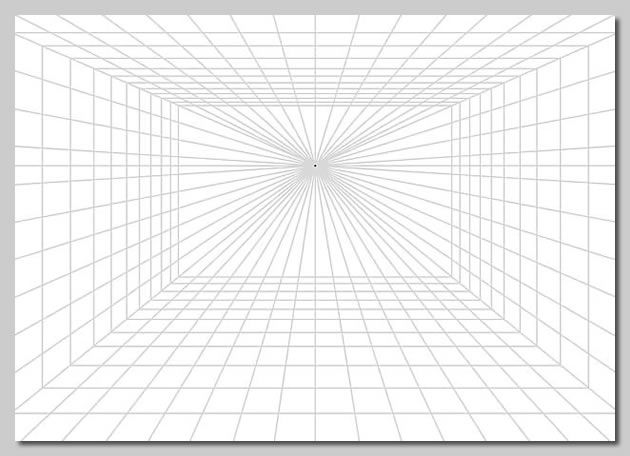
Performance is though usually associated with the theatre and the space of the theatre is often associated with perspective as a drawing mechanism. For instance perspective scenery is a scene design technique that represents three-dimensional space on a flat surface, creating an illusion of reality and an impression of distance. In effect perspective and theatre become fused into a new form, a form that like both theatre and perspective drawing creates an illusionary space for action to take place within it. This fusion was made possible by the introduction of the proscenium theatre. This involved the use of an arch, (sometimes curved and sometimes rectangular) which served as the frame within which the audience observed from a more or less unified angle the events taking place upon the stage. This 'frame' and separation of the audience from the performance, was in effect almost the same as one point perspective.  

The idea of the proscenium arch can be thought of as a social construct that divides the actors and their stage-world from the audience. In fact the seat that would be the perfect point from which to view the action, was often both the place where the person most powerful present would be seated and the spot opposite the controlling perspectival vanishing point. The curtain usually comes down just behind the proscenium arch, both hiding the stage from view when scenery is changed, but also reminding the audience of the reality that surrounds the illusion. 

The stage curtain was not introduced until the 17th century. When it was drawn back the plane it moved through was what became known as the imaginary forth wall. This was like a plane of glass through which the audience experienced the illusion of watching events happen from a distance. A situation that physically reinforced the fact that you could not intervene in what was happening, but God like, you could see what was going on, and therefore you were emotionally engaged, even though unlike the Gods you had no power to intervene. 

One point perspective

Proscenium Arch, Pantheon Theatre, London 1815

Palladio’s Teatro Olimpico in Vicenza

Because this type of stage fits the mathematical model of perspective, it also becomes very easy to use the various tricks of anamorphic perspective drawing to create further illusions. 
Palladio’s Teatro Olimpico in Vicenza exhibits an early use of anamorphic perspective, the illusion that the street is much longer than it really is, is created by a forced perspective. Forced perspective is a technique perhaps seen at its clearest in the Palazzo Spada, as created by Francesco Borromini. He designed a barrel-vaulted colonnade that looks much longer than it is by making the two sides of the colonnade converge and by reducing the height of the columns as they recede.
Palazzo Spada: colonnade: Francesco Borromini

Bramante’s Santa Maria presso San Satiro in Milan is another example of forced perspective, one that you can see easily when a photograph is taken from any point of view away from the one determined by the central vanishing point. 

Bramante: Santa Maria presso San Satiro in Milan

Bramante's perspective illusion choir viewed from the west transept.

In many ways paintings and drawings from this time could be regarded as silent theatre. Perspective created the illusion of a space constructed for action that sat behind a picture frame and the fact that theatres themselves were also now constructed using similar principles, for a while brought the two disciplines into close proximity, but there were other issues that also fused the two ideas. 

In painting there had been a long tradition of gesture as a way to indicate meaning. 
Representations of hand positions or gestures in portraits and paintings were some of the most effective ways of conveying messages. For instance the gesture of the blessing hand shapes the letters IC XC, an abbreviation for the Greek words Jesus (IHCOYC) Christ (XPICTOC) which includes the first and last letter of each word. Therefore the hand that blesses reproduces, with gestures, the Name of Jesus.
The blessing gesture

The language of gesture in Italy was firmly established and went all the way back to Roman times, when hand gestures associated with oratory were established and which were still understood in the 15th century.  


In the theatre, the Commedia Dell’Arte had flourished throughout Europe from the 16th through to the 18th century. (Our Punch and Judy is an English spinoff of this form of theatre). This was a theatre of improvisation which was undertaken within a framework of clearly established roles, with associated masks and stock situations. The professional players who specialised in these roles developed comic acting techniques that could be transported throughout Europe because they didn't rely on any one specific European language. The language used within a Commedia Dell’Arte improvisation was grammelot (nonsense and gibberish). Any audience member could follow the exaggerated physicality and the tone and pace of the voice. The languages of gesture, especially hand gestures, were vital to the construction of the required effect. Commedia Dell’Arte was a theatre style that heavily relied on physicality to build character. This acting style developed the concept of a leading body part (the body part that goes in a direction and the rest of the body follows). This incorporated the concept of centre of gravity in an actor’s body; for instance a bottom fixation could be contrasted to a posture centred on a nose. Imagine an earthy character constantly waggling a padded fat bottom always in confrontation with another character who always had their nose stuck up into the air in an attitude of constant aloofness. Add to this fast signing with the hands, especially with rude signs, as in a very vulgar version of present day British sign language and you can get an idea of the art form.

Watteau: The Italian comedians 

It is Watteau that brings the two traditions of visual art and theatre together again. I have posted about him recently because Watteau as a painter was someone who could deal with the visualisation of a society in a transitional state and I strongly believe that our society is also in a similar position. The people he depicts are set into liminal spaces and the space of the theatre is typical, as it sits between worlds. It is on the one hand 'real' as the actors and the stage are physically clearly in existence, but on the other hand it is an imaginary space, one that can be used to literally play out ideas. The relationships between people in Watteau's paintings and drawings are suggested by small gestures and body postures and you get the feeling that people's minds are suffused by a never ending series of unresolved actions and unfulfilled desires. They act out their lives but perhaps have forgotten their lines. You sense that the people in his paintings have lost direction, that they are unsure about the roles they should be playing and in compensation they turn to the Commedia Dell’Arte players who all know their roles and play them to perfection, day in, day out, to audiences across Europe. 

Deutschlands Geisteshelden: Anselm Kiefer 1988

Because of this understanding of theatre type perspectives being ones within which you can play out an idea, artists still use these one point perspective stage like spaces. Kiefer's large charcoal drawing on canvas, 'Deutschlands Geisteshelden' positions the viewer as if they are looking through a proscenium arch at a stage. Burning torches line the walls of a space that is empty except for the names of the actors scrawled above the fast receding, single point perspective floor. These actors (or actants) are German cultural heroes; Joseph Beuys, Arnold Böcklin, Adalbert Stifter, Caspar David Friedrich, Theodor Storm, and others. These are the actors of a painful history play and Kiefer sets out his image as a stage, so that he can make them perform as ghosts of their former selves. All are dead, Joseph Beuys, his mentor dying in 1986, just before Kiefer began drawing out the image. Kiefer I'm sure was well aware of the relationship between images made using one point perspective and the theatre, he is a well read artist and he cites many literary figures as past influences on German culture. The image as a stage whereby ideas are acted out continues to be a powerful idea and as more performative ways of working have emerged out of traditional drawing practices, I would suggest that the fusion of drawing and theatre is something that will become more and more the norm. 

So is Karina Smigla-Bobinski's 'ADA' part of this tradition? I would suggest it is. The large sphere is playing out the role of a performer, or actant, alongside the people that have to enter the space to move it around. Without the people, the sphere would just sit there. The resultant drawings, like in all 'draw to perform' works, are traces or recordings of the event. ADA is also in form very like the virus that has invaded our lives over the last few years, a fact that begins to give extra traction to the non-human character Smigla-Bobinski has invented. I have for some years now been interested in animism and I would argue that ADA operates within an animist framework, the sphere becomes an actant in the same way that any objects in an animist framework can become part of the interconnectedness of the life system that someone belongs to. The term 'actant' is itself a reminder that within an animist world we are all actors; landscapes, people, plants, rocks, animals and the weather and that perhaps by returning to these types of very ancient traditions, we might find that we begin to regain a much older and more productive relationship with all the things that surround us, but which we have for many years ignored because they were not other humans. 

* Actant: Is a term used in literary theory and is a way of referring to a person, creature or object playing any of a set of active roles in a narrative or event. This means that in this case the people who enter the space defined by 'ADA' are as much a part of the event as the sphere. By using this term you can suggest that both the actors and the scenery are acting out vital roles within a play. It is also a term that helps us think about how in 'object orientated ontology' humans and other things can be considered as having an equal footing on the bill of life. 

See also:


Life or theatre