Showing posts with label Traces. Show all posts

Tuesday, 1 August 2023

The Magic Slate

Magic Slate

Today is the first day of my retirement and of course at the end of any period of your life you tend to reflect back on what you have achieved. As I reflected I automatically checked to see if I had any work e mails, and was reminded of how quickly you are wiped away by the institution you have worked with. My work e mail had already been taken down, I no longer had an electronic presence and if course all of those files that record the many and various activities I have worked on over the last 48 years are no longer accessible and have probably been wiped. It was I realised rather like I had been working on a Magic Slate for all those years. However, as always I shall try to turn my experience into a post about something to do with drawing. 

The Magic Slate is a children's drawing toy that was invented in the USA by R. A. Watkins in 1923. Besides being a toy, it is also often used as an erasable message board and communication device for people unable to speak.

A stylus is used to write or draw on a transparent plastic sheet which when pressed down creates an impression on the layer beneath. This layer transfers itself to the back of the plastic sheet where the stylus has pushed it into the waxy backing. The “magic sheet” is lightly attached to the card surround, so that it can be lifted away from the wax backing by a sliding bar when you have completed your drawing or writing and need to erase it. The most interesting aspect of this arrangement is that the resinous wax layer that exists behind the plastic sheet retains etched into itself traces of all the previous impressions. 

Sigmund Freud once wrote an essay about this very process, 'A note upon the Mystic Writing Pad'.  He wrote the essay to explain his theory of memory and used what he called the 'Wunderblock' (the German name for a magic slate) to illustrate his ideas. The outer coating or transparent sheet on which we read the writing or drawing represented for him the protective layer of the mind. He writes that the layer protects the mind from too much excitation and that if this thin layer is torn or contaminated (in Freud's day thin transparent paper was used instead of transparent plastic), the Wunderblock would cease to work, in the same way that trauma can irreparably damage the psyche. The stylus for Freud representing a stimulus from the outside world. The papery layer is the conscious mind and the wax resin is representative of the unconscious.

Freud thought that the mind retained impressions of memories in the unconscious. This is why a forgotten trauma can still effect how we emotionally operate, even long after an event. The main difference between the magic slate and the mind being that the mind's traces can come back and disrupt psychic life, especially in dreams and after trauma. 
Freud wrote, "The permanent trace of what was written is retained upon the wax slab itself and is legible in suitable lights." Therefore it could be argued that Mystic Pads have a particular kind of memory. Freud went on to state, "I do not think it is too far-fetched, to compare the celluloid and waxed paper cover with the system of Pcpt-Cs. (Perception-Consciousness) and its protective shield, the wax slab with the unconscious behind them, and the appearance and disappearance of the writing with the flickering-up and passing-away of consciousness in the process of perception."

A writer on the Electronic Labyrinth website takes the idea further and points out that Derrida in 'Freud and the Scene of Writing,' states that perception is itself a kind of writing machine like the Mystic Writing Pad. The marks on the pad are not visible due to the stylus leaving a deposit on the sheet of plastic, the marks only becoming visible because of the contact the wax has on the reverse side of the sheet of plastic, which Derrida argues, is also the case in perception. None of us apprehend the world directly, but only retrospectively; our sense of that which is beyond ourselves is the product of previous memories, previous writings. "Writing," says Derrida, "supplements perception before perception even appears to itself" (Writing and Difference 224). Accessed from: http://www2.iath.virginia.edu/elab/hfl0257.html

The Mystic Writing Pad, then, is for Derrida a model of the primacy of writing, of the way in which we can only ever experience the world after the fact, through traces of previous experiences and through the signifiers which are for Derrida in effect the condition of being.

What is intriguing about this is that a process of image making can also become a metaphor for how the mind works. In my recent post on drawings as storage devices I was trying to articulate  a similar concept, if drawings are thought about in a certain way they can also be seen as a type of battery as well as a material metaphor. The process of making drawings produces something far more than just the mechanics of how they are made. By extending Freud's metaphor, another insight from the Mystic Pad essay could be that what makes the human mind distinct isn't just its "layers" for perception and storage, it is also about the nature of traces and how they can be understood. Because a trace is by its very nature only a fragment that is left by contact with a much more complex entity; these traces have to be interpreted and in their interpretation we rarely achieve accuracy. This could be a even deeper metaphor for how perception operates.

Using a magic slate to make a small animation

Because the transparent plastic sheet that overs a magic slate is very reflective, any drawing you do is hard to see and your body is reflected in its watery like surface. In trying to make this basic animation, I began to realise that it had another potential metaphorical direction, one that was about trying to write on water, a concept akin to walking on water, but with the vague presence of the author appearing to float around and mingle with the images. Something to return to perhaps another time. 

References:

Derrida, J. (2001) Writing and difference. London: Routledge.

Freud, S. (1991) A Note upon the Mystic Writing-Pad, General Psychological Theory.

The Electronic Labyrinth 

See also:

Drawings as aesthetic transducers 

Drawing devices

More drawing devices

Using viewfinders

Friday, 3 April 2020

Drawing mutations: Megan Needham

Guest drawing blogger: Megan Needham

Megan Needham is today’s guest blogger. Megan was a Fine Art student at Leeds College of Art from 2012 to 2015, her practice at the time being concerned with repetition, seriality and order found within everyday objects. The visual qualities of these ubiquitous structures would become the starting point for heavily repetitive and time-intensive drawings which often centred around the formation of a grid. 


Since leaving, she has exhibited in various group shows across Leeds, Manchester and York. In 2016 she completed a PGCE in secondary Art & Design at Manchester Metropolitan University and continues to teach. In 2018 she was awarded a sketchbook prize at Manchester School of Art and more recently won the People’s Choice Award in MADE IT --Short Supply’s (an artist-led initiative and curatorial collective operating in Salford) graduate show. She has recently completed her MA in 2019 at Manchester School of Art.

She is currently working at Rishworth School and continues to develop her art practice, a practice that has become much more sculptural and organic. Recent work has seen her responding to a series of forms that mutate and evolve as if they were embryos, each ‘mutation’ having anthropomorphic qualities reminiscent of the human body. 

Megan’s blog post describes what drawing means for her and it explains how her approach to drawing has changed as her practice has evolved.

Drawing mutations: Megan Needham

I was always encouraged to keep a sketchbook whilst a student at Leeds College of Art. Working in a sketchbook format became an important part of how I developed my practice and it was a way of collecting my thoughts together. It became habitual and comfortable to work at an A6 sketchbook size and consequently lots of my work produced around this time was of a small scale. It taught me how valuable drawing was and how drawing could operate as an overlap between disciplines, as I started to consider more three dimensional possibilities, such as objects with linear qualities existing in space or coming out of the paper.   

Various Sketchbooks 2012-2015

Typical sketchbook pages from my time at LCA


Examples of LCA student work

Whilst studying for an MA at Manchester School of Art I was encouraged to leave the safe confines of the sketchbook and I started to realise some of the forms I had been obsessively drawing, as sculpture. As my sculptural work was developing, I found myself returning to a sketchbook to plan, to think, to visualise and record my ideas of how to resolve the sculpture in progress or develop ideas for new works. As I progressed some of these works on paper stayed as drawings and others became information from which I was to develop sculptural forms. For me there is a symbiotic relationship between drawing and sculpture; each informs and generates momentum from the other. 

Contained Form. Mixed Media on Fabriano 100x200cm approx. (in progress)

Contained Form. Pencil Crayon on paper 7x15cm

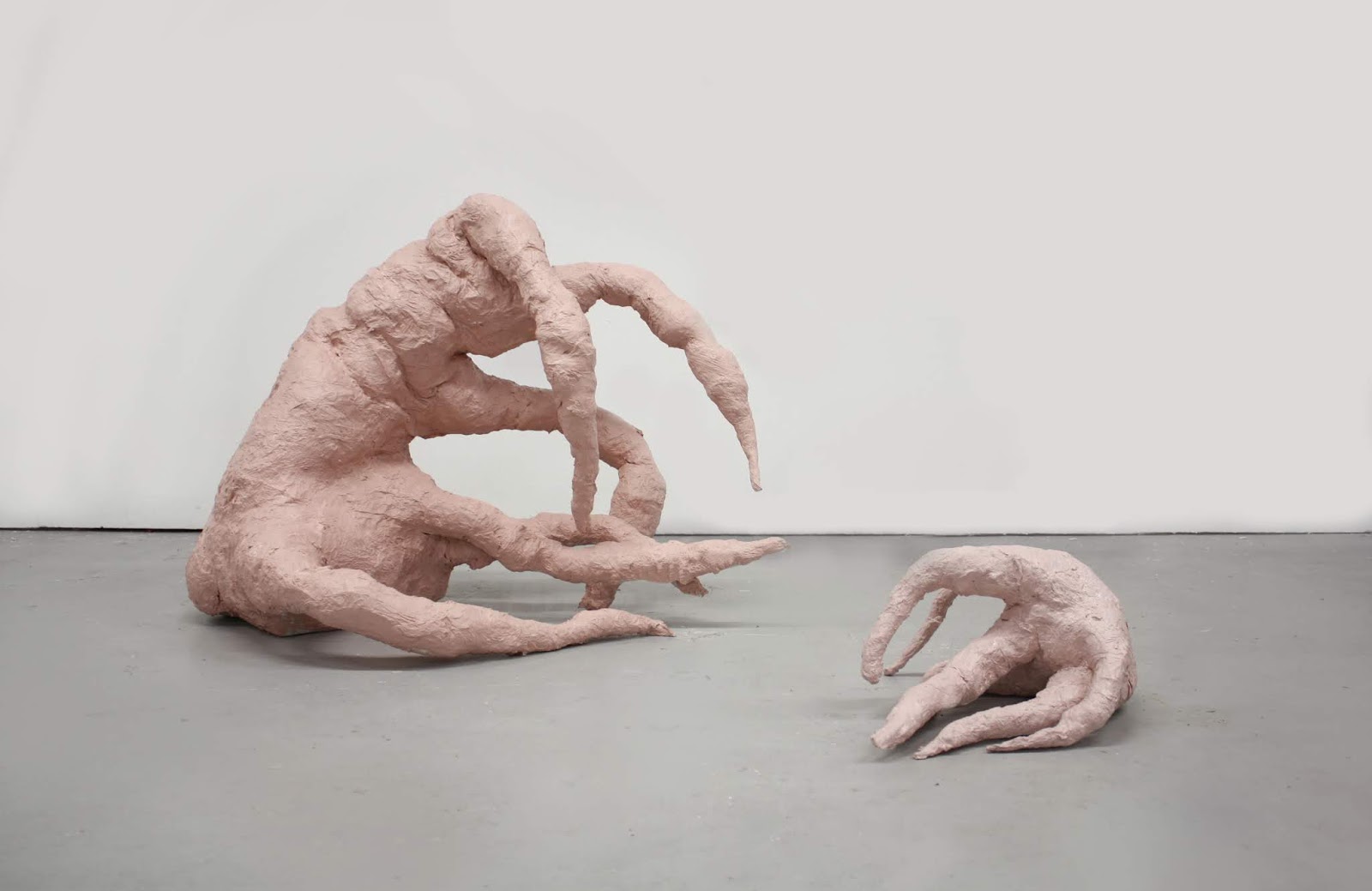
Slob (right) 2019. Paper mache, tissue, paint, wood. 120x70x90cm
Baby (Left) 2019. Paper mache, tissue, paint. 35x30x22cm

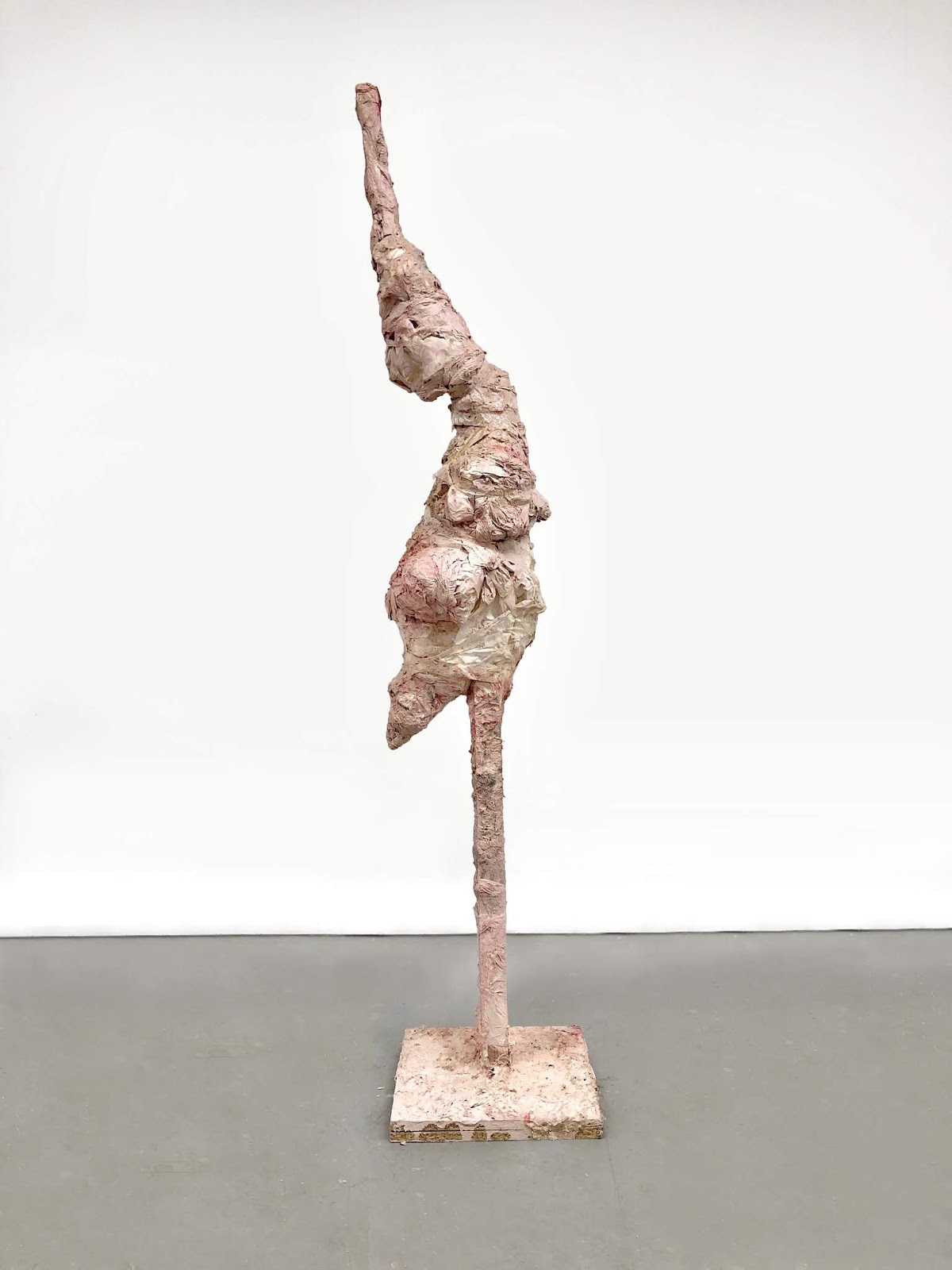
Untitled. Paper mache, tissue, paint, wood (in progress) 90x50x120cm

Untitled. Paper mache, tissue, paint, Sellotape, varnish, wood (in progress)


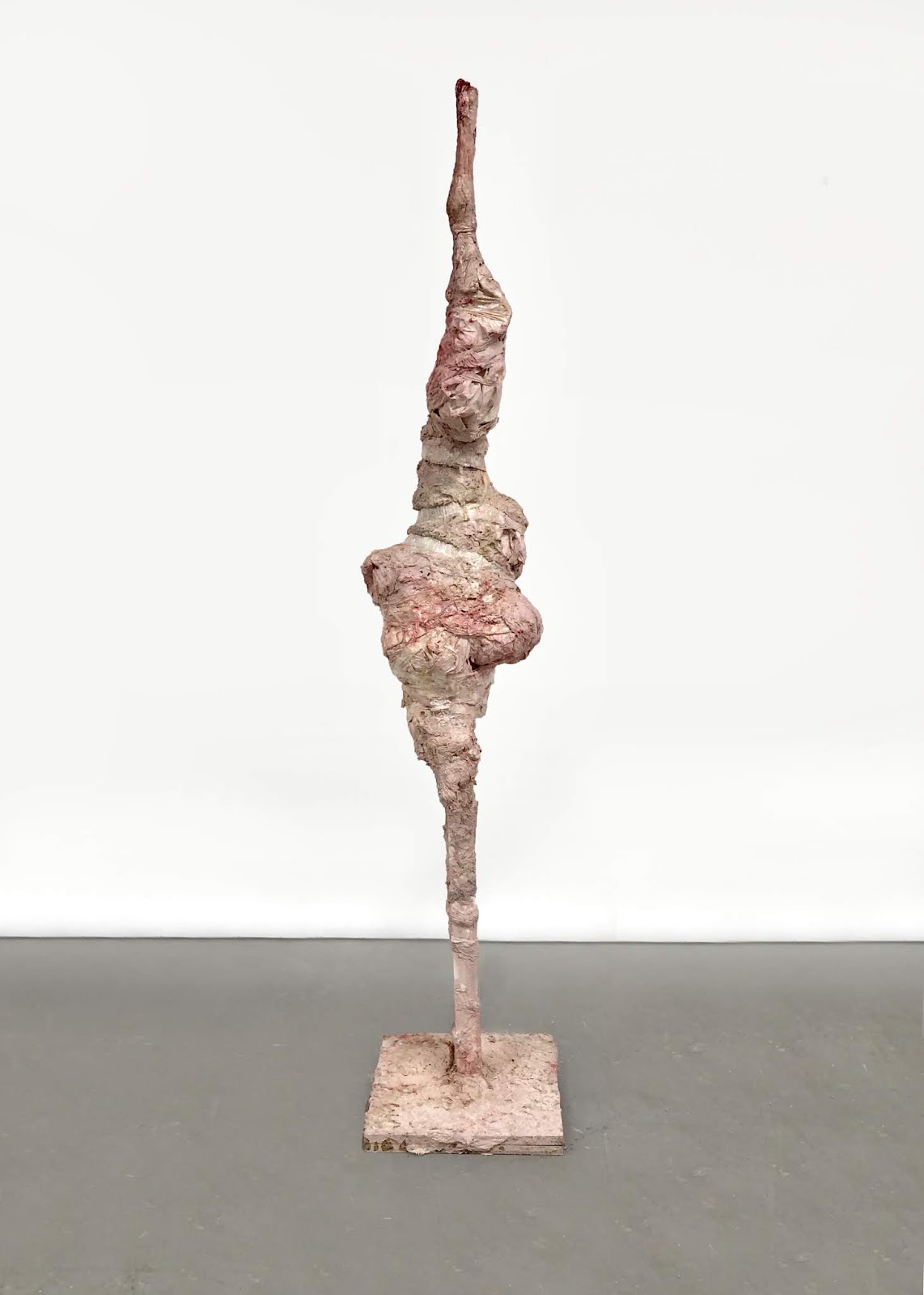
Pupa. 2019. Paper mache, tissue, paint, Sellotape, varnish, wood. 20x32x130cm


Chewing Gum Study. 2019. Gum, Fabriano paper. 15x15cm

As I was thinking about how and what materials to use when making sculptures, the thought processes also emerged in my works on paper. In particular I began using chewing gum as a way to ‘sculpt’ forms and shapes within the space of the paper. For the materials I am now working with I look for softer qualities that can easily be manipulated. 

Contained Forms is a series of works on paper where the resulting outcomes are abnormal, organic, mutated forms that are repetitive, obsessive and that continue to evolve throughout the series of work. They have anthropomorphic qualities, are reminiscent of embryonic limbs, folds of flesh, wrinkles of skin and curls of hair. I am interested in allowing the forms to develop intuitively but I also want them to share a quality of being restricted and contained within the confines and edges of the paper. 


Contained Forms. 2019. Hardground Etchings on Steel. Printed on Fabriano Rosapina. 15x30cm

These works range in size, which changes the way I physically make the work. On a smaller
scale, marks are made using the flick of my wrist and are limited to the range at which it can flex back and forth. When working on a larger scale the drawing becomes much more rhythmical and relies on the whole movement from my shoulder and the range of movement from my elbow. The forms in these larger drawings are of a similar size to my sculptures and are also related to human proportions, creating an uneasy relationship with the viewer that can at times be almost confrontational. 
Henry Moore: Shelter Drawing: Underground Study: 1940 
Gouache, brush and grey wash, coloured wax crayons, pen and black ink over pencil on paper. 12.3 x 17.7 cm.

To reveal mass and the three dimensional nature of form, I make use of a network of fine, curved, cross contour lines. This was a style adopted by Henry Moore who used these types of marks in combination with wax crayon, ink and wash to produce his series of Blitz drawings. Mixing and layering materials is something I do both when making drawings and sculpture, to create tactile and visceral surfaces. It is also a tool sculptors use to indicate weight as well as form in a preliminary sketch
. 
During this period of social distancing, I have downsized my studio quite significantly to the space of a desk. This is changing the nature of my work but I am working with what I have to hand and embracing new ideas. I have started a sketchbook; a continuation of the contained forms series, exploring drawing and being experimental with combinations of materials and approaches to mark making. I’ll be sharing on my Instagram how these drawings develop: @megan__needham


Recently, with so much advice on how to wash your hands properly to reduce the spread of coronavirus, I have been thinking about how the virus is passed on from person to person by physical contact. This is a very sculptural concept, touch being central to our idea of form. When something is touched traces are left behind from the natural oils in your fingertips. You can see the layer upon layer of greasy prints if your phone is left on lock and you hold it up to the light. These invisible latent fingerprints are made of water, fatty acids, amino acids and triglycerides—in other words, they result from the oil and sweat that your skin produces naturally. The reoccurring messages from PHE about handwashing make you more aware of how many surfaces each day we touch. I have been thinking of mapping these traces as drawings.

See this link for the exercise. 

These images of traces reminded me of some of the work made by the artist Jack Brown, who would collect the grease marks left by passengers’ hair rubbing against the glass windows on public transport. 

Jack Brown: Traces from a bus window

Some traces are invisible and others are much easier to see, whether or not the trace is something left at a microscopic level or is something that exists in our macro universe, it will be the result of things coming together and as they do a change is made. The police when recording a crime scene are very aware of Locard's exchange principle, "Every contact leaves a trace". As an artist when you begin to research these traces, you could be thought of as a type of crime scene investigator, something that feels very appropriate when thinking about how the corona virus spreads. 


Earlier this month I took this photo of the back of a lorry which interested me because of the mark making qualities and how the stained cloth resembles a prepared ground on which you might make a drawing. This is a found drawing, like Jack Brown’s work, it can be thought of as a residue of an event or series of events involving someone and something. Which is giving me some food for thought…

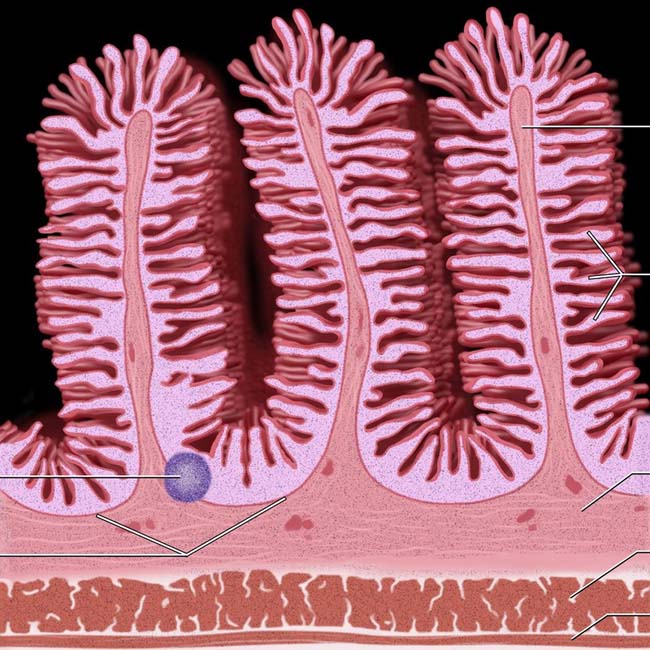
Scientific imagery of the internal human body has in the past acted as a reference and starting point for new drawings. The formations in my earlier etchings were inspired by the microscopic structures within our bodies. For example in our digestive system we have villi on the surface of the colon; small finger like projections that increase the surface area to uptake nutrients from digested food. Although invisible to us, they are an essential aspect of our lives and without them we could not function. The forms that villi take were seen by myself as electron microscope photographs and as images made by specialist scientific and medical illustrators. My own drawings then extended these ideas, trying to lend mass and weight to them, in order to give the concept of their invisibility and yet purposefulness, a certain gravity as well as mystique. 


Contained Form 2019. Hardground Etching on Steel. Printed on Fabriano Rosapina. 15x30cm

The corona virus

During this last month, many images were being shared in news articles of the visual structure of the coronavirus. These images have shown how the spiked projections on the surface of the virus binds on to the host cell and infects it. They adhere to various surfaces because of their pairing with the receptor site and can be loosened by the application of soap. The images of the virus differ between a 2D or 3D image depending on what sort of microscope has been used.  From these microscope derived photographs, 3D illustrations have been digitally rendered, each one designed to pick out certain ideas about the virus. These illustrations will have been produced in response to a dialogue between scientists and illustrators.  I have been looking a lot at these kinds of images and drawing from them to generate new work, whilst I do this I am thinking about how I might take a flat image into a sculptural form. This has been something I have struggled with recently – because the drawings have been produced from my imagination as well as from 2D imagery derived from secondary sources, and not from direct observation. This means that when trying to realise them as objects they don’t quite work in the same way I envisaged them in my mind. 
It is always interesting to have a dilemma to solve. Do I make models to work from? Do I insert x, y and z axis into and through existing drawings so that I can rotate them in my mind and on paper? Do I make drawings that I then cut up and reassemble? Do I gradually extend my drawings by adding more and more 3D materials to them? Do I create drawings on the surface of 3D forms and then re-draw them? Do I develop a process of working with materials that reflects the way a virus is transmitted or how it is broken down by lipids? 

See also:

These are a few posts that touch upon some of the issues raised. 


Friday, 5 July 2019

Self portrait drawings

Kurt Vonnegut


Kurt Vonnegut was always interested in drawing and he had a clear grasp of its potential to help himself think by using drawing as a visual problem solving tool. He used an idea that all stories have shapes as a way of developing story diagrams. There are many kinds of narrative and another one that Vonnegut was interested in was the self-portrait. In the one he made of himself, (above) you can see his awareness of abstraction and how a minimal amount of information is needed to suggest an individual. Most artists that have been interested in representation have at some time or other made a self-portrait. Drawn self portraits are interesting because they can be stripped down, they tend to be more economical and closer to the essence of how an artist saw him or her self. 

Paul Klee

Käthe Kollwitz

Max Beckmann

Picasso

Matisse
Gwen John

Bonnard

Franz Kline

Myself in expressionist mode

However these typical 'expressive' portraits are only now found in more conservative institutions such as the National Portrait Gallery or in competitions that still focus on issues of rendering likeness such as the BP Portrait award or TV's Portrait Artist of the Year. 

Isobel Peachey: BP travel award winner

The old tradition of portraiture has been questioned extensively within fine art practice and approaches to what it is to make a self portrait are many and varied. A typical approach is one that focuses on what it is to leave a 'trace' of one's existence. This can be a direct physical trace as in some of the work of Jasper Johns or research into how traces of our existence are manifest in the production of other things such as certificates, account details, data collections and numerical accountings. 

Jasper Johns: Untitled 1964-65

David Hammons in the late 60s and early 70s created a series of images of himself which are direct impressions left on the world in the same way that other things in this world leave impressions, such as leaves and animals. I was particularly interested in his approach because it seemed to me that this levelled the playing field between people and other things, everything leaves a trace of its existence in some way, and usually that trace is made when one thing makes contact with another. 


David Hammons

David Hammons is an interesting artist in that he uses the myths and fables that have accrued around his persona to make points about misconstrued notions of black identity. These body prints for instance, were made by coating himself with grease and then adding black pigment. He is making a statement about his presence in a white dominated art world. Compare his image with the one Johns made, he is much more there as a presence, Johns is emerging out of a welter of 'art marks' embedded within the signs of his practice, but Hammons is still partly having to hold on to some sort of street credibility. His work being also about black history as well as being about his own story. 

Thinking of other stories, how do other 'prints' made by geological forces enter into this debate? Can their images be seen as evidence of other non human stories and can these stories be told with as much of a poetic resonance as all the other images made by one thing acting upon another?


Hiroshima

Can these images be seen as types of portraits? Can a flower have a portrait, or a fish? We know that dogs can.
William Wegman

Data can be used to build up your identity and Amazon will have already built up a pretty accurate picture of you by now. A far less sinister approach to data drawing was the analogue data drawing project as developed by Georgia Lupi and Stefanie Posavec, whereby they posted postcards of visualised data to each other for over a year, each week looking at different aspects of their lives and converting these things into data as well as associated codes for the data's translation back into 'real world' language.

Georgia Lupi and Stefanie Posavec 

Lupi and Posavac's work demonstrates how a self portrait can be determined by many different factors and none of them need to be anything to do with how somebody looks. Their work also demonstrates the power of drawing to visualise information abstracted from the world in many different ways. 

Laurie Frick

There are many artists using data to develop imagery but perhaps Laurie Frick is a useful artist to look at in that she holds an interesting edge between the use of technology to access data, such as her Fitbit for collecting self-tracking data and the construction of objects and large-scale installations using common often found materials such as cardboard. Frick used her Fitbit and combined it with location data from the online program OpenPaths and her iPhone’s GPS to draw a track that tried to capture the experience of walking through Brooklyn.  It is in this area where data meets innovative visualisation processes that I believe fine artists have a powerful role to play. 

Frick refers to some of her images made from data collected about herself as self portraits, a clear demonstration that if you don't want to there is no longer any need to be working with those old models of facial recognition, unless of course there is an approach to thinking about image capture that causes us to think again.

The idea that an optically travelling image can leave a trace is fascinating. We have long had image capture stories surrounding death, the last image someone sees being somehow 'burnt' into the eye's retina. Optography is the process of viewing or retrieving an optogram, the technical term for an image existing on the retina of the eye and this process was at one time believed to be a scientific reality. The laboratory investigation surrounding this much miss-understood concept is itself a horror story in its own right. In the late 19th century the physiologist Wilhelm Kühne, inspired by Boll's discovery of rhodopsin or visual purple, a photosensitive pigment present in the rods of the retina, wanted to prove that images on the retina could be fixed, in exactly the same way that a photographic image could be. Therefore Kühne developed an experiment to test out his hypothesis. He fastened the head of a live rabbit into a clamp, so that its head faced a barred window. He then covered the rabbit's head in a black lightproof sack, so that there was time for undisturbed rhodopsin to accumulate in the retina. He then took off the eye cover and allowed the rabbit to 'expose' the rhodopsin by looking at the barred window for three minutes. Then he quickly decapitated the rabbit and sliced its eyeball in half, placing the rear half into an alum solution to fix the now bleached rhodopsin. This resulted in a distinct image of the barred window. 
One of the barred window images

Of course he now wanted to perform the same experiment on a human subject, eventually persuading the powers that be to let him have the eyes of a convicted murderer. 

Wilhelm Kühne: Drawing made of the image found on Erhard Gustav Reif's retina

The child murderer Erhard Gustav Reif was executed and his eyes given to Kühne who cut the eyes in two and fixed the bleached rhodopsin, making the drawing above from what he found there, which is the only known image of an actual optogram. The story is a powerful one and it continues to be told, especially within science fiction and detective genres. Jules Verne's 1902 novel, The Brothers Kip, contains a reference to optography as a key element of the plot. The Kip brothers are imprisoned for the murder of a ship's captain. When the victim's son examines an enlarged photograph of his late father's head, he discerns in the eyes the faces of the true murderers—two of the captain's shipmates—and the brothers are exonerated. Verne explained the scientific basis of the conclusion in the book's final chapter: 

For some time now it has been known—as a result of various interesting ophthamological experiments done by certain ingenious scientists, authoritative observers that they are—that the image of exterior objects imprinted upon the retina of the eye are conserved there indefinitely. The organ of vision contains a particular substance, retinal purple, on which is imprinted in their exact form these images. They have even been perfectly reconstituted when the eye, after death, is removed and soaked in an alum bath.

It is fascinating to see how quickly failed science can become some sort of popularised truth. 


I seem to have once again wandered off the plot and have left the self portrait idea well behind, the point I was beginning to make was that by looking at something from an entirely different angle you could refresh an old idea. For instance what if Kühne was the last thing seen by the rabbit? If he was an artist could Kühne then use the resultant retinal image as a self-portrait? This becomes the start of a story and some artists use stories as art. 

For many years Mark Manders has been in some way making a self portrait. It is better perhaps to have him explain how he works in his own words. 

Mark Manders: Self-portrait as a floor plan

MM: I made this floor plan in 1986 from all the writing tools I had at the time. These served as the basis for a written self-portrait, which was to be formed collectively by seven imaginary persons in a building. It was to be a book without a beginning or an end, one that I would always have to keep working on. I thought it was interesting that it was a dry, formal floor plan, in which no movement whatsoever could be observed. I wanted to project a mental self-portrait into this floor plan, one in which everything would take place only in language. Making a self-portrait seemed to me the most fundamental thing to do. However, while writing it I found I did not like the idea of using written sentences to dictate to the audience exactly what they should think. I did not want the self-portrait to become really personal—it had to remain abstract. I became more and more fascinated by the physical manifestation of the floor plan: how I stood there before it as a human being; how tall I was in relation to the things on the ground; how the changing light transformed a ballpoint pen so dramatically; how I could bring my eye closer to an eraser and what then happened inside my head. This zooming-in created a breathtaking cinematic experience: I could move over these objects, and they dictated my thoughts with their color, language, form, and their indescribable physical coherence. I concluded that making a self-portrait in language was not the right thing to do. The world itself is more complex than the world of language which has been embedded in it. I decided to write the book not with words but with objects, and to embed the self-portrait in reality as an imaginary building.... If you write a self-portrait using objects, it will be read in a totally different way. Viewers—or readers—of the objects construct their own new thoughts, and the result is a self-portrait that is suspended between the maker and the viewers.
This floor plan was never really meant to be an artwork, it was more like a strange kind of writing machine. Now it is a work of art. It is used as an artwork.


Mark Manders

Manders often uses drawings of ground plans to develop ideas for exhibitions, his drawings reflecting an idiosyncratic approach to personal meaning, a sort of private language being developed to talk about his approach to the processing of life's experiences. These 'life experiences' may not be real, but they may be, a self-portrait is an idea and as an idea it can take many forms, some of which might be fictional. 

Mark Manders: Several drawings on top of each other: 1990-20015

Many of his works become installations, the one above suggesting a long process of making private drawings that eventually become physical substitutes for the artist's life, which in turn becomes another self-portrait. 

De Kooning: Self portrait with imaginary brother

The self portrait can also be a place where you explore other aspects of your life, in De Kooning's case the need for an imaginary brother. 

Ivan Albright

In the last year of his life Ivan Albright drew himself as if already a ghost of his former self; on completing the drawing he passed away. When he was seriously ill the Scottish artist John Bellany drew himself as a way to fight through the pain, confront his mortality and try and last a little longer. It must have worked because he lived long enough to make etchings from the drawings he made. 


I hope to be more like Bellany than Albright but you never know how you will react to those end times. The one thing I do know is that drawing can be a friend right until the end. 

See also:

Further ideas related to concepts of drawings as traces of events or contact with other objects or things.