Showing posts with label votive. Show all posts

Monday, 24 March 2025

Stained glass: Finishing

The finished panel

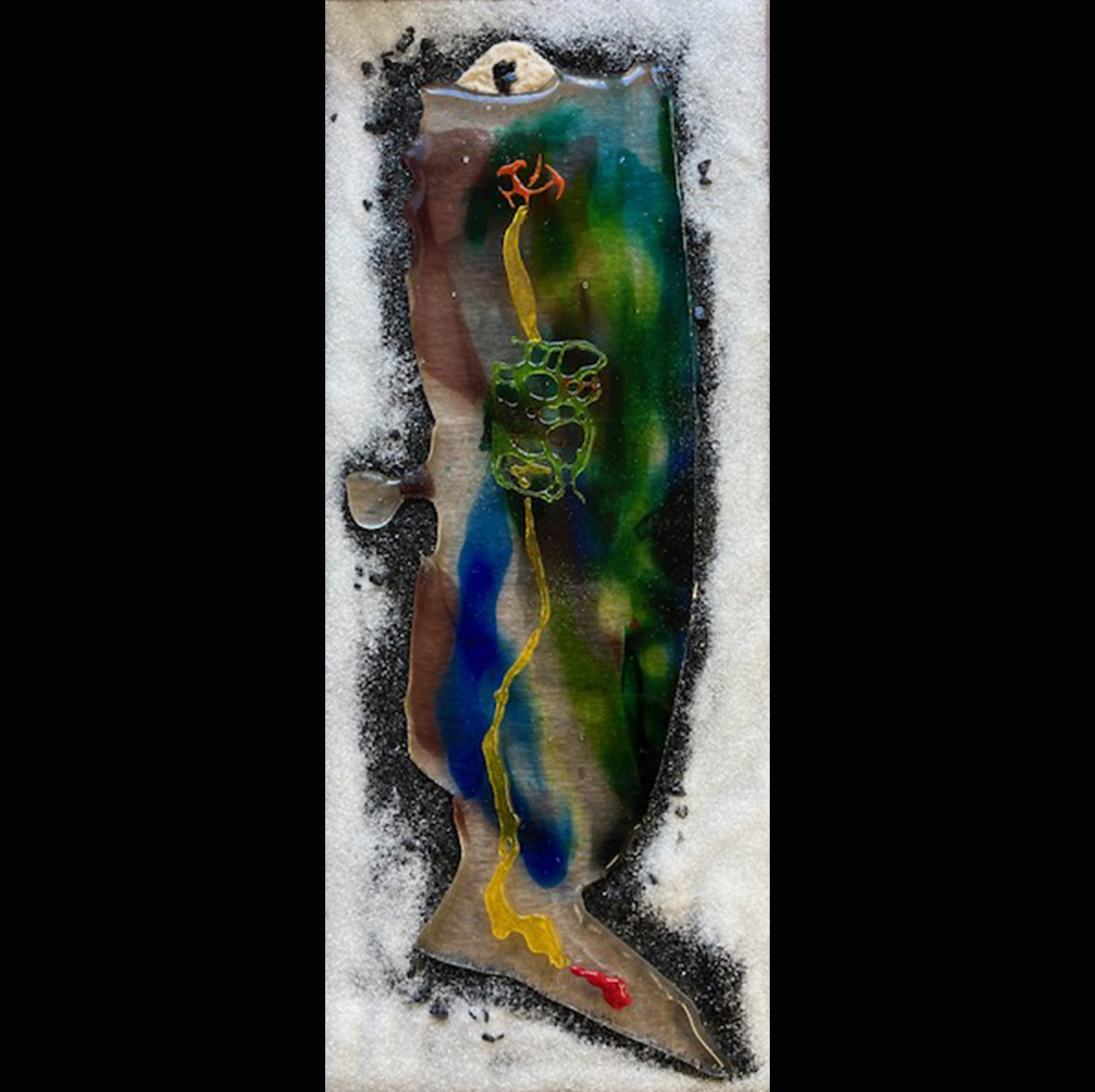
As you can see from the image above the stained glass panel I have been working on for over a year has finally been finished. It's approximately A1 size and it was designed as a response to the fact that when I started the project I had plantar fasciitis, which meant I couldn't put my foot down without extreme heel pain. As I had been making votives, I decided to use the idea of Sooty as a type of voodoo fetish, interceding to bless the pain and therefore release it. It did eventually go away but not I suspect due to the intersession of Sooty. Even so it was an interesting experience and I have learnt a lot technically and have set up my workshop to be able to undertake quite a few of the glass skills used during the past year. The painting I started out with is this one below, and as always its fascinating to look at how a change in technique totally changes the meaning of what can be almost exactly the same image. 

The original painting 

My last post was about the soldering process, which left me with lots of cleaning to do, most of it due to the deposits of tallow still left on the lead. Once the tallow had been cleaned off the next step was to stabilise the panel with black putty, which  ensures that every section is held securely in place. If the panel was to be used as a window, it would also need to be made weather proof and this stage would ensure rain water would not be able to penetrate it. 

Black putty being applied to all the gaps between the lead and the glass

I had bought myself a tub of stained glass putty a while ago, so had it ready. It's much more expensive than the putty you use to secure the glass in a window and I suspect you could mix your own by staining ordinary putty black but I was in a rush to get everything finished, so had bought a ready mixed tub. There is nearly always a reason for the materials being what they are and when I have tried to go my own way, such as using ordinary soldering flux, things haven't worked. 

Stained Glass Lead Cement Putty Black 1/2 PINT (Approx: £26)


I used an old toothbrush to push the putty into the gaps between the leading and the glass. I was amazed at how much putty would be needed to go into these gaps, and it takes quite a while to work it into each section. A circular movement of the toothbrush seemed best, and as the putty began to settle into the spaces, it lifted off the glass surface. (I was initially worried that it might stick to the glass and be hard to clean off). 

The toothbrush: The black putty is very sticky, like thick runny hunny.

As the gaps become filled, the putty pulls away from the glass surface. 

I then, once all the gaps were filled on one side, with help, I turned the panel over and repeated the process. I had some whiting power left over from when I was printmaking and once the putty was in place on both sides, dusted one side with it. This is to help dry the putty and clean off the panel. Using an old scrubbing brush, I then worked my way across the panel, again using a circular motion and this removed bits of excess putty and at the same time cleaned the glass. This was then repeated on the other side.

Using an old scrubbing brush to remove whiting powder and excess putty.

The window was at last beginning to look how I wanted it to. The too shiny look of the solder had gone, the black of the putty now filling every crevice of the surface, which makes the whole panel look as if it is an old thing; something made back when stained glass was a process embedded into a deeply spiritual way of understanding the world. I was beginning to think that all the effort was at last going to pay off. 

The final part was to get the 'look' of the leading right and to do this I used black stove and grate polish. (£7)
'Stove black'

I used to help my nan polish her black iron stove and this was very like the Zebo polish that we used then. When buffed up with a soft duster or rag, you get a rich dull black, which is what I wanted. These final touches were vital as they gave the panel a very personal feel. The surface looks very hand done, the final finish looking like something that has resulted from several hours of intense one to one application. The Sooty window was meant to be a type of fetish or votive and by virtue of the many hours of work invested into its making, it has human spirit built into it.  


Developing the final patina by polishing

This final part of the process felt intuitively right, perhaps because of the link back to the time helping my nan polish that old black iron stove. 

In order to have a good flat light source behind the panel, I ordered an A1 size, LED lightbox from Amazon, and it fits very neatly, I used it to light the window in order to take the photograph at the top of this post. 

It has been a long and expensive process, I have learnt a huge amount and made a piece of work I am very satisfied with, as it extends the conceptual as well as the emotional and spiritual range that I am trying to communicate with. I have also set up my old studio in such a way that I can now cut glass and grind it into shape, I can cut lead and fit panels together, but what I cant do is paint the glass without access to a specialist kiln. My objective was to see if I could become self sustaining in relation to a craft that I really feel does enhance spiritual 'feeling'. But the reality is that it will have to be a 'supportive' skill, one I use occasionally to enhance my work, rather than as a main focus. 

See also:


Saturday, 13 May 2023

Nina Simone's Gum

The hair clippings of St Clare of Assisi, the Basilica of Saint Clare: Assisi.

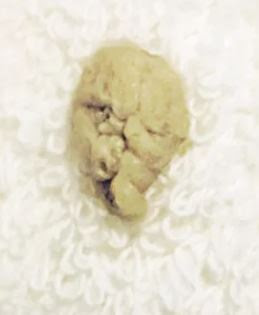
'Nina Simone's Gum' is a book by Warren Ellis. Entitled after the fact that Ellis had pulled the gum off the leg of a piano Nina Simone had played back in 1999, in what was to be Simone's last performance in England. It was twenty years later put on display as a relic; an object of great spiritual value; the book being about how something so small can form such powerful connections between people, it is, as the blurb says, 'a story about the meaning we place on things, on experiences, and how they become imbued with spirituality'. 

Nina Simone's Gum

I went to see Nina Simone at Birmingham Town Hall in 1969, she was astonishing. Memories of the event still move me, and when she sang 'Young Gifted and Black', I remember hairs standing up on the back of my neck as the mainly black audience rose to her words. It was my first real experience of what it meant to have a very different identity to that of a white, male anglo-saxon. I had just accepted things as they were, but on going to art college, I was finally beginning to wake up and discover that the world out there was a conflicted place and that what I took for granted, was a situation many others would see as a position of privilege.  Simone's performance was an unforgettable experience and I could easily see why something as humble as her discarded chewing gum could be so important to someone who had attended one of her concerts. 

This is how relics work. Objects become the repositories of the spirit of the person who was associated with them. This could be, as in the image that opens this post, a saint like Clare of Assisi, who's still golden shorn hair is kept to remind us of her piety or Jesus Christ; the nails from his crucifixion being energised with some sort of spiritual essence of his being. 

A Holy nail relic: Trier Cathedral 

But you don't have to be that special or saintly, anyone's spiritual essence can be passed on using a relic, the most common situation being when you are given an urn full of ashes after a cremation. I know of several families that keep their grandad's ashes in an urn sitting in a cupboard and every now and again they turn to those ashes and ask for grandad's help in supporting them through life's difficulties. The objects that become relics can also be very mundane, a tooth, a nail, a used discarded chewing gum, but in their very banality, they tell us a story about life, about how the most humble, overlooked object, has the potential to give physical form to spiritual things. 

The artist Alina Szapocznikow, used to use chewing gum to make sculptural ideas, and then photograph the results. 

Alina Szapocznikow, “Photosculpture” (1971)

These images also tap into the concept of the relic. The artist's traces becoming very like those of a lost saint, Szapocznikow's chewed and hand pulled tiny sculptures, now venerated as high art, become relics not unlike the ones we find preserved in glass vitrines in many Catholic churches. A relic works as some sort of externalised mind. Without their physical presence we would find it very difficult to think about the ideas associated with what relics stand for. The reason we need to make physical objects to carry our ideas, is because of the same reason, each art object in effect operating as an externalised thought, a concept made real, rather than remaining as a thought trapped inside a head.

You can also think about a drawing once it is completed as a type of relic. Its very materiality is a crystallised idea. We are intrigued by an original drawing and as we look closely at its hand made marks, we recreate in our minds the artist's touch and in turn we are touched by the idea of a certain combination of materials holding within itself an idea. When I am dead my drawings will have to talk for me. Mute like all relics, people will bring their own stories to them, therefore I hope my works on paper will have enough substance to them to allow for many possible stories to emerge and flourish, the drawings' very muteness hopefully offering others a silence within which to make their own sounds. 

A drawing from an old sketchbook

Whatever idea I had when making this drawing I have forgotten, but the specific combination of materials remain, the drawing holds its form, only slightly distorted by time, perhaps a little faded and the paper slightly flattened due to compression and dampness. It now operates as a relic, a frozen thought preserved in paper and ink, a type of fossil. If now framed behind glass and put on display, the framing begins to remove it even further from the world and heightens its iconic possibilities and begins the journey towards becoming a reliquary.

The frame within a frame

An empty reliquary frame 

The empty reliquary frame above is just waiting for a saint's toe or tooth to be mounted within its ornate surrounds. It is designed to give honorific value to whatever is placed within it. It needs something like Nina Simone's gum to complete it. In fact the gum was cast in silver by Hannah Upritchard, a London jeweller and the Belgian fashion designer Ann Demeulemeester produced an intricately carved silver ring in its image. 

Hannah Upritchard: Silver casts of Nina Simone's Gum

I suppose this sequence of ideas has come to me because I'm about to retire and the library at Leeds Arts University is thinking of archiving some of my old sketchbooks. If they do and as I would hope, they keep them safe, one day they will seem to some future researcher as strange old relics of the past and my life will be a distant memory. It is unlikely I will have ever changed anyone's life in the way Nina Simone did, but on a more modest scale, perhaps some of my teaching or my drawings did help some people enrich their own lives and if anything of mine could be regarded as repositories of my spirit, it would be my sketchbooks.

Sketchbook idea evolving in relation to how my varicose veins feel

Glass leg votive in progress

See also: 

False starts Exhibition: An aspect of my work that reaches into the tradition of the votive