Friday, 12 July 2024

Dream photography

When trying to find out more about Louis Darget’s V-rays, (vital rays) I discovered that he was into 'dream photography', and as I have for a long time been interested in photographs of ectoplasm, decided to find out more. I usually find photographs of ectoplasm very funny, they are so obviously fakes and often use just bits of muslim stuffed up noses or into mouths, to effect their 'mystery', but they must have convinced some people and therein lies the interest for me; why and how are people 'convinced' of psychic meaning by such obvious fakery?

Ectoplasm: A séance image from Thomas and Lillian Glendenning Hamilton's archive 

Ectoplasm materialisations were according to Albert von Schrenck-Notzing, a result of 'ideoplasty', an idea that expressed a medium's ability to form images directly from the mind. Photographs of these images were used to illustrate von Schrenck-Notzing's book 'Phenomena of Materialisation' (1923). The images were obvious fakes, sometimes made of magazine cut-outs and string. In response to their obvious fakery, the magician Carlos Maria de Heredia replicated a photograph of the ectoplasm taken from von Schrenck-Notzing's book that was supposed to have been produced by the psychic medium Carrière, using just a comb, gauze and a handkerchief.

The psychic medium Carrière at work: From 'The Phenomena of Materialisation'

Examples of ectoplasm: Samples found in the Library of Congress photo archives.

The images of ectoplasm samples above reminded me of Radiolarians which are tiny protozoa that produce intricate mineral skeletons that are the result of cells dividing into inner and outer forms of endoplasm and ectoplasm. This other more prosaic 'ectoplasm' is perhaps in terms of microscopic imagery even more unworldly, for myself though it also offered a connection between fact and fantasy and further fuelled my interest in hybridity and permeability. In fact if you look up 'ideoplasty' in Webster's dictionary it has two meanings, the first being 'modified by mental activity' such as ideoplastic factors in digestion'; the second being 'of an art form': rendered symbolic or conventional through the mental remodelling of natural subjects. 'Ideoplasty', in terms of von Schrenck-Notzing's concept of a medium's ability to form images directly from the mind, no longer being even written up as an old defunct dictionary definition. 

Radiolarians

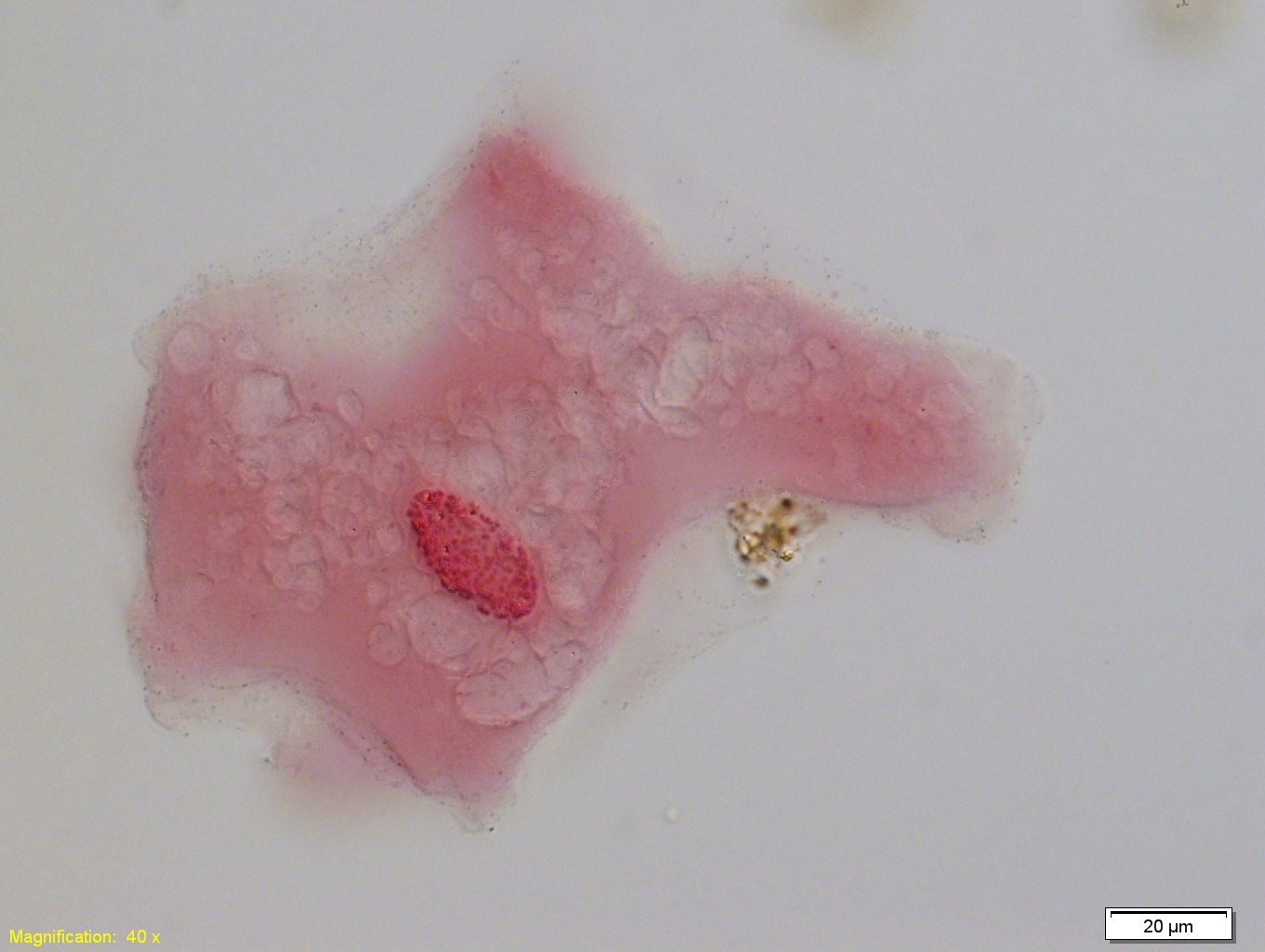
An amoeba

In the image above of an amoeba the darker pink blob is the nucleus and the rest of the cell's body is the cytoplasm. There are lots of plasm words used to describe a cell. For instance the whole thing is made up of protoplasm. If you exclude the nucleus the remaining protoplasm is called the cytoplasm. The cytoplasm is itself composed of the endoplasm, which is the stuff you see and though not visible, the ectoplasm lies just inside the plasma membrane and is the outer, more viscous region of the cytoplasm. A sort of invisible skin that sits below the membrane. Ectoplasm provides structural support to the cell and helps maintain its shape and is involved in processes such as cell movement and the formation of cell extensions like pseudopodia in amoeboid cells. The cell membrane is the outer boundary of the cell responsible for regulating the passage of substances in and out of it, whilst the ectoplasm provides structural support and facilitates cell movement in the amoeba. 


An amoeba hybrid: Taken from drawings made some time ago

The word ectoplasm is another hybrid, as it unites the ancient Greek words ἐκτός ektos, "outside" and πλάσμα plasma, "anything formed." The imagination of a scientist and the imagination of a psychic, seeming to travel along similar lines. The blobbyness, or unformed plasma appearance of the amoeba suggests that it is always between one state and another, always moving towards something that might be food or away from something that repels it, such as toxic chemicals in the water. It is always for myself a delight to find forms implied by examining of a lump of clay that I am manipulating or within the granularity of pooling liquids, as a brush is moved through them. Just as the amoeba flows between one shape and another, possibilities constantly emerge from materials in flow as you draw.

Landscape emerging from paper: Inks and watercolours

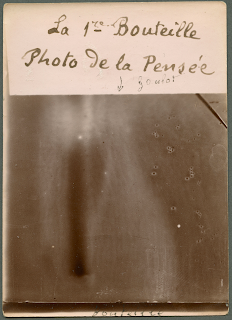
I like to think of 'dream photography' as a form of drawing, as it really is 'drawing with light' and is concerned very much with the way we give meaning to the things we cant see very well, or are usually unseen. I particularly like the crazy way that Louis Darget set about making his dream photographs. For instance in order to make the image below, Mme. Darget was told to hold a photographic plate about an inch in front of her face in darkness. Eventually she would fall asleep. She would awaken as the cool, smooth plate pressed against her face because it had been dropped as she dozed off. Louis Darget would then take the plate away and develop it. In the case of the image below, he decided that his wife must have been dreaming of an eagle as she fell asleep. 

Commandant Louis Darget: Mme. Darget's “Eagle Dream”

A photograph of thoughts being projected from the human brain


All of these images above developed by Louis Darget, could be anchored by titles. For instance the one directly above could have been entitled 'Frogs in a dream' or 'An insect dream', in fact anything you want to see in the image could be reinforced simply by writing down what you imagined to be there and these images are so ambiguous that they are open to interpretation in a wonderful variety of ways, especially if you stated that they were images from dreams.

In the early days of photography, many believed and hoped that the camera would prove more efficient than the human eye in capturing the unseen. Spiritualists and animists of the nineteenth century seized on the new technology as a method of substantiating the existence of supernatural beings and happenings as well being a tool that could visualise those things that only we can see in the mind, such as thought dreams or memories. 

A thought photograph" by Tomokichi Fukurai

Thoughtography or psychic photography, (nensha in Japan) is the claimed ability to 'burn' images from the mind onto photographic film by parapsychic means. In the film 'The Ring', which was a remake of the Japanese film of the same name, a similar idea was introduced, which was called 'projected thermography'. However when we draw from our imagination, surely this is what we do. We 'burn' the images that are emerging from our minds into the materials of their making. However as we make an image, part of the process is a dialogue with the materials of the image's making, therefore what was in the mind, as it is embodied into a new material presence, is also 'in the material' or 'of the material' of its making. This is a symbiotic emergence. A fact that for myself is wonderful, as it is a sort of dance with the world and yourself. 


Images from the mind as it thinks about the body and its interior

However the ability of people to effect changes in photographic substrates still captures people's imaginations, more recently a former bellhop Ted Serios convinced people that he was able to manipulate Polaroid photographs. In the 1960s, Dr. Jule Eisenbud a psychiatrist, staged a series of experiments with Polaroid instant film, using Ted Serios as his subject for research, in order to prove that a psychic projections could manifest on film.
“Parthenon” (1965), an image in the Jule Eisenbud Collection on Ted Serios and Thoughtographic Photography 

I love this image supposed to be of the 
Parthenon, all you need is lots of fogging and blurring and lo and behold you have a psychic projection. 

The Psychic Polaroid Photographs of Ted Serios

The Thoughtography of Ted Serios

There is something serious behind all this fakery though and this is our willingness to suspend our disbelief. We want to believe that there are forces beyond our understanding and that there are doorways into the unknown.

One of the first books to mention "psychic photography" was The New Photography (1896) by Arthur Brunel Chatwood, who described experiments where the "image of objects on the retina of the human eye might so affect it that a photograph could be produced by looking at a sensitive plate." The book also has a chapter on 'Spirit Photography' and the later more esoteric chapters are a seamless extension of the earlier part of the book whereby new photography seems to be exemplified by its ability to see through things, as in the image of the frog seen below.

From: The New Photography (1896) by Arthur Brunel Chatwood

In his book (p. 96) Chatwood states, 'I made experiments on the subject by staring at a sheet of grey paper in a strong light, and at the same time doing my best to concentrate my mind upon some well know object, and trying then to produce a photograph in the same way as in the case of the ordinary retinal impression.... In the Amateur Photographer of 1896, Dr. Ingles Rogers...states that he found it necessary to produce a vacuum in the space between the eye and the plate and that the problem of photographing thought is solved.'

Chatwood was more sceptical about spirit photography and he provides an image of his own whereby he shows how easy it is to fake up these ideas.

From: The New Photography (1896) by Arthur Brunel Chatwood


Dora Maar, Main Coquillage, 1934, 

Within art practice it would be Surrealism that would take up the implications of these ways of developing imagery. Photo-montage techniques now becoming more sophisticated and coupled with a much more subtle understanding of psychology, artists were able to manipulate images designed to effect us in terms of their psychic resonance. The surrealists were also interested in magic and the ritual objects used in a variety of cultures to effect people's minds and as such they form a bridge between the experimentation of the late 19th century and the contemporary advances in neuroscience, whereby the mind/body relationship is being rethought. 
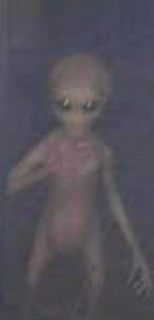
We are still willing to be fooled though by a slightly out of focus photograph. Uri Geller has for many years now played with our minds and his alien photograph, is yet another attempt to tap into our willingness to suspect disbelief. 

Uri Geller's alien photograph

Most of these ideas go back to William H Mumler, an American spirit photographer who's first spirit photograph was a self-portrait which, when developed, also revealed the "spirit" of his deceased cousin. At the time a large number of people had lost relatives due to the American Civil War. They were looking for solace and his work gave them something to hold on to, a belief that the spirits of their lost ones were still out there somewhere and that they were not 'gone forever'. 

William H Mumler: Spirit photography 

This brings me back to a familiar theme, how can we use art to reconcile ourselves with our own mortality? All this interest in invisible rays and esoteric energy flows, is perhaps driven by an inability to accept that death is just what it is. Life is such a magical thing that it is hard to believe that it just finishes. An animist would point to the fact that the life essence moves on and flows into other things and that as we rot down, we feed the vegetation that grows through us. Dream photography and its cousins being perhaps forms of vanitas or memento mori.

References: 


Arthur Brunel Chatwood. (1896). The New Photography. Downey. p. 93


Chéroux, C., Fischer, A., Apraxine, P., Canguilhem, D. and Schmit, S., (2005) The perfect medium: Photography and the occult. Yale University Press.


See also:

Saturday, 6 July 2024

Why Proust still matters

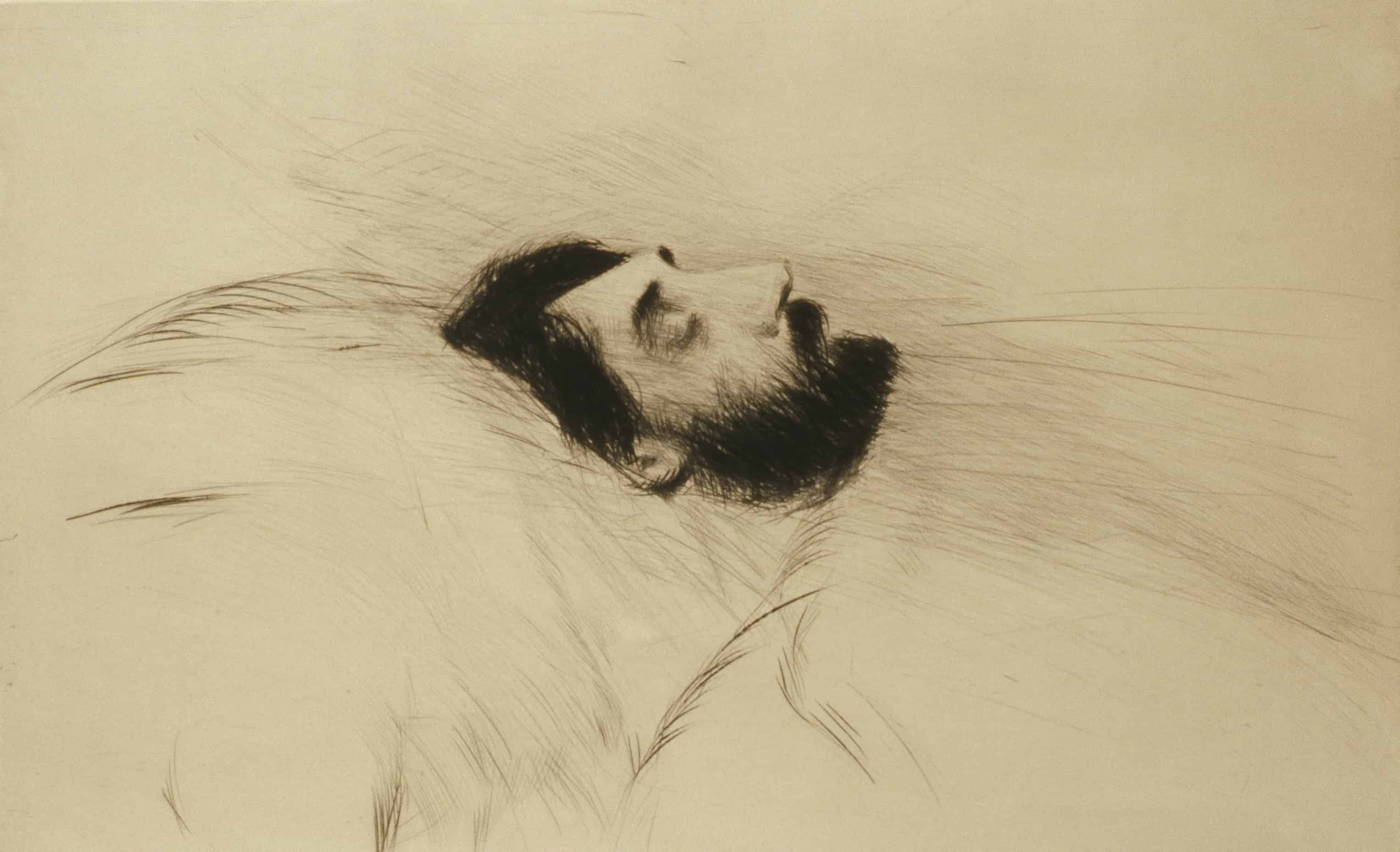
Marcel Proust on his deathbed, Paul-César Helleu, 1922

When in the late1960s I was first at art college in Wolverhampton, I was told to read Proust. I did but very slowly, gradually over the years reading bits of Swan's Way, The Guermantes Way or Time Regained, never actually reading all seven parts of 'In Search of Lost Time'. I dipped into it as if occasionally swimming in dark pools, each of which was full of strange and exotic creatures, that turned out on examination to be based on the familiar forms of childhood experience. 

Proust reminds us that everyday experience is strange. He suggests that although reality is untouchable and unknowable through human experience, that it sort of creeps in through the cracks. The cracks themselves are formed by the details of things and it is in these details that mystery begins. 

Looking through grass

I sometimes trace my interest in being an artist back to when I was a boy lying down in long grass. I would stare into the grass and watch it move, gradually shifting my gaze upwards until I could see the sky. There was something about the scale of things, the texture of nearness and farness that seemed to be full of mystery. The grass was at one moment treelike and at another it was like a sea. I have written about my boyhood experience of clouds and how they could trigger my imagination in an earlier post, but they are always far away, and grass is something that you can press your nose up against. It is ubiquitous and thrives in all the cracks and gaps that nature teases open in our cities. In the spaces occupied by grass roots spreading out in the dark beneath city pavements, can be conjured other stories, tangled roots forming mysteries waiting to unravel themselves when the slabs are lifted. 

I still draw grasses and other wind blown vegetation, gazing into the waving mass of plants in movement, trying to capture the energy flow of invisible breezes, as if this will enable me to somehow tap into a type of knowing that the grasses have. As I make these drawings in certain instances, as I get lost in the looking, I can feel as if I am part of an animist reality, conjoined with the swaying of grass stalks, as I too rock my body in tune with the breezes. I make rhythms with my pen as it moves across the paper; my hand dancing to the grass tune, as as I do, I am for once inwardly at peace.


Some sketchbook observations

However sometimes the vegetation is clipped and controlled and then it can become strange, menacing, full of a type of mystery that is a fusion between human and plant life. 

A clipped hedge outside a block of flats

A small hedge next to a field in West Wittering

These clipped forms, are in my mind hybrids, now animal like in their transformation, still untamed even though shaped by human geometry. That untouchable, unknowable reality begins to creep through from underneath the hedge. 

See also:

Sunday, 30 June 2024

Macro and micro embodied networks

Typus Sympathicus Microcosmi cum Megacosmo: Oedipus Aegyptiacus: Athanasius Kircher

In the image above, the body's organs are shown, along with zodiacal and planetary symbols. The dotted lines are labelled in Latin with the name of the body parts they point towards. The outer ring names various plants, diseases and foods. The image reflects a desire to link everything together and it suggests that various correspondences exist between humans and the environment they exist within. This reminded me of the fact that when we begin to look at other species beside ourselves, they nearly always exist within a niche, for instance insects that feed on the various plant species, tend to have a very specific relationship with the plants they feed on. They have evolved to fit perfectly in the world they inhabit, but outside of that environment they would soon die. If an insect were therefore to be able to show us the relationship between itself and its world, it too would probably produce a diagram showing how its own form reflects the make up of the world it inhabits. 

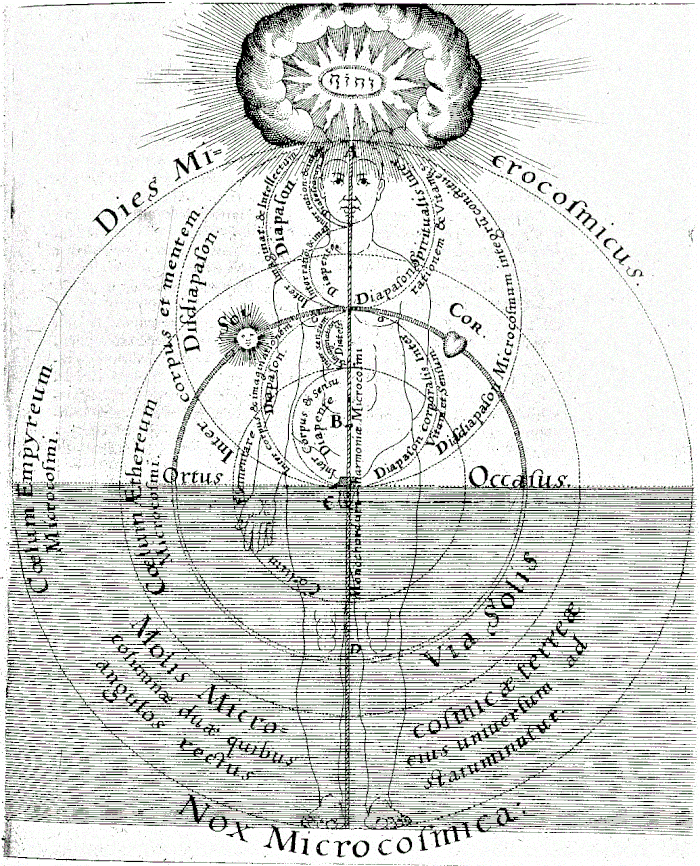
Robert Fludd: The cosmic macrocosm within the body microcosm 

Several cultures at different times in history have come to a conclusion, that there is an analogy between the human body and the structure of the cosmos. In European traditions the head is analogous to the coelum empyreum or highest heaven which was supposed to be occupied by the element of fire. The chest to the coelum aethereum which is occupied by the planets and wherein the heart is analogous to the sun and the abdomen to the coelum elementare; the legs to the dark earthy mass (molis terreæ) which supports this universe. The nice thing about drawings is that they can at the same time be illustrations and diagrams, therefore they can hold two positions at once. You can focus for example on the shape and form of the human body and think about how it stands in relation to the surface it is depicted upon. On the other hand you can switch your attention to a diagram of the cosmos. The scale of one being totally at odds with the scale of the other, and yet even so, in your minds eye you can reconcile the two ideas and hold them together, because analogy stems from finding a likeness and this likeness forms a powerful and meaningful connection. 
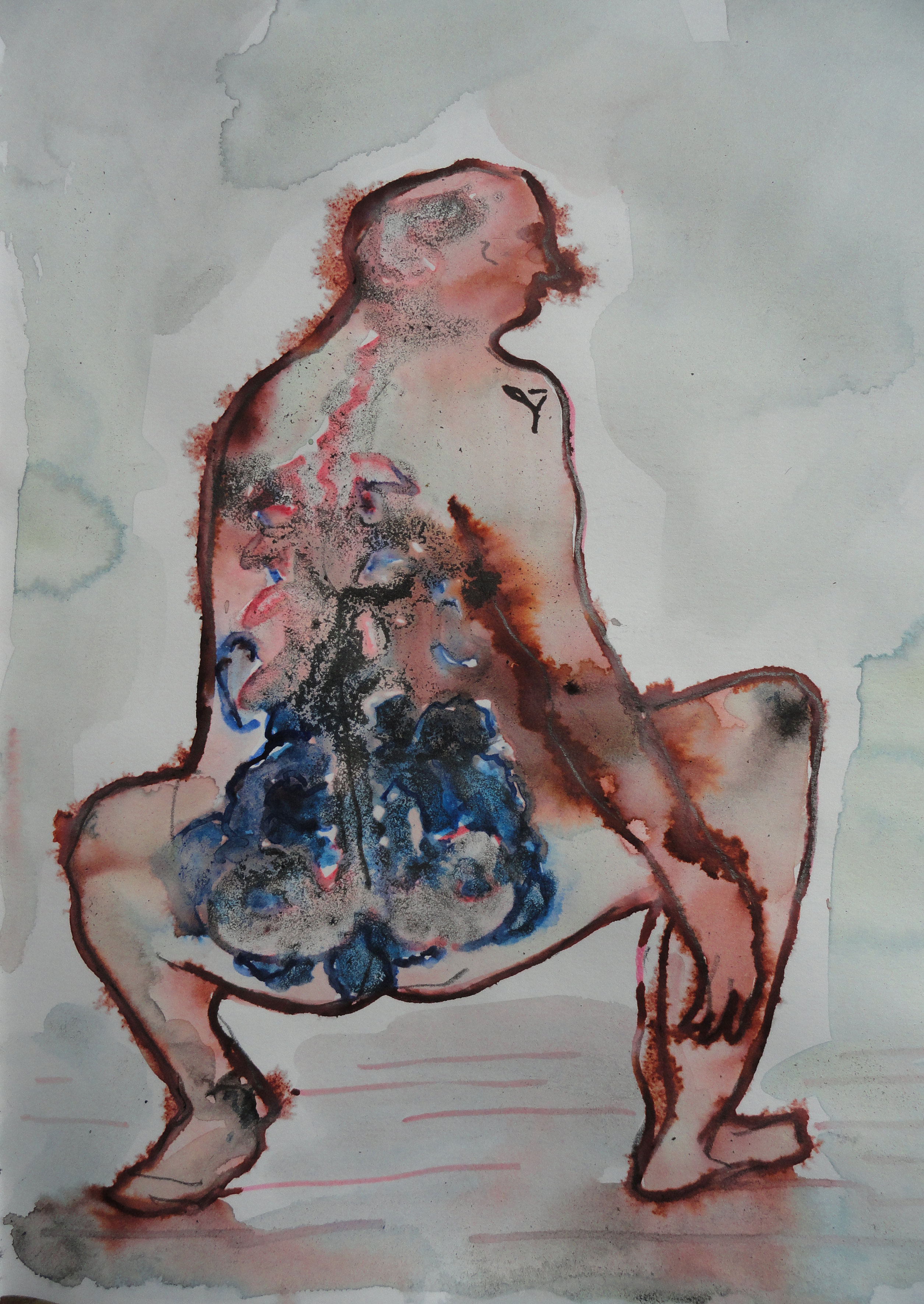
I have been trying to combine some of my images based on interoceptual experiences, with those made from observation, so have returned to life drawing, but with a different intent, trying to imagine feelings of interiors at the same time as seeing an exterior form. 


Perceiving insides and outsides at the same time.

I've also been reading two texts at the same time, as an attempt to support a more holistic understanding of what I'm trying to get at. One is exploring the 'molecules of emotion', an examination of how for instance neuropeptides are secreted by immune system cells, demonstrating therefore that communication with the brain and stomach is via a network and is not one way. The peptides integrate the immune system, (spleen, bone marrow, lymph nodes and white blood cells), with for example areas of the skin, in order for the body to react when we are wounded. In the defence of the realm, (the body) good communications are therefore maintained, and as with all communication networks, you can use communication theory to help think about what is going on. 

Internal and external flows of information

An act of communication is the transferring of information from one thing to another thing. Every communication involves (at least) a sender, a message and a recipient, or a starting point, a movement between and an end point.  Communication includes the medium used to communicate and the location of the communication. There are several communication theories that are available to help us understand how and why a system might work, and each theoretical lens allows us to think about the effects of the communication in slightly different ways. See this Handout that describes the main communication theories, the cybernetic transmission theory being the one that most clearly fits this situation, but other theories that stress the very human nature of communication can also be used. 


Chinese representations of the trunk and its organs (c.13th century)

The other text is a history of Chinese medicine and it explores the mythic relationship between the human body and the cosmos, and it focuses on ways of thinking that were developed over 2,000 years ago. I am revisiting this text because it allows me to think visually about the body as an image that can hold an inner and outer reality together and at the same time conjoin two vastly different scales, the size of a body and the size of the universe. The images above are entitled  'neijing tu' a term that translates as 'internal view, inner landscape, inscape' and as images they were intended for people who practised the inward visualisation of the internal organs. The images in their original form, were accompanied by a text about inward contemplation. 

The Neijing Tu

The Neijing tu depicts a human body as a microcosm of nature; an "inner landscape" with mountains, rivers, paths, forests, and stars. 

An interoceptual landscape

Exploring how various scales as well as interior and external narratives can be conjoined

In my visual research, I've been looking at how some things that we think of as beginning with perceptual external experiences, eventually become physical, inner body realities, such as an experience that becomes embodied as a chemically induced feeling. For instance I was knocked down by a car before Christmas and since then, every time I need to cross a road, I have a heightened sense of anxiety and I feel this within my stomach. 

The body scan

I was taken to hospital and had to have a full body scan and the whole experience left me with an embodied set of feelings that are now part of me. I have had a steep learning experience and as I therefore approach a road to cross it, my body issues a chemical warning and in order to do this, my body is secreting extra neurotransmitters such as epinephrine and norepinephrine. This has led me to develop a series of drawings centred on images of whirlpools, in particular tales of the Moskstraumen or Moske-stroom that sits adjacent to the Lofoten Islands off the Norwegian coast. As a teenager I had read 'A Descent Into The Maelstrom' by Edgar Allan Poe and this illustrated imaginary experience, even though 60 years ago, is also an embodied memory, something that still causes me to have a slight anxiety, especially when I bring to mind Poe's written description, alongside Harry Clarke's illustration. Going into the scanner, felt as if it was something akin to entering a whirlpool. My body scan print above, structurally echoing the idea of being sucked into a vortex. 

Harry Clarke: Illustration to 'A Descent Into The Maelstrom' 1919

I was also reminded of an idea I had some time ago of a decent into the gut, where I drew the slide down a throat and the journey into the intestines; a place where bits of old food floated about; visualised as a sort of Jonah and the Whale or Geppetto and Pinocchio inside the whale story. The nearest I had come to actually using this idea though in the past was as an illustration for the Nest story. 

Kay Nielsen: Inside Monstro the Whale: Pinocchio (1940)

From: Nest

This is how Edgar Allen Poe described the situation; 'Our first slide into the abyss itself, from the belt of foam above, had carried us a great distance down the slope; but our farther descent was by no means proportionate. Round and round we swept—not with any uniform movement—but in dizzying swings and jerks, that sent us sometimes only a few hundred yards—sometimes nearly the complete circuit of the whirl. Our progress downward, at each revolution, was slow, but very perceptible. Looking about me upon the wide waste of liquid ebony on which we were thus borne, I perceived that our boat was not the only object in the embrace of the whirl. Both above and below us were visible fragments of vessels, large masses of building timber and trunks of trees, with many smaller articles, such as pieces of house furniture, broken boxes, barrels and staves.' E A Poe

This for myself is proof of art's ability of affect us deeply and that various threads of experience (both of external realities and the imagination) can be woven together in ways, that even though they don't seem logical, can still be effective. 


Pages from sketchbooks

So perhaps I need to further integrate a narrative that has been floating around this new body of work. It began several years ago when I was making images in response to a story told to me while I was drawing blocks of flats in Leeds. At the time I made an animation of a boat at sea, the boat hit troubled waters and eventually sank, re-emerging in calmer waters only to fall prey to the same storm, over and over again. Other static drawings also included tiny boats, filled with tiny people, always engaged in some sort of tragic event. This boat has returned to my image bank, very much in response to the government cry of 'Stop the Boats'. I inwardly shudder as I think of the harsh trials that people have had to survive to get as far as the English Channel, only to find at the last hurdle, one more virtually insurmountable hurdle, the toxic myth of migration and immigration. The boats are now being sucked down by maelstroms, but these maelstroms are also digestive tracts, as if by setting out to legislate against these people, we in effect try to swallow them whole, we are now the monsters that swallow the boats. 

This is also a sign of our collective health. We treat immigration as if it is some sort of infection. However if we are to collectively heal ourselves, we will need to be far more in tune with the environment and focus on issues such as pollution and global warming, two of the very things that cause populations to destabilise. The Earth warms and fishing grounds become sterile, crops die because of drought and it becomes just too hot to live where you are. When it gets too hot to live, you need to move and as you do you come across artificial boundaries, invisible lines that were drawn across maps at some time, often in the 19th century by Europeans; lines that never took into account the invisible reality of the industrial revolution and its dire consequences for the planet.

The Chinese system saw the human body as a model of the cosmos and the cosmos as a model for the human body. A new cosmic model would include all of our recent tragedies, and would embrace polluted rivers as models of the body's blood flow, but now including micro plastics and chemicals found in our food, due to over investment in pesticides. Gut bacteria would be faced with strange foods that are blighted with antibiotics, preservatives and high levels of artificial sugars, the gut in turn becoming an embodied model for the Earth itself. 

The body's cells have long memories, these memories determine strange things, such as the fact that during the early development of the spinal chord, the heart is at one point above the head. Cells are programmed to divide and undertake various types of metamorphosis as they evolve into the forms that will be needed to maintain the particular life type they have an encoded DNA for. But tiny changes in the environment can affect their programming. 

So what am I getting at here? Can communication theory deal with how a cell communicates with other cells? Is noise or interference an issue? What would this be in the life of a body cell? Does the body inhabit a form of rhetoric? Is it all just about energy flow? Is the relationship between the scale of a cell and the human body, similar to the scale of a human body shown in relation to the scale of the solar system?

There is a story here, a tale of two selves, one a body and another of a mind, fused together and in the flux of fusion something else is glimpsed; a spirit, a vital charge, soul or just life itself. 

The glimpse

Always new images to find, and as the search goes on, a trail of not quite there ones are left, which when put together perhaps reveal something else, how the visual embodied mind seeks stories that speak differently to the verbal one. The Greek poet Nikos Kazantzakis once stated, "The universe is warm, beloved, familiar and it smells like my own body". 

The human universe

See also:

Drawing using analogue and digital processes: A reflection on the visualisation of interoception