Showing posts with label William Kentridge. Show all posts

Thursday, 13 December 2018

William Kentridge in Manchester


I went to see the William Kentridge exhibition, 'Thick Time' over at the Whitworth Gallery in Manchester last week. Every time I go to see a Kentridge exhibition I find something new to think about and something else for me as an artist to aspire to. There are very few artists that I can revisit over and over again and still find myself engaged and thinking about how my awareness of the world changes as I look at it through his lens. This is not to say that his work is great or profound, just that the way he struggles to put together narratives about his own experiences of the world seems to chime in some way with my own. I'm older than he is, but only by five years, so my upbringing, although far away in the English Black Country, was in some ways similar. He was though from a very intellectual and well connected family; Clement Greenberg came to tea at Kentridge's family home when William was a young man, and I think it probably took some courage to not be directly influenced by Greenberg's powerful modernist doctrine. I had to reject Greenberg's ideas as anti-working class via a different route, but both of us needed to find a way of saying things about the world by using metaphor. Art for a long time seemed to reject narrative and analogy. These were things I always wanted art to include, but I spent many years having to fight for some sort of acceptance that what I was doing was ok, that it could be seen as legitimate fine art practice. Even now, I sometimes get accused of being too illustrational, but it doesn't worry me any more, I just get on with what I do. 


From 'Thick Time'

Kentridge uses metaphor in a layered way and this time I made sure I sat in with his animated installations long enough to see them through and to get an idea of what they were like if you moved into different positions to listen to them as well as watch them unfold. In doing this you get a better idea of the correspondence between the processes of his making and processes we find in the world itself. He has said himself that drawing is analogous to thought, and that for him, "the activity of drawing is a way of trying to understand who we are and how we operate in the world". More recently his drawing concerns have moved on from being a type of thinking, (epistemological research) to becoming much more about a state of being, about worlds that are places to inhabit, as well as a process out of which worlds arrive. (Ontological investigations). He has also commented that we "actively construct our world as we go through it", something that is also  what we do when we draw. 


Thick time

The processes that Kentridge uses such as animation or printmaking are also metaphoric; animation moves through time and therefore appears to Kentridge as a medium ideally suited to dealing with history. Printmaking pushes information from loaded plates onto paper proofs, the press squeezing the ink into the papers operating as some sort of 'proving' process as well as 'proofing' process. The texts about his practice, all state that Kentridge is working through his South African trauma. I'm not sure what I'm working through, perhaps it's the British post industrial and post colonial loss of identity and the realisation of what it is to live in a multicultural society in a time of global warming. Or perhaps it's just that I have dreams and need to get them out of my head. When I make animations I'm not using them like Kentridge as metaphors for historical change, I'm trying to deal with change as a process that simply unfolds as part of the everyday, as well as realising that so much of what we do is repetition, this is why I try and make my animations looped. 


A dog with eyes on its body

This dog was the first animation I ever made, I know it's really basic, but the fact that the dog keeps running, keeps trying to get to the edge of the frame, but never quite gets there, was what fascinated me and this was what I decided was the deeper metaphor for myself, not an ever changing history but a sense of Sisyphean activity endlessly repeated. 

Neither man nor bird

In this case I tried to draw an animated image whereby man's aspirations, in this case to be able to fly, prevents the bird from taking its natural course. By one trying to catch or control the other, neither is able to do what they need to. The man endlessly stuck trying to hold on to the bird, hoping it will lift him off the ground, the bird struggling to fly, but being held down by the weight of the man. It's very crude, and I learnt this crudity from Kentridge, it seemed to me to be the only way to avoid having my work being compared to the sophistication of modern CGI animation techniques. This image is simply an animation made of a very quickly put down set of drawings, executed on several sheets of A4 tracing paper, with a dip in pen and a little ink wash. As the washes were added the paper crinkled up, and it is this crinkling that makes the background tonal changes. The drawings were not even laid on top of each other to ensure a smooth transition from one frame to the next, I just drew them in a line, one after the other. At the time of drawing this image I felt that the rough stupidity of human actions could not be over estimated and I haven't changed my mind. Kentridge's images are less pessimistic than my own and he has a sense of history leading towards a better life, something I'm not so sure about. Showing alongside the Kentridge at the Whitworth was another wonderful exhibition of Goya and Hogarth prints. Both artists were grim chroniclers of human folly and I see no reason to disagree with their take on things, we still repeat the same mistakes and I'm sure both Goya and Hogarth would recognise the base elements of greed, xenophobia and hatred that continue to exist, even when economic conditions are such that so many more of us now exist above the poverty line. 

Goya

Hogarth

If you can, do go to the Whitworth to see this. Kentridge has used several different ways of installing video projections as well as using sound to add emphasis to his narratives. He also has large textiles and cabinets of drawings on display, so there are various ways of dealing with presentation for those of you interested in moving image and sound art, as well as excellent work using more traditional formats. 

William Kentridge: tapestry


See also:


Wednesday, 4 July 2018

Shadows and the magic of transformation

Lotte Reiniger

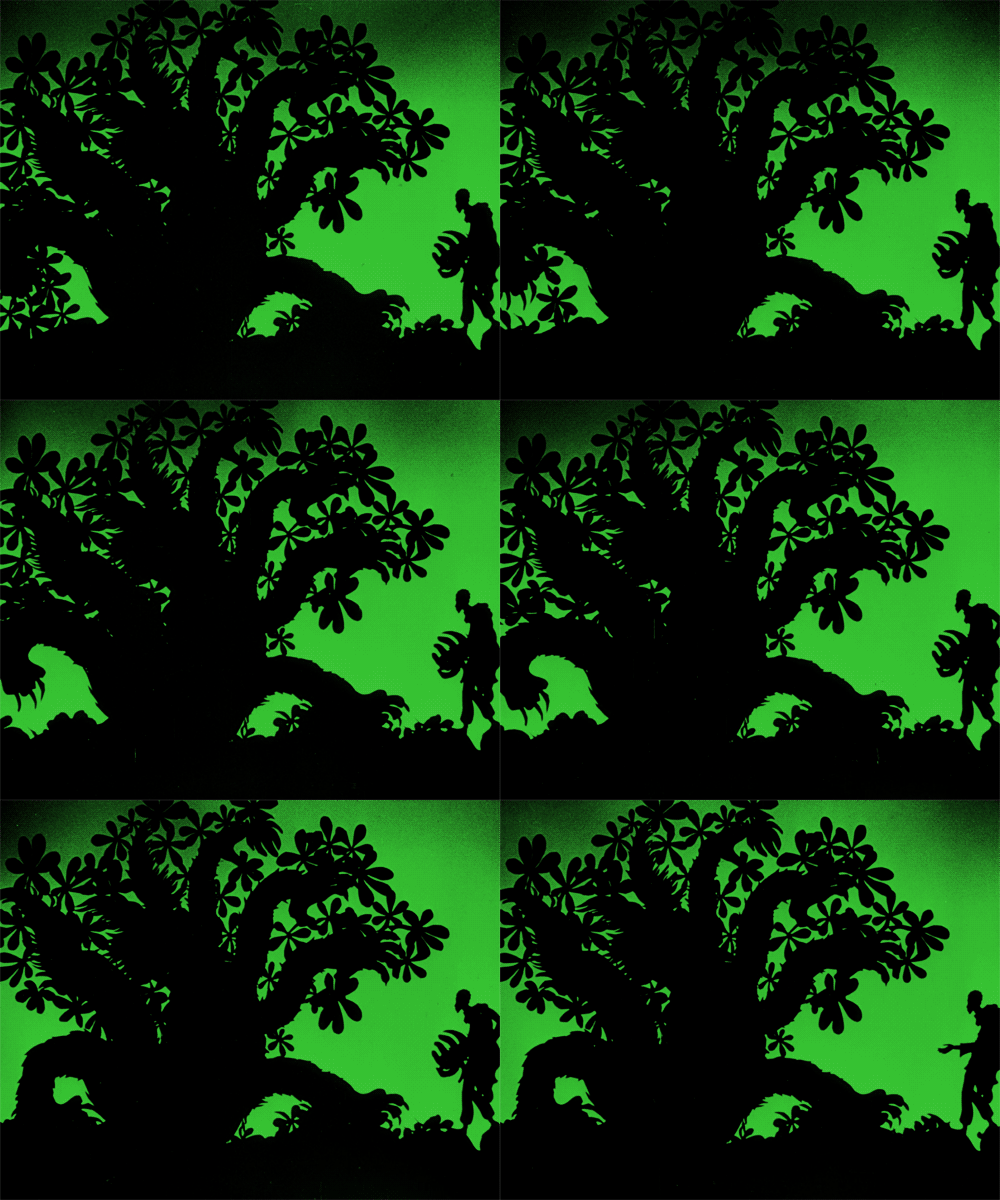
It was Lotte Reiniger that invented many of the techniques that we associate with 20th century animation, her ground breaking innovative techniques were instrumental to the development of Walt Disney's technical innovations. In working with articulated cut black paper stencils she carried on a tradition of shadow play that had existed for thousands of years.


Lotte Reiniger: The Adventures of Prince Achmed (1926)
More of Lotte Reiniger's work

The shadow is one of the most elemental ways to make images and it does not require any technology at all. 


In the image above of a woman and child you have the core of the mystery of the shadow. Two human beings stand watching an image of themselves that is not themselves but is intimately connected to themselves. If the humans move their arms their shadows will move their arms. But the shadows are not them, so what are they? 


Everything that stands in the sun casts a shadow. Because the shadow reduces everything to flat shapes and it can't differentiate between the things that cast the shadows, new forms are made that are often unexpected. These tree branches can begin to look like people and the shadows of people can begin to look like trees. When two different things cast a combined shadow their differences are eliminated in the new form. 

Tim Noble and Sue Webster

Probably the most well known of contemporary artists using the elimination of difference effect are Tim Noble and Sue Webster, the pile of rusty junk has been carefully arranged so that it casts a shadow of copulating rats. Who hasn't at some point in their childhood not spent hours making shadow animals with their hands.


These hand shadows I would argue were probably the first images made by human beings. Once you have seen your shadow and understood that you can manipulate it simply by moving your body you are bound to begin exploring the possibilities. 
As well as being a very simple way to make an image, a shadow has something elemental about it. It has a direct relationship with the sun, it is cast from something else, so bears a direct relationship between the thing that cast the shadow. This intimate relationship is something very powerful and we have many folk tales concerning the problems of dealing with this relationship. For instance Hans Christian Andersen's 'The Shadow' tell the story of a man separated from his shadow. The shadow lives a much darker life and then years later when the man meets back up with his shadow, the dark nature of its exploits lead to the man's demise. The shadow is often associated with ideas of the soul and in early animist societies was thought of as a separate entity and would be addressed as such. Georges Schwizgebel's 'The Man with no shadow' is a more contemporary take on these ideas. 

The Man with no shadow: Georges Schwizgebel

I have tried to deal with the concept several times myself and will no doubt do so again, because I do believe shadows have a deep and significant resonance in relation to the way I think about images coming into being. (See Avark: A Fable)

William Kentridge

I can't escape the influence of William Kentridge when thinking about these issues and I have mentioned him several times before and make no apologies for doing so again. He is I think a very significant artist who is producing work that will stand the test of time. Even so, I'm sure he will himself have acknowledged the pioneering work of Lotte Reiniger and much older traditions.
The other aspect of shadow play that is important is that it is usually accompanied by sound. Music and spoken narratives are vital to the communication of complex stories. 

Wayang Puppet theatre

The Wayang puppet tradition is over a 1,000 years old. Sophisticated moral and philosophical values were transmitted via Wayang shadow stories and the artists involved in their presentation were highly valued in the royal courts of Java and Bali. 
A more contemporary version of this long history is the work of Matthew Robins, who has presented his work at the Tate Gallery as well as touring the country. I saw his 'Flyboy' narrative when he passed through Leeds a few years ago and really enjoyed it. 


Matthew Robins

 Such simple and direct ways of making images can seem outdated, especially in an age of CGI and other sophisticated modern imaging technologies. However there is something of the universal in these processes; dark and light in opposition, images made from the same stuff that has been around forever seem very suited to carrying certain elemental messages. Shadows were made as soon as suns began to emit their light rays and something else gets in the way of them. The moon casts it shadow across the Earth when it gets between us and the sun. There is nothing so grand and magnificent as an eclipse, so why not operate as if working with shadows is participating in a tiny aspect of that universal narrative. 

Coda

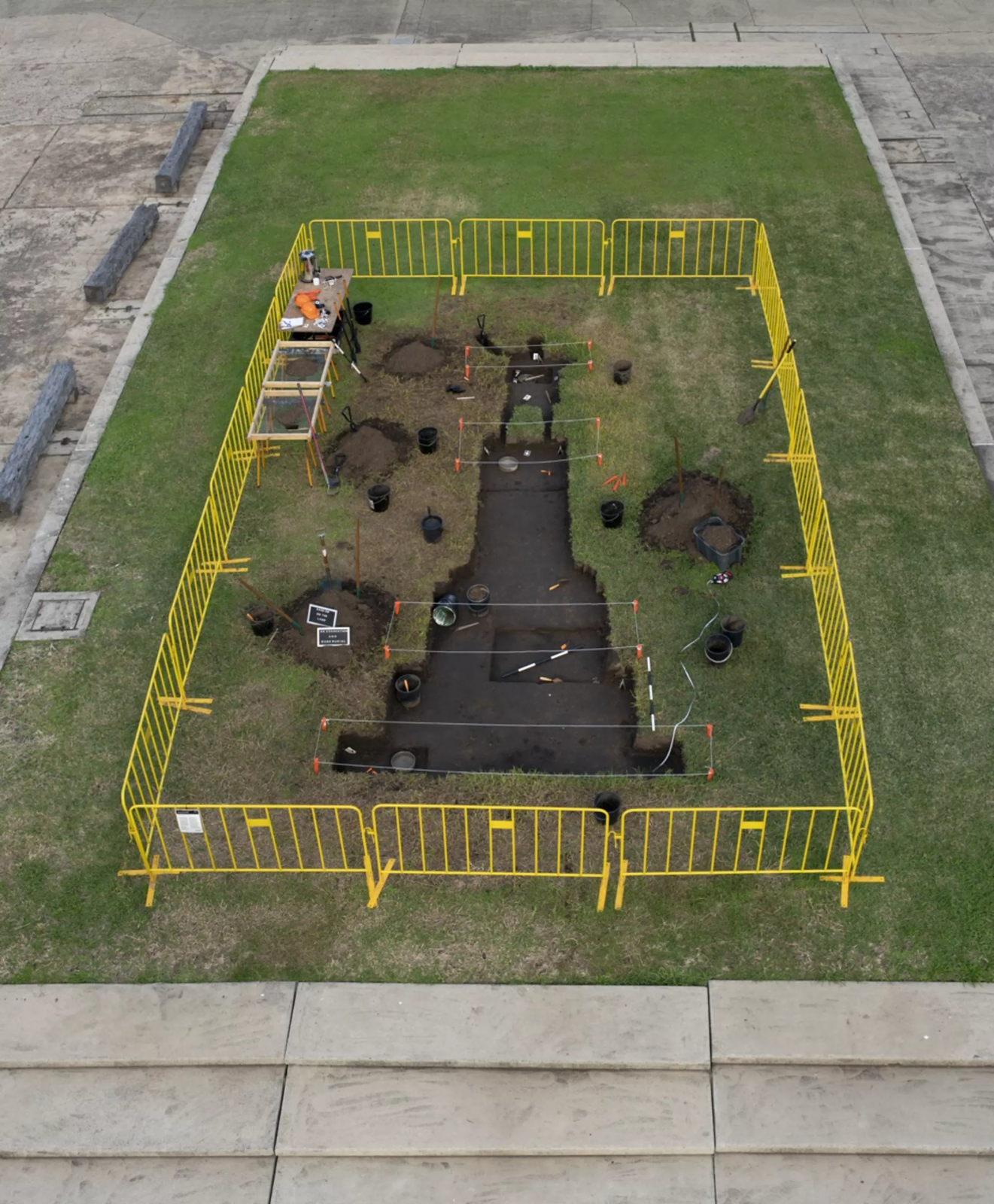
There are of course metaphysical aspects to the shadow. History can cast a long shadow over the present. Nicholas Galanin's installation 'Shadow on the Land, an excavation and bush burial, 2020, at the 22nd Biennale of Sydney, points out how the old public art monuments of western culture, cast a long shadow over the people's that western culture in effect blotted out or made invisible. His 'Bush Burial' is cut into a grass lawn, another product of western culture, a way of treating vegetation that is totally alien to the Australian bush. 

Nicholas Galanin: 'Shadow on the Land, an excavation and bush burial'

In horror movies you usually see a shadow of the monster long before it reveals itself, in this case the monster has often been standing in plain site and on a plinth. 

See also these related posts:

Articulated collage and shadow play
The vignette
William Kentridge in Berlin
William Kentridge in Rome
The world is drawing itself
Tone and emotional value
Venice biennale a continuing tradition
A short review of Matthew Robins' Flyboy

Wednesday, 9 November 2016

Fine Art animation now


The Oriel Davies Gallery in Cardiff has been hosting a series of exhibitions and events to celebrate contemporary animation as being at the forefront of artistic and creative innovation. The gallery is showcasing a wide range of approaches to what is essentially moving drawing and after coming back from Berlin after seeing the large William Kentridge exhibition, I do feel that animation is one of today's key areas of drawing practice. Parts & Labour, which is part of Move It, explores animation as something that is ‘made’ – whether physically, digitally, or both. The introduction of the animated gif allows any simple set of images to be inserted into places where previously you would have put a still photographic image. Gifs allow you to use very little computer memory to animate a series of stills, this means you can drop these animations into a wide range of other programs. This trick when working with them is to think about circular visual narratives.


Dave Peel: Ice-cream


Dave Peel is an ex LCA student who went to Goldsmiths and he is making some very interesting animated gifs.

Dave Peel: animated gif

What Dave is doing is tapping into a very different aesthetic to the one we normally associate with drawing. His work is really an extension of collage, everything now of course generated directly on a computer, scissors and cut paper, now a distant ancestor. 

Of course you don't need new technology to make animation work. William Kentridge is a wonderful example of an artist using traditional drawing techniques to create animations. 


William Kentridge

Francis Alys has used traditional animation techniques to reflect on the interrelationships between rich and poor in modern city life. 

Francis Alys

Len Lye


There is a long history of fine artists using animation to get their ideas across, perhaps the most well known early pioneer was Len Lye. 


Mark Leckey

Mark Leckey was a recent Turner Prize winner with 'Made in heaven' a 3D animated recreation of a work by Jeff Koons.  Leckey uses his own room as a background for the animation, suggesting that the public profile of this very famous and very expensive work has been made very private, but then of course it is sent back out into public exhibition again. The work suggests that nothing is actually private, the reflective surfaces of Koons work perhaps acting as some sort of surveillance, in this case giving us 360 degree views of Leckey's flat.  

Some other artists using a range of animation techniques that you might find interesting.

Inger Lise Hansen House An animation of still images, exploring the breakdown of a house.

David Theobald Walking Holiday inGrindewald, An interesting take on the relationship between still life and landscape imagery, plus a range of his approaches to different genres and stereotypes.

Jordan Baseman Nasty Piece of Stuff, a speeded up photomontage, expressing the speed and energy of the city.

Katie Goodwin In Between Inception Animated images made from cuttings made from waste found footage from the 'cutting room floor' of Christopher Nolan's ‘Inception’. A more conceptual piece that references abstract animation and the process of film making itself.

Chris Shepherd World Stare OutCompetition, A drawn animation playing with the conventions of the genre. In this case the lack of animation reflects the fact that the protagonists are meant to remain still.

Lois Rowe and Patrick Rowan Filter, A montage and complex cutting sequence that reflects upon the repetitive nature of factory work in Asia.

Tadasu Takamine God Bless America, Traditional ‘claymation’ animation techniques laid over live footage to create a disorientated, disjointed commentary on the US.

James Lowne Our Relationships WillBecome Radiant, A meditation on nature using crude 3D animation techniques.

Jan Švankmajer is always worth looking at. Faust, Alice, Flora, and Food.

And everyone should be aware of the Quay Brothers. Švankmajer and the Quay Brothers carry on the Surrealist tradition into animation.
The easy accessibility and use of 3D modelling software and other computer based tools means that more and more artists are turning to this area to output their work and as drawing students working in the 21st century, you ought to consider the possibilities this area of work offers. 

Perhaps the real issue about using animation is the fact that the images move. We are hard wired to take an interest in movement, just watch how a very young baby can be captivated by an animation sequence. I have used very basic animation techniques myself to make animated gifs, and these have allowed me to deal with condensed allegorical narratives, in this case the stupidity of shifting your own mess onto others, they will just throw it straight back at you.


The boundaries between different types of practice are constantly shifting and Rachel Goodyear, an artist who made her reputation through drawing is now working in animation and performance. See:  
Goodyear uses animation in a variety of ways, sometimes she puts her work into photoframes as in Girl with a bird in her mouth, and at other times she uses back projection.


Rachael Goodyear: Dancing Devils (Back projection)

Animation is not just about how to animate, it is also about the physical presence of the work in the space where it is encountered. It may be projected, on screen, sent to mobile phones, seen on a bank of monitors inserted into an installation or inserted into a cinema pre-main feature slot. Whatever the realisation, it will be as important to test this out as it would be to test out the qualities of the animation itself.

See also:

Earlier post on drawing and film.

Video games as an art form

Computer animation

http://www.moveit.org.uk

http://www.animateprojects.org/films/by_date/2016/pig

https://hinemizushima.com/video-lake-monsters-music-by-they-might-be-giants


Friday, 5 August 2016

William Kentridge in Berlin

William Kentridge: Charcoal and ink on paper with traces of red pencil

I was over in Berlin this last week and had a chance to go and see the William Kentridge exhibition at Martin-Gropius-Bau; ‘No it is!’. Kentridge has long been an interest of mine as he covers a wide range of approaches to making drawn visual narratives and is not afraid to reflect on the political realities of his homeland and the contemporary fraught world of global capital and the anxieties it creates. His work can also be read allegorically and seeks to distil personal feelings into works that strive to achieve mythic stature.
This was a comprehensive examination of his animation work as well as his filmed performative pieces. Alongside this focus on moving image were also two galleries devoted to drawings, prints and models.
By working between disciplines he is able to extend his narratives and to open them out into much wider contexts. He has been able to work with composers, dancers, actors, as well as engineers and technicians to develop immersive environments composed of several projections and/or objects and moving constructions.

Models

Always drawing led, he has developed a comprehensive catalogue of characters, objects and landscapes that can be used as images in their own right, as models and sculptures that can be used as props and to create shadow plays, or within animations and performances where they are brought into ever changing relationships with each other, that allow original stories or implied associations to become renewed and opened out into new emerging narratives. Every time I get to see a Kentridge exhibition it seems as if he has added another element to his repertoire, this time working with musicians to compose scores that add emotional depth to the filmic experience. He was also layering his projection work much more, using animated drawings for backgrounds and a mixture of live footage and shadow play to develop his themes. 

From: 'More Sweetly Play the Dance’

In ‘More Sweetly Play the Dance’, by using the device of a procession he was able to let all his characters parade in front of the audience. This 40-foot ‘frieze’ film of slowly progressing shadowy figures walking to a haunting tune played by a brass brand, is a sort of dance macabre that includes skeletons, people pulled along on platforms, dancers, people on medical drips, in cages and a walking pair of dividers. People might be fleeing their homes or escaping hunger, floods, poverty or war, they are from everywhere and anywhere, their dark forms moving through a raw stripped down landscape of and from any-when.  


On the 21st of September William Kentridge comes to the Whitechapel Gallery in London for the exhibition ‘Thick Time’. The exhibition will be composed of 6 large-scale installations; I am really looking forward to being able to see more of his work and if you didn’t see his major show at Marion Goodman, or haven’t been able to get to Berlin recently, then I do recommend you getting down to London before the 15th of January 2017 when it ends.

Still from a Kentridge animation