Showing posts with label shadows. Show all posts

Thursday, 22 December 2022

Thinking with articulated body parts


William Kentridge

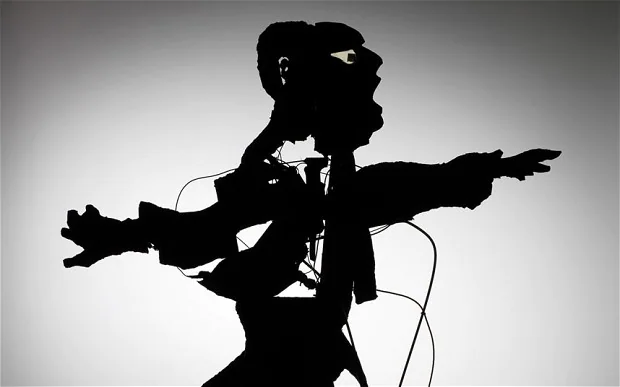
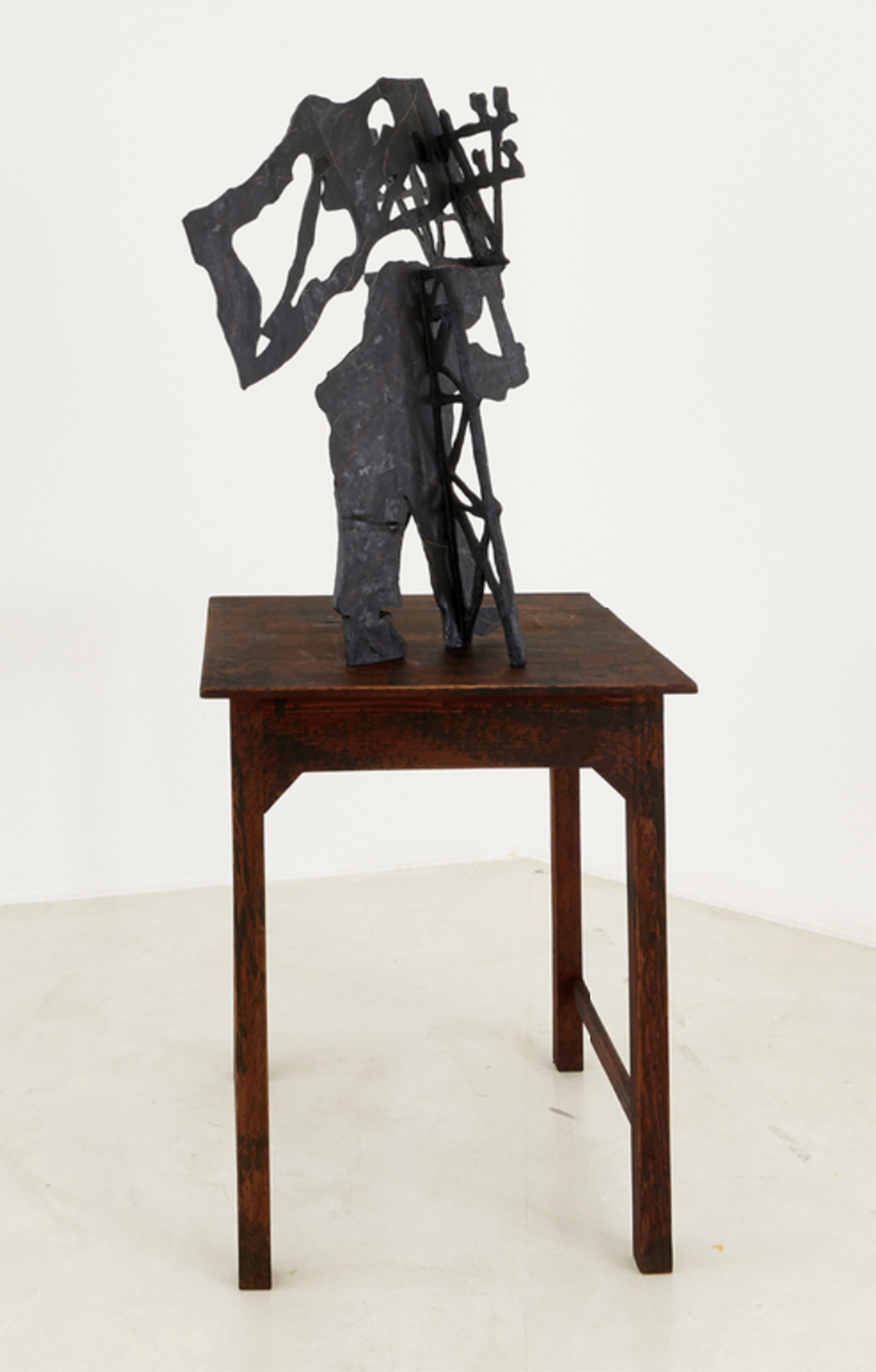
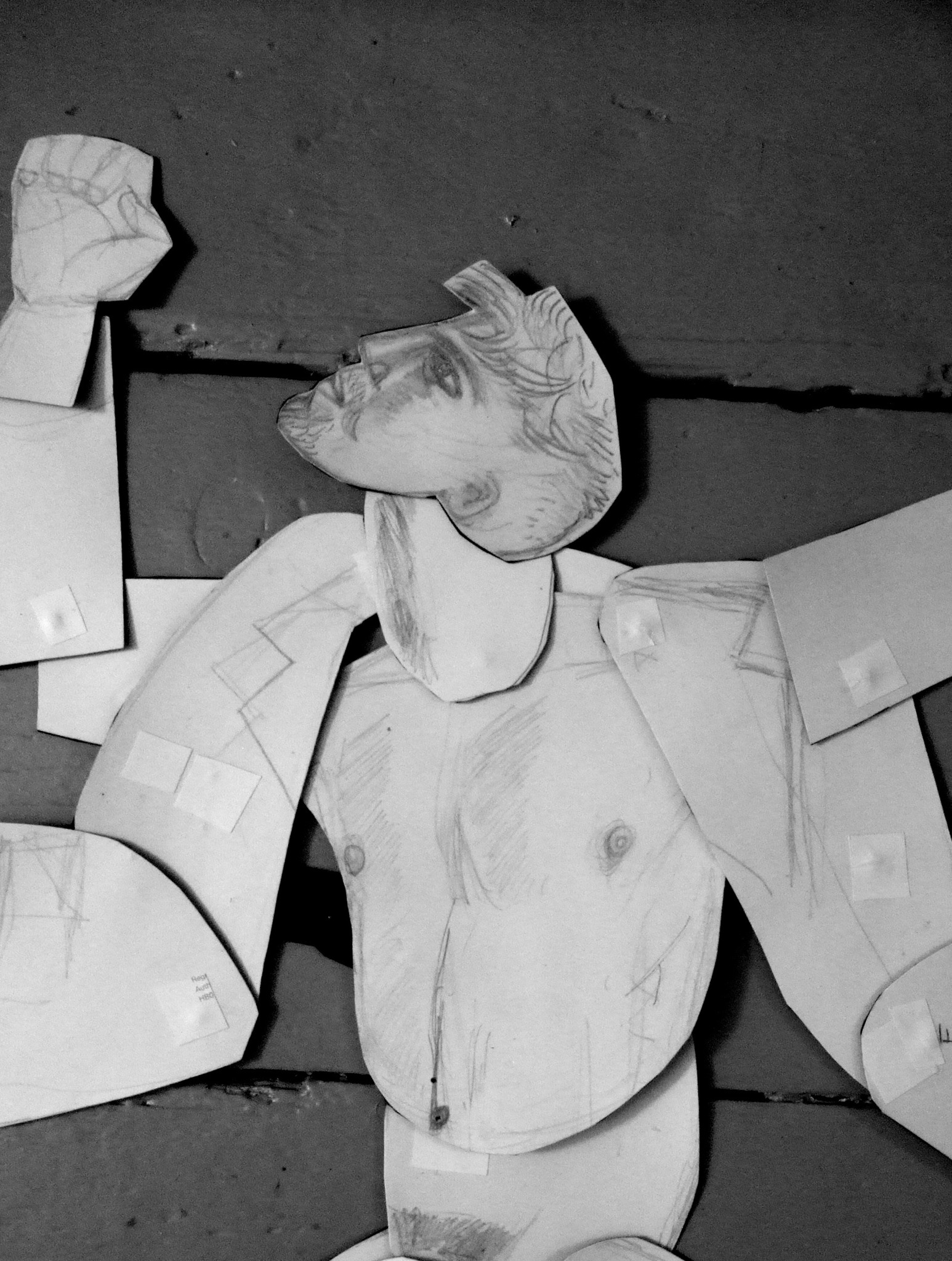
The William Kentridge exhibition that has just finished at the Royal Academy provided us with a wonderful example of an artist working across genres and being inventive in a wide variety of ways. One of the tools he uses when inventing compositions and movements for both human and animal subjects is to make cut out forms that can then be fixed to each other using simple joints. I love this articulated thinking, and have used it myself, both as something totally two dimensional and as a way to think about linking more three dimensional forms together. 

Making articulated figures is a very old way of working and Kentridge isn't the only artist who still uses this technique, Clive Hicks-Jenkins also uses it productively. 


In the image above you can see the various cut out body parts and their associated clothing being assembled. This is not about cutting out complicated forms, in fact the simpler the better, you do though need to have an idea of how joints will be made and where to place them. I use split pin butterfly clips to make my own jointed figures, but have also used paper clips, wire and string. 

Split pin butterfly clips

You can of course simply stitch a joint using thread, use a small piece of twisted wire, anything that allows you to make a joint. Once you begin working like this you can be very playful, perhaps you might make a short animated film of the movement possibilities. 
Don't forget overall image effect. Because you are cutting out shapes you tend to be much simpler or bolder in your thinking; the forms that make up a figure therefore become much clearer. We all have an unfortunate tendency to get trapped into details and this really does help to avoid this. When you begin to make any drawing or textural indications within these shapes it is therefore useful to maintain a simple but clear way of visual thinking. Look at the trousers in the figure below.


The movement of cloth and associated folds in the trousers has been reduced to a few bold marks, this allows for the trouser forms to sit comfortably within the dynamic of the overall composition of arms and legs and body parts; i. e. they are integrated into the gestalt of the whole image. 


You can see this process developing as the image evolves. The simple forms of a cut out coat are integrated into the totality by another set of marks that suggest both the edges of the coat's collar and the play of shadow across creased fabric. The problem would be if you tried to give the fabric a realistic finish, it would not sit well within the simple forms of a cut out. 

Simplified drawing on head and hands and torso, kept visually separate by simply changing colour

Clive Hicks-Jenkins 

Clive states that he begins with a maquette, starting with a paper template and working his way to a fully rendered figure. Once he has the figure made he can play and try out compositional experimentation. He takes photographs and makes sketches as he makes these changes, something that as students you all need to do, so that you can visually explain the processes that lie behind your decision making. Finally for Clive a drawing takes shape, and then in his case often a painting begins. The result will often be quite different to what he had in mind when he started out, as he points out, these things take their own directions. They are what they are. However, as they begin as flat, articulated figures, something of that origin has to remain in the final work.

Clive Hicks-Jenkins 

If you look closely at Clive's articulated cut out wolf, the language of animal hair comes from the same visual language set as folds in clothing. It is simple and bold enough to sit against the cut out shapes that make up the creature. 

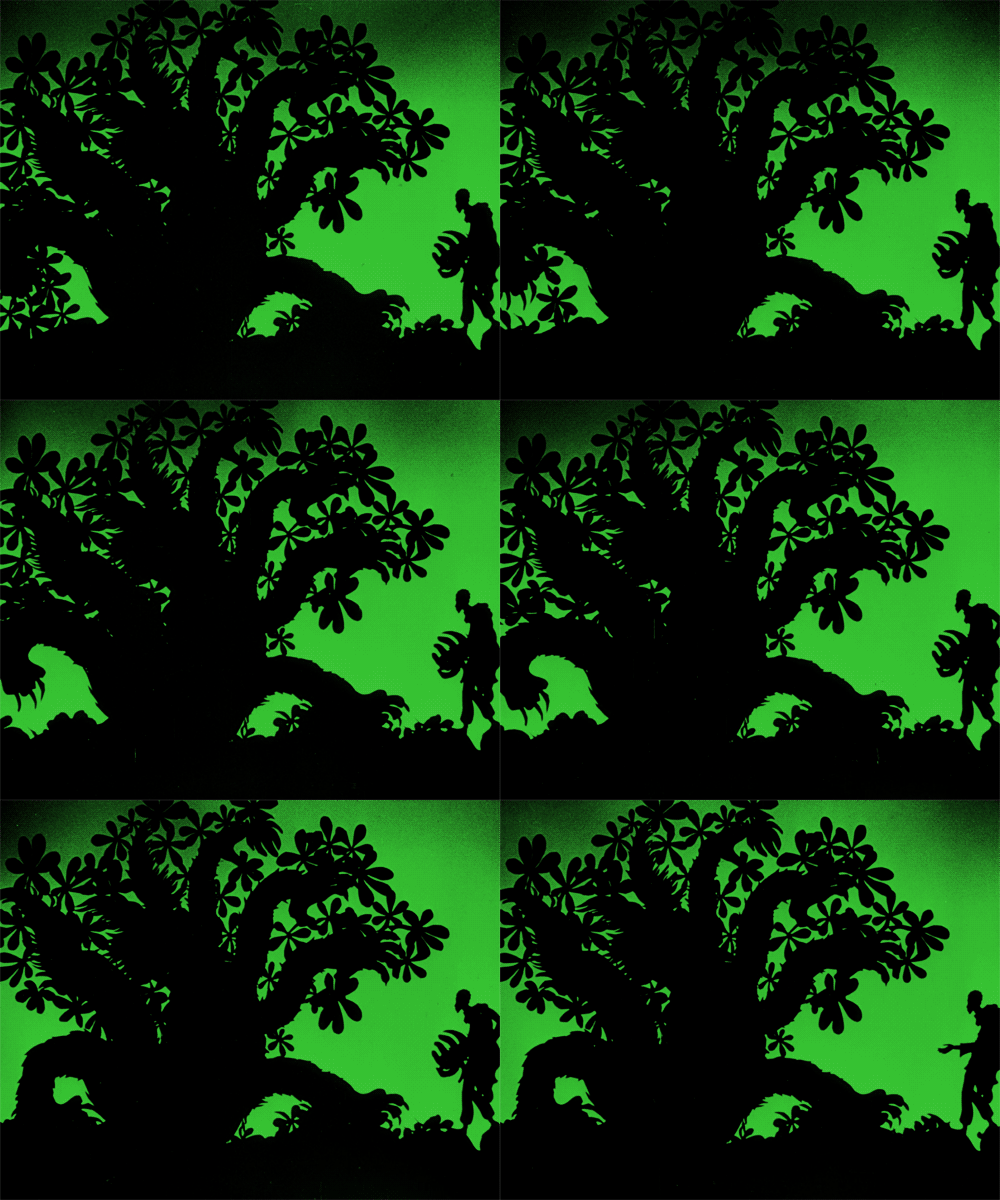
This way of working was sometimes used by early animators, my own favourite being Lotte Reiniger.

Lotte Reiniger.

You can see 
Lotte Reiniger's influence on William Kentridge, his own animations owing much to her sophisticated shadow play and of course all of these artists owe a debt to historical folk traditions such as Chinese and Indonesian shadow puppetry. 

Indonesian shadow puppetry

I'm very aware that several students have asked me about portraiture and this approach can be a very interesting way to break out of old habits in terms of facial depiction and composition. 
Tim Hawkinson. Emoter

I have posted on Tim Hawkinson's Emoter  a while ago and I think it is still worthwhile looking at his approach but this time in terms of portraiture. He breaks a face down into units, just as the body can itself be broken down. He uses blown up photographs of his own face to do this, so the type of simplification that drawing can produce isn't available to him, but the implications are still there. You could build a face in the same way that a body is constructed. 


Muscle structure of the face

Face mask with articulated jaw "elu" ("spirit") Nigeria, Ogoni

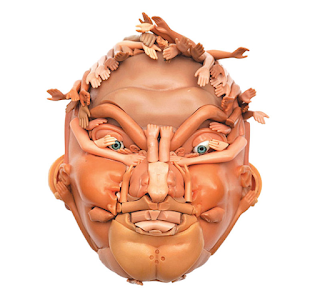
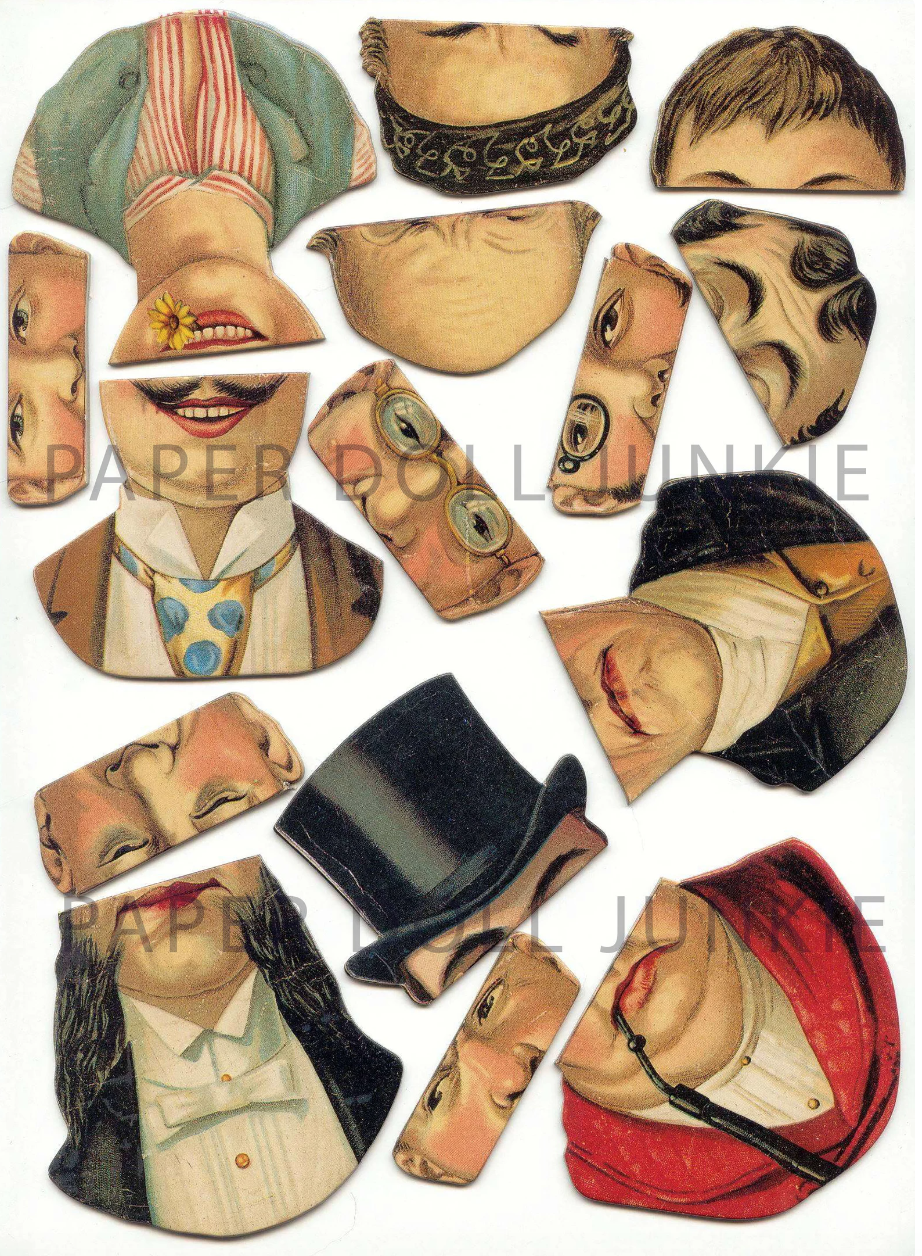
The degree of simplification you bring to this process will determine the visual look or feel of the images made. Compare the Nigerian face mask with an articulated jaw above, with a face made by Freya Jobbins from recycled dolls and the early 20th century paper toy face further below. 

Freya Jobbins

Paper toy face

The world of toys is another area of endless fascination in relation to these issues. Mr Potato Man has a wide variety of body and face parts now available to buy as extras that mean you can extend your Potato Man ideas even further. 

Mr Potato Man mouths

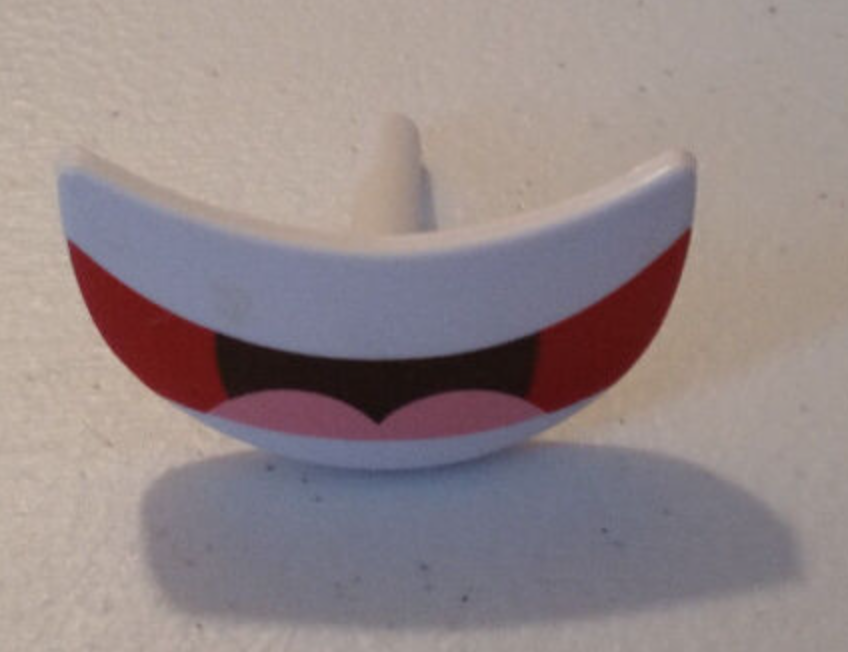
A Mr Potato Man mouth

When you look closely at the mouth forms that the plastic additions come in you may well find that they are very strange abstractions. The mouth above could be a design for an abstract painting. The more we separate a whole into parts, the more each part can become loosened from its original function. This process of atomisation is one that we are very good at, but which has also led us as a species to be able to cut up interconnected eco systems and divide the world into dis-functioning units. Every way of thinking has its effects on reality, and hopefully before we apply these conceptual models we think through their consequences. 

However it is in shadow puppetry that the most deeply mystical and spiritual of articulated images emerge. Like the cave wall that acted as a membrane between the world of the spirit and the world of the everyday, the thin sheet upon which the shadows move is another delicate membrane that sits between the world of the imagination and of reality. 

A figure from the Javanese shadow-puppet tradition of Wayang Kulit

Clive Hicks Jenkins has an excellent blog and he has given a far better explanation of the history of shadow puppets than I could ever manage, so do click on the link and read what he has to say about this wonderful art. 

Christian Boltanski 

Various contemporary artists have returned to articulated shadow puppetry, and as well as William Kentridge, Christian Boltanski and Kara Walker have made extensive use of the technique. 

Kara Walker

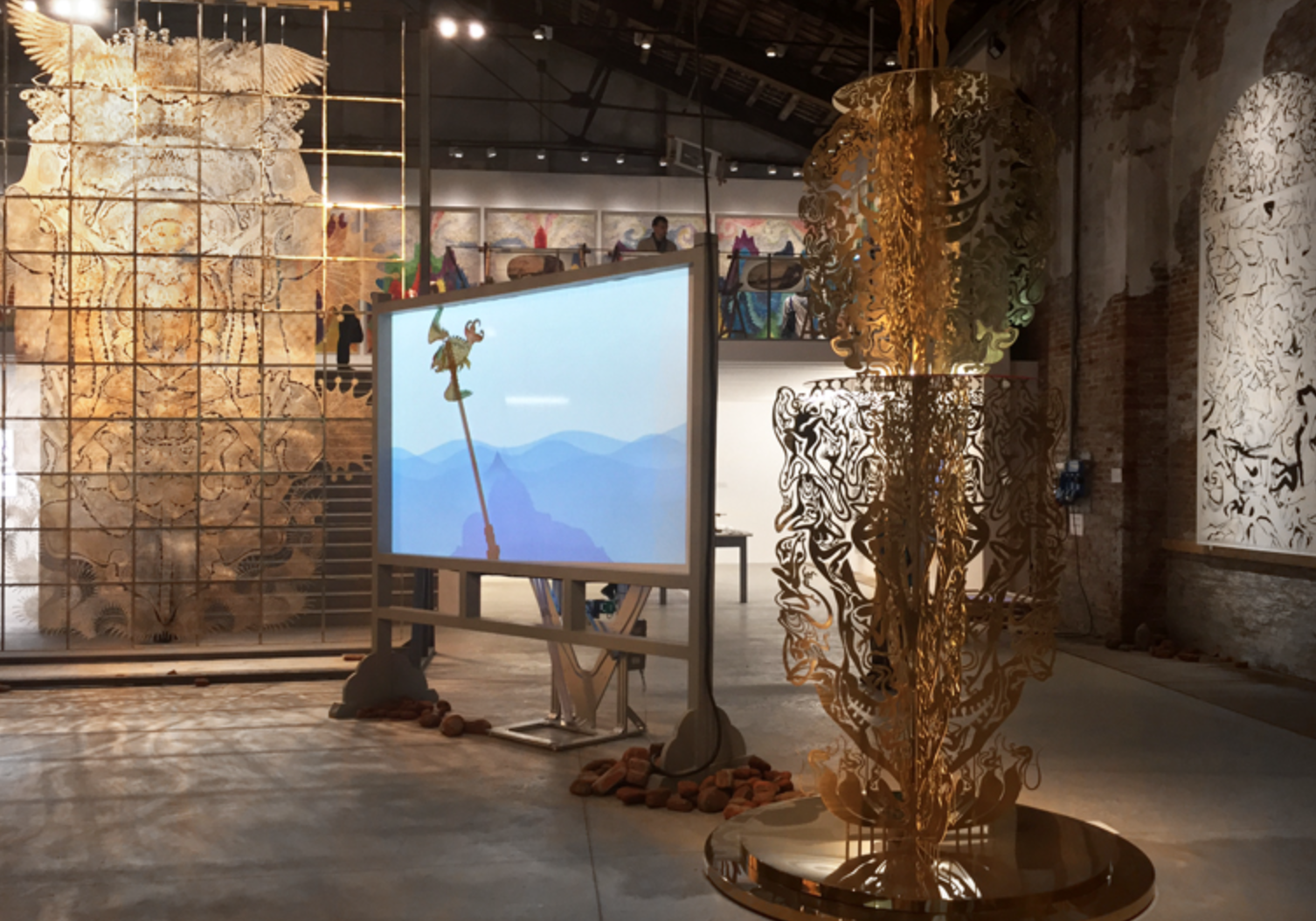
The Chinese pavilion at the 57th Venice Biennale saw the artists Wang Tianwen, Tang Nannan, and Yao Huifen working together to present ‘Removing the mountains from and filling the sea’, a shadow theatre performance. 


Wang Tianwen, Tang Nannan, Yao Huifen: Removing the mountains from and filling the sea

Wang Tianwen, Tang Nannan and Yao Huifen combined new and old technologies to make the work. Traditional skills in making the shadow puppets were combined with computer driven armatures, whilst some components were still fixed to bamboo sticks, such as the waves you can see in the image above. Their work reminds us that old and new technologies are in reality the norm. We keep using what works, whilst we invent new forms, and the one sits alongside the other. We forget that painting is an art form thousands of years old and happily go to exhibitions where it sits side by side with video projections and we have kitchens full of modern gadgets that sit alongside utensils that have changed little since Medieval times. 
It is not just artists that have thought of breaking forms down in this way. Detecting people in images is a key problem for video indexing, browsing and retrieval. The main difficulties are the large appearance variations caused by action, clothing, illumination, viewpoint and scale. Therefore the people that break down images for indexing, represent people use a 2D articulated appearance model composed of 15 part-aligned image rectangles surrounding the projections of body parts: the complete body, the head, the torso, and the left and right upper arms, forearms, hands, thighs, calves and feet. Each body part is numbered so that a numerical filing system can be applied to the images. 

From: Learning to Parse Pictures of People: Remi Ronfard: 2002

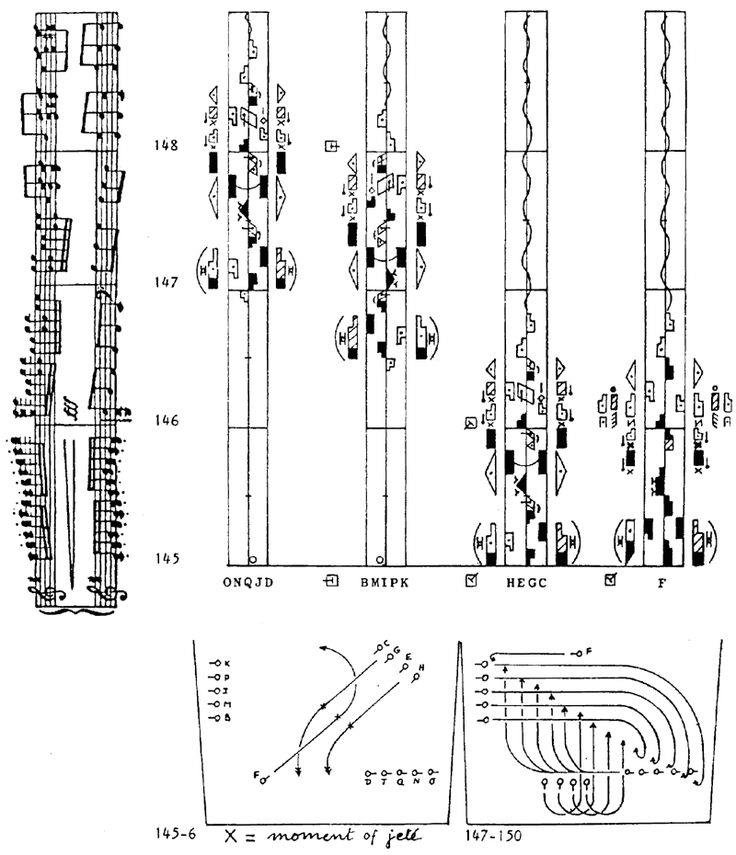
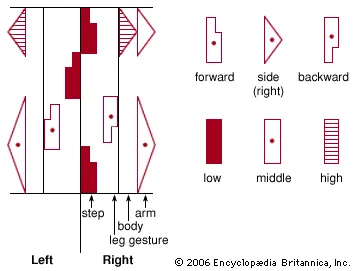
This way of visualising computer images of the body is now 20 years old and is no doubt in the scientific world of computing redundant, but it might be interesting to combine it with Laban notation. 


Laban notation

Of course once you begin looking at how to move a real body in terms of articulating it in sections you could take the idea out into performance and that could be a wonderful new beginning for the idea. What if we could extend or join certain parts?


Rebecca Horn: Finger gloves

All of these thoughts have led me towards my own attempts to work with articulated body parts in an animation.

One of several articulated figures that are going to eventually feature in an animation. 

See also:

Saturday, 21 March 2020

Shadow drawing

Intersections: Anila Quayyum Agha

This installation by the Pakistani/American artist Anila Quayyum Agha, uses a central light source that casts a shadow over an entire room, to create a wonderful immersive environment that heightens a feeling of spiritual contemplation. This beautiful resolution of what is a very old idea, is something all of us can think about using and is not the property of any one artist or designer.

Hilden and Diaz

The designers Hilden and Diaz market Ernst Heinrich Haeckel inspired chandeliers; when you illuminate them they cast shadows around your room that turn it into a forest. A very similar idea to Anila Quayyum Agha's and more affordable and available to ordinary people. It also asks some questions as to the relationship between art and design. The reality is that the idea belongs to nature, i.e. to us all. 

Shadow of a plum tree cast by moonlight: David M Porter 

The sun and moon cast shadows for free and we can all benefit from the idea. Because so many of us are having to self isolate perhaps a project whereby we investigate the potential of a different way of making images would be both useful and distracting, as well as reminding us that we don't need expensive materials and equipment to make interesting images. 

This very basic video shows how you could begin a project.

The problem with working in this way is how to give your shadows sharp edges, so here is a short tutorial on how lighting works.

Hard and soft light and shadow tutorial

Using some tape, wire, scissors, a cutting knife and whatever else you might have at hand, try and transform materials you might normally throw away into something that can be used to create shadows of images related to the work you are already doing. Noble and Webster even managed accurate shadow portraits, so it literally can be images of anything. 

Noble and Webster

Make sure your light source is not a hot one, the last thing you need to do is burn the house down and that you have camera ready to record anything that looks interesting. Then try and follow the implications of what you have done. Try and film the process as well as record it as a series of static images. Then review your footage and begin the process again, this time relating what you are doing to the potential you have unearthed in the review. In this way you can begin to reveal for yourself what the project might lead to. Remember Jasper Johns and his mantra, "do something and when that's done, do something to that". 

I shall try and mix these blog posts up during these days of self isolation, sometimes putting up a practical project and at other times things to generate ideas. But remember, it is in doing things that ideas emerge, so don't think for too long about what all this might mean, just have fun playing with shadows. 

See also:

The vignette (Includes links to other information about shadows) 


Wednesday, 4 July 2018

Shadows and the magic of transformation

Lotte Reiniger

It was Lotte Reiniger that invented many of the techniques that we associate with 20th century animation, her ground breaking innovative techniques were instrumental to the development of Walt Disney's technical innovations. In working with articulated cut black paper stencils she carried on a tradition of shadow play that had existed for thousands of years.


Lotte Reiniger: The Adventures of Prince Achmed (1926)
More of Lotte Reiniger's work

The shadow is one of the most elemental ways to make images and it does not require any technology at all. 


In the image above of a woman and child you have the core of the mystery of the shadow. Two human beings stand watching an image of themselves that is not themselves but is intimately connected to themselves. If the humans move their arms their shadows will move their arms. But the shadows are not them, so what are they? 


Everything that stands in the sun casts a shadow. Because the shadow reduces everything to flat shapes and it can't differentiate between the things that cast the shadows, new forms are made that are often unexpected. These tree branches can begin to look like people and the shadows of people can begin to look like trees. When two different things cast a combined shadow their differences are eliminated in the new form. 

Tim Noble and Sue Webster

Probably the most well known of contemporary artists using the elimination of difference effect are Tim Noble and Sue Webster, the pile of rusty junk has been carefully arranged so that it casts a shadow of copulating rats. Who hasn't at some point in their childhood not spent hours making shadow animals with their hands.


These hand shadows I would argue were probably the first images made by human beings. Once you have seen your shadow and understood that you can manipulate it simply by moving your body you are bound to begin exploring the possibilities. 
As well as being a very simple way to make an image, a shadow has something elemental about it. It has a direct relationship with the sun, it is cast from something else, so bears a direct relationship between the thing that cast the shadow. This intimate relationship is something very powerful and we have many folk tales concerning the problems of dealing with this relationship. For instance Hans Christian Andersen's 'The Shadow' tell the story of a man separated from his shadow. The shadow lives a much darker life and then years later when the man meets back up with his shadow, the dark nature of its exploits lead to the man's demise. The shadow is often associated with ideas of the soul and in early animist societies was thought of as a separate entity and would be addressed as such. Georges Schwizgebel's 'The Man with no shadow' is a more contemporary take on these ideas. 

The Man with no shadow: Georges Schwizgebel

I have tried to deal with the concept several times myself and will no doubt do so again, because I do believe shadows have a deep and significant resonance in relation to the way I think about images coming into being. (See Avark: A Fable)

William Kentridge

I can't escape the influence of William Kentridge when thinking about these issues and I have mentioned him several times before and make no apologies for doing so again. He is I think a very significant artist who is producing work that will stand the test of time. Even so, I'm sure he will himself have acknowledged the pioneering work of Lotte Reiniger and much older traditions.
The other aspect of shadow play that is important is that it is usually accompanied by sound. Music and spoken narratives are vital to the communication of complex stories. 

Wayang Puppet theatre

The Wayang puppet tradition is over a 1,000 years old. Sophisticated moral and philosophical values were transmitted via Wayang shadow stories and the artists involved in their presentation were highly valued in the royal courts of Java and Bali. 
A more contemporary version of this long history is the work of Matthew Robins, who has presented his work at the Tate Gallery as well as touring the country. I saw his 'Flyboy' narrative when he passed through Leeds a few years ago and really enjoyed it. 


Matthew Robins

 Such simple and direct ways of making images can seem outdated, especially in an age of CGI and other sophisticated modern imaging technologies. However there is something of the universal in these processes; dark and light in opposition, images made from the same stuff that has been around forever seem very suited to carrying certain elemental messages. Shadows were made as soon as suns began to emit their light rays and something else gets in the way of them. The moon casts it shadow across the Earth when it gets between us and the sun. There is nothing so grand and magnificent as an eclipse, so why not operate as if working with shadows is participating in a tiny aspect of that universal narrative. 

Coda

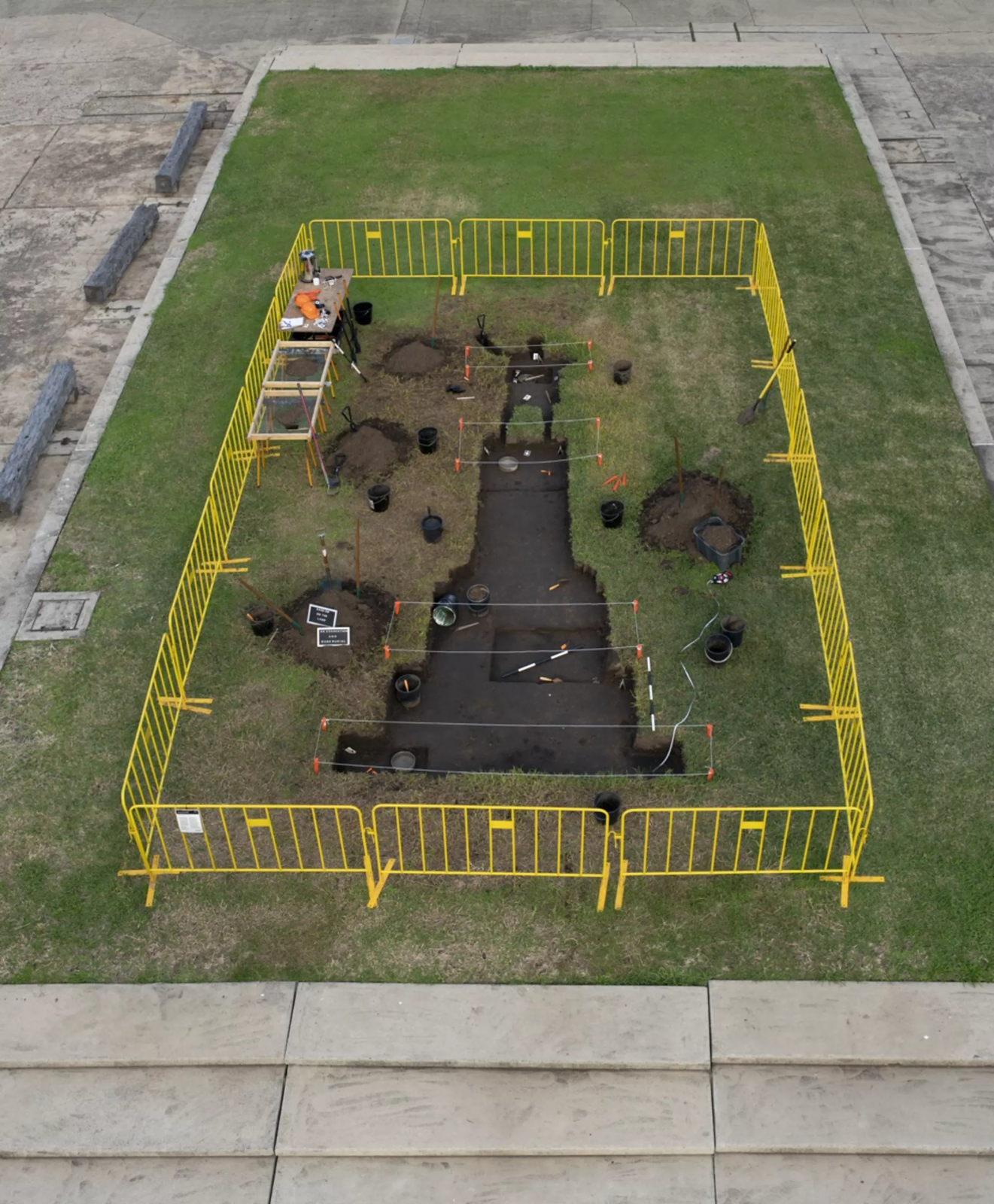
There are of course metaphysical aspects to the shadow. History can cast a long shadow over the present. Nicholas Galanin's installation 'Shadow on the Land, an excavation and bush burial, 2020, at the 22nd Biennale of Sydney, points out how the old public art monuments of western culture, cast a long shadow over the people's that western culture in effect blotted out or made invisible. His 'Bush Burial' is cut into a grass lawn, another product of western culture, a way of treating vegetation that is totally alien to the Australian bush. 

Nicholas Galanin: 'Shadow on the Land, an excavation and bush burial'

In horror movies you usually see a shadow of the monster long before it reveals itself, in this case the monster has often been standing in plain site and on a plinth. 

See also these related posts:

Articulated collage and shadow play
The vignette
William Kentridge in Berlin
William Kentridge in Rome
The world is drawing itself
Tone and emotional value
Venice biennale a continuing tradition
A short review of Matthew Robins' Flyboy

Wednesday, 10 January 2018

The world is drawing itself

I would like to explore a situation where the world is constantly drawing itself. To look at the world as if nature is making its own traces and human beings are seen as just elements within a vast range of other mark makers, both organic and inorganic.

A river system revealed as a drawing

Nelson Minar created software whereby when used we could see how river networks operated across vast territories, therefore we could reset our thinking in relation to familiar maps of the world. His coding was still available when I was writing this post; see and it came with a warning that as coding it was already becoming out of date. What I thought was important about these drawings was the symbiotic link between various human and natural phenomena. The land itself is shaping its own traces; as rain falls water flow responds to the terrain it finds and as it does so it finds its way down towards sea level. This finding a way cuts through a vast range of geological differences, but eventually the dendritic shapes of rivers and streams and rivulets and river basins become clear and tell their own story. The thinking of someone like Minar will begin with an awareness of his own body. The fact that our human bodies include similar dendritic systems; arteries, veins and nervous systems that are often in illustrations similarly colour coded, is I'm sure an important element here. The coding done by Minar is also something that is 'rooted' in a topographical awareness of surfaces and boundaries. Mathematics, coding, human biology, embodied thinking, geology, weather systems, physics and chemistry all becoming enmeshed in drawing.
Publicly available data is also an important element, free information being essential to a non-capitalist economy of thinking. Thinking without resorting to thinking about how individual gains can be made is becoming more and more important to my own idea of why I am engaged in this project of thinking through drawing. Find the open source information for North American river systems here. 

The rivers of the American Southern States visualised using Nelson Minar's code.

A snail trail is something we have all seen. Snails produce a type of mucus, 'snail slime', that is used to help them crawl along. It is partly like a glue and partly like a lubricant, thus helping a snail to climb up surfaces as well as along floors. This silvery track is a sign used by humans to check whether or not their environment is sealed off from the outside world or not and by other animals as a sign that food is present.
Snail trail
Years ago I read a short story about a mathematician, a Buddhist monk and a Christian priest in conversation. The monk believed in reincarnation and the idea of karma, the priest also had an insight into these issues and often quoted from the bible to explain his truths to the other two. In this case he quoted Galatians 6:7;  "Whatsoever a man soweth, that shall he also reap”. Neither was able to convince the other of the 'rightness' of their religion and the mathematician was also not convinced by either of the religious scholars and stated that  "where there is life there is a pattern, and where there is a pattern there is mathematics", a famous quote taken from the mathematical scholar John Barrow.  There was no conclusion to their conversation which was years later being reflected upon by the Christian priest, who was sitting on a bench reminiscing on the fact that the other two people in the conversation were now dead. As the priest related this remembered incident he began watching a snail moving across the floor just on front of his feet and leaving a trail of slime. The snail seemed to be moving in a purposeful manner and the priest decided to keep a close eye on what it was doing. Gradually the snail traced out the mathematical symbol pi. Well I think that was the story, I read it a long time ago, and it stayed with me. 
Pi snail trail
This drawing in a story weaves together several things, mathematics, religion, nature, belief and the fact that a drawing done by a non human actant is central to the narrative. 

Coyote Buttes slopes: Arizona and Utah border 
Differential erosion creates beautiful landscapes, which reveal variabilities in rock hardness as wind and water act together to shape the face of the planet. New drawings are made as lines of difference emerge, rocks laid down in seas millions of years ago now exposed as contour bands drawn across the undulating earth. This is little different to artists cutting into surfaces to reveal different colours and textures, Penny Evans' ceramics being typical examples of sgraffito, the scraping and digging away of surfaces in order to find new colours and forms beneath.  
Penny Evans: Sgraffito used on ceramics
We use the same processes when drawing as nature does. This is not really a process of mimicry, I would suggest it is simply how things go. We are all physical things and part of nature, so perhaps it is no surprise that wind and rock operate in a very similar way to people and clay. 

I have looked at shadows as a way of thinking about drawing in earlier posts, but what if we look at the world itself as a drawer of shadow shapes? As the Earth revolves around the sun and spins on its axis, a constantly changing series of shadow landscapes are made. 
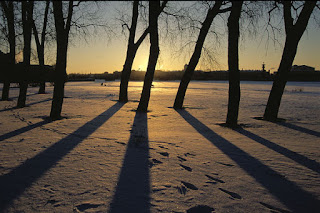


Everything that projects above the ground has the potential to project a shadow on cloudless days, and these projections are in constant movement, a movement that informs us about the changing relative positions of Earth and Sun. We have of course used this fact to develop our idea of time and sundials are just one of the many ways that human beings have harnessed shadows. In plants certain proteins can detect changes in light, so when the plant experiences a time of being in shadow, it holds back the photosynthesis process so that the plant doesn't waste energy trying to make use of the sun's energy when it is not  available. This protein is so sophisticated that it allows the plant to make decisions about very subtle differences, such as whether there is a passing shadow, such as a cloud obscuring the sun, a chance flicker of light or the light fading because it is the end of the day. It could be argued that plants understand and use shadow much better than we do. 


A very basic sundial


Shadows have helped us to have ideas. From Plato's idea of the prisoners in the cave* to in the case above, an advertising company developing an idea about protection and the unborn baby, as part of a campaign to get us to adopt. Once again we can see human beings and natural forces combining to do something as well as natural elements getting on well enough without us and operating to produce effects as part of what goes on. It doesn't actually matter if we are around and about to record these effects or not. So in this case the famous question, "If a tree falls in a forest and if there is no one about to hear it, does it make a noise?", sort of changes its meaning and becomes more like an analogy of mankind's hubris. 
*Plato asks us to imagine prisoners chained in a cave, they are unable to turn their heads, and all they can see is therefore the cave wall. Behind them is a fire and between it and the prisoners is a low wall along which move puppeteers that manipulate puppets and objects in order to develop particular stories about the world. The prisoners are totally unaware of the puppeteers and what is going on behind them, all they can see are the shadows cast on the wall in front of them. This situation is he explains what we actually experience in comparison to pure reality or the ideal forms that underpin all experience. So when we look at the shadow of the woman holding a child, if we could not see the woman, but only the shadow we would think she was pregnant, a type of mistaken deduction that Plato suggests we constantly make. 
See also: