A study is a drawing done in preparation for a finished piece, either as a sort of visual note taking exercise or as a form of practice, so that when you come to make the actual artwork, you get it right.
Studies can be used to understand the problems involved in rendering subjects and to plan the elements to be used in finished works, and written notes alongside visual images can allow the viewer to share the artist's process of getting to know the subject. In a recent post I looked at the studies made by David Reed for his paintings; his annotated drawings are central to his creative process, helping not only with the development of his ideas, they also document the creative process itself.
Sketches are typically drawn quickly to capture basic information, to rough out compositions or put down an idea before it is forgotten. Studies are more finished pieces made to get a deeper understanding of a specific aspect of the work, such as colour, tonal range, or how things are shaped, they are much more deliberate and bare a close relationship with the intended finished work. A relationship between Seurat's and Edward Hopper's work can help to give us a clearer idea of the difference between a study and a sketch.
The studies below for Hopper's 'Nighthawks' and 'Office at night' tell us about composition and tonal value, the light sources are all in place and shadow as an essential part of composition is clear. All that is missing is the colour.
Edward Hopper: Study for Nighthawks
Edward Hopper: Study for office at night
However with Hopper there is never a clear dividing line between the sketch and the study. In the image directly below, it is slight enough to be a sketch, but it is also a study of the main light source and the basic forms of the overall composition.
Edward Hopper:Sketch: Nighthawks
Hopper: A sketch that has become a study of shadow and composition
You often find in Hopper's drawings that what might start out as a sketched out idea, very soon becomes a meditation on something. In the case of the drawing above, he reminds us that in our perceived reality, shadows are just as substantial as walls and floors or seas and skies. By looking at these preparatory drawings, we can see his mind working. Each drawing works as a layer of meaning, one that can help you to think about how Hopper's visual language creates meaning for you as an individual.
This is why his painting are things you can come back to over and over again, because each time you do, you can sense another layer of material thinking. You might visit his work and become fascinated by the underlying geometry of forms, then at another time the way he composes uses mass, by using forms that push themselves across his two dimensional surfaces as if they were tectonic plates. Light and shadow are for Hopper key signifiers, they allow exterior and interior spaces to interpenetrate each other and help to build an emotional world for his people to inhabit. Placement is vital, not just in terms of geometrical relationships but in terms of emotional presence. Each human figure occupying a solid space that says 'I'm here' and yet at the same time they are placed with such internal firmness that although a body position may indicate awareness of others, their internal world seems to be wrapped up in themselves. In a Hopper you get a sense that although others are in the room, and even if it appears that they might be speaking to each other, they are not really listening. This is where hopper's layers begin to kick in, as it is at this point that he offers us a view of the human condition. One whereby we know, no matter how hard we try, we can never know what others are thinking of us and that there are moments when we realise that everything is staged. His painting are staged by going through a process of being sketched and then these sketches become studies, studies that are really rehearsals, in the same way that each encounter we have with others in life, can become a rehearsal for the performance of who we think we are.
Seurat:: Young Woman: study for 'Un Dimanche à la Grande Jatte'
The Kröller-Müller Museum has within its collection one of Seurat's charcoal studies of a young woman, that he used to think about the essence of someone. He tries to sum up the presence of this young woman in the simplest terms possible, she is reduced and yet not reduced, to a mass, a mass that is also as you look at it dissolving back into the paper surface that it is constructed within. There is something eerily beautiful about this image. It is definitely not a sketch, it is a study of the human condition.
The people in Seurat's painting are 'on parade' they are not just out for a stroll in the park, they are presenting images of themselves that they wish others to see. Roles are again being played out, but Seurat visualises these roles in a different way to Hopper. He senses that the roles are ephemeral, that beneath the posing and fashion lies something much more fundamental. He is like Hopper seeking the frozen moment when we become aware that the curved arc of a dog's tail, is as important to an experience as the shadow of a tree or the shape of a hat, but at the same time what is captured in that frozen moment, is a reminder of the insubstantial nature of everything. It is as if the clouds we watch were to one day form themselves into a vision of a day in our life, a moment that would be gone as soon as it arrived.
We can date both Hopper and Seurat's images by examining the clothes people wear. But we are not time bound by these details. Just as we are not time bound by the details of clothing carved into a Egyptian statue, in all these cases we are overpowered by the timelessness of the image. Seurat's seated figures are always seated, their forms are emanations that flow out of the shadows they sit within.
Like Hopper, Seurat also produces studies of the space he is going to people with figures. He probably went to the park early in the morning when long shadows are cast by the rising sun, a time when a lone dog was let out to exercise. The shadows help him to think about structure and the relationship between light, mass and space. Shadows hold for all artists some sort of wonderment, they impose themselves on the visual field, with the same force as the objects that cast them. The insubstantial ghost of an object which is its shadow, being in perception as solid as a rock.
Seurat's trees are like ghosts of trees, his monkey is the ghost of a monkey, or one seen through the early morning mist. All of the information Seurat was deriving from these drawings will be brought together with his colour studies in his monumental painting 'Un Dimanche à la Grande Jatte'. However for myself, as someone who holds drawing as central to the way I try to understand the world, it is the studies on paper that move me far more than the final painting.
If you look closely at Seurat's drawing of a monkey above, you can see a texture formed partly by the ridged lines of the paper running through the image. This tells us that Seurat was using a laid paper. This type of paper was made by hand, using a wire sieve stretched across a rectangular mould. A papermaker would dip the mould into a vat containing a diluted pulp of fibrous material, then lift it out, tilt it to spread the pulp evenly over the sieve and, as the water drained out between the wires, shake the mould to lock the fibres together. In the process, the pattern of the sieve's wires was imparted to the paper sheet. The laid pattern itself consists of a series of wide-spaced 'chain' lines lines parallel to the shorter sides of the sheet and more narrowly spaced 'laid' lines, at right angles to them. In effect the paper sheet is a thin cast of the mould, a ghost of an activity involving workers who endured often very poor working conditions, whereby paper fibres were breathed in all through the long working day and which therefore brought on various and serious lung illnesses. These workers would also need a break on a Sunday from their hard labour, and perhaps, just one of them was out first thing in the morning walking their dog when Seurat made is first study of that space in the park that would eventually become the such a celebrated painting.
There is a previous detailed post on charcoal and how it can be made. However issues of sustainability in relation to charcoal production were not picked out and as sustainability is so important, I have decided to re-visit my posts on various art materials and to develop eco-narratives around them.
First of all there are considerations in manufacture if you are not making your own charcoal. Watch this video on how a specialist charcoal supplier makes charcoal ready for art supply shops and similar outlets. On the one hand it's very good to hear that they source their willow locally and that they work in relation to a specific location so don't have to have raw material shipped in and that they have managed to keep their workers in employment over a long period of time, which suggests that they are good employers. On the negative side they have to transport their charcoal to all the various art shop outlets, so their carbon footprint is probably going to be at its worst in relation to distribution rather than manufacture. Some charcoal producers state that that their artist quality charcoal is made from Natural Willow cut offs that would usually be discarded, and some like the Dorset Charcoal Company, set out in detail how they manage their charcoal production ecologically. In their case a mobile charcoal burner system allows the company to respond to the changing needs of their local woodland and they are seeking to be beneficial to local woodlands and wildlife. Visit their site to find out more about how to spot charcoal made from unsustainable tropical wood sources. However, no matter how good their carbon footprint, there will always be distribution costs, which is why you might consider making your own at home.
Most charcoal is actually made as fuel for fires. This is still a vital source of heat for cooking in Africa and there are both good and bad practices going on. Sustainable charcoal production requires owners of natural woodland to maintain forest cover over time, rather than converting it to other land uses, such as large scale agriculture. However sustainable production is more likely to be achieved in woodlands with secure tenure with formalised management and harvesting plans designed to maintain the broad ecosystem functions of the forest or woodland. For instance in Niger and Senegal the adoption of formalised, community-based wood fuel production has resulted in an increase in the diversity and health of the forest stock (de Miranda et al., 2010). However in other areas of Africa unsustainable harvesting, has contributed to widespread forest degradation and deforestation, particularly in the vicinity of concentrated markets, such as large urban areas (Chidumayo and Gumbo, 2013). A very brief look at charcoal production in its wider context quickly raises issues about localised and global production and the maintenance of interconnected forest or woodland ecosystems. These issues are of course related to the production of charcoal for burning, but the maintenance of healthy woodlands and forests is of significance to everyone, and whether charcoal production is for fire or for drawing, it can either be done sensitively and in co-operation with an understanding of the local eco-system, or not.
If you are to use charcoal and want to make a point about why you are making it yourself, you could indicate how you are thinking about sustainable resources in a wider context. You might consider issues such where willow is grown in relation to where you are? How should you harvest it if you want to ensure it is not depleted? Perhaps you might research what other wood is available to you locally and in what form does it come, (old bits of furniture, wood picked out of skips, branches and twigs from local trees etc.). Test local trees for types of charcoal, some will make for a reddish brown mark, others darker browns or light blacks and some will be scratchy and break into tiny pieces and others very soft. If you are making a charcoal oven, could this be part of the idea? Could you set up a sustainable charcoal production facility? Perhaps making charcoal of various sorts for the local arts community. In doing so you could help others become more self-reliant and make them more aware of how charcoal is made. Could you oversee your charcoal production as part of a local interconnected woodland ecosystem? It is important to think about this, because over 90% of all charcoal consumed in this country comes from overseas, predominantly the endangered tropical rainforest and mangrove habitats of South America, West Africa and South East Asia. In addition to the damage caused by unsustainable forestry practices in these regions, is the negative environmental impact arising from the consumption of fossil fuels transporting charcoal so far around the world.
David Nash
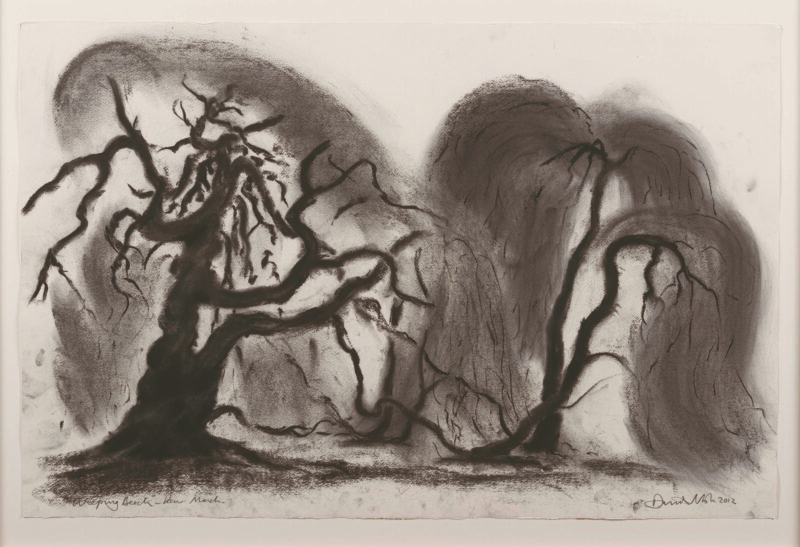
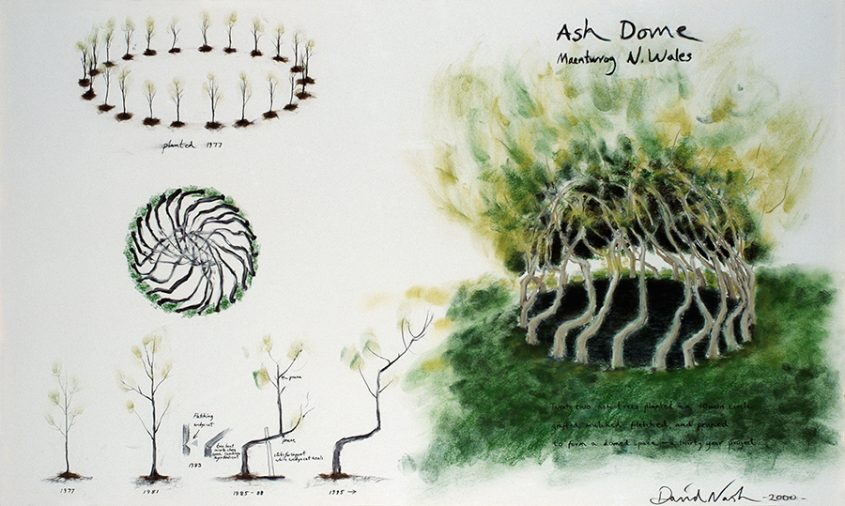
One artist in particular has deeply explored the relationship between ecology and charcoal, and that is David Nash, who is also exhibiting at the Yorkshire Sculpture Park at the moment. Using fallen trees, Nash has made sculptures and charcoal drawings that explore environments and ecosystems as points of intersection between nature and art. As he says, “trees take just enough and give back more”. Drawing is central and constant in Nash’s practice. It is an alternative way of learning about and understanding his subject, of finding form for ideas and recording and responding to perceptions of his environment. He uses hand made smoky willow charcoal to create intense blacks, these he will soften or accompany with softer warmer colours made from ash or oak; bold swathes of colour are achieved by using pure pigment dug out from the ground, mixed with burnt wood and ashes and wiped onto his drawings with bare hands. He uses local streams in which to dissolve ground down homemade charcoal alongside various natural pigments, which then become his inks, his ideas are often driven by the particular qualities of certain trees and their environments. His drawing Ash Dome (2007) was created using ash charcoal and earth taken from the surrounding ground, and he uses diagrammatic drawing to demonstrate the aesthetic associations and familial links between various aspects of his ecologically tuned ideas.
Ash Dome: david Nash
Working directly with fallen twigs and other 'pick-up' elements of a natural habitat might be even more ecologically friendly. For instance every stick can be a drawing implement. When you make marks with sticks you will find them expressive and they will help you achieve a much wider range of line quality. If you have no ink to dip the sticks into, just collect local soil, add water and draw using dirt. You can if you have more time extract colour from leaves. This video will show you how. Then when you draw both applicator and pigment will have a conceptual relationship.
How to extract colour from leaves
The German artist Nils-Udo works directly with fallen leaves and branches to create site-specific works. From delicately arranged petals scattered on the surface of a pond, to huge nests formed from twigs, leaves, and wildflowers, like Nash he tries to use what he finds in an environment such as a woodland or park, heightening our awareness by making interventions designed to make us wonder. His artist statement reads: “By installing plantings or by integrating them into more complex installations, the work is literally implanted into nature. As a part of nature, the work lives and passes away in the rhythm of the seasons.”
Nils-Udo
A charcoal burner's mound
The form of the nest like work above is heavily influenced both by birds' building activities and by the size of charcoal burner's mounds.
Nils-Udo: Project proposal for a motorway service area
Nils-Udo's drawings are proposals for interventions often in urban spaces, whereby planting is used to soften the impact of the harsh edges of places like motorway services stations. The question though is of course is he just hiding or making more acceptable something that we should be confronting, such as the still too high levels of car use and associated carbon emissions?
Once you have made a charcoal drawing or a drawing using soil, it may need to be fixed. Van Gogh used to use a skimmed milk spray to fix his charcoal drawings and Spectrafix Degas Pastel Fixative, also uses milk-protein. I try not to advertise brands, but in this case it is ecologically far more sustainable than toxic fixatives that operate like hair sprays. Most of us at one time or another will have used hair spray to fix a charcoal drawing, but remember the clear liquid spray is made of polymers that cause it to create a film over what you spray it on, be that hair or your charcoal drawing or an insect. Don't forget, hairspray was originally created to kill insects back in the 1940s, it was one of many chemicals developed after World War Two, that relied on advances in toxic chemical production because during that war there had been research into chemical warfare, just in case the other side decided to use poisonous chemicals to attack unprotected populations. Instead of people it was then decided to use these chemicals on the natural world; Rachel Carson's book 'Silent Spring' highlighted the issues surrounding the following unrestricted developments in using chemicals like DDT to control insects, pointing out that in the end those chemicals did indeed and still do, poison humans too. Spectrafix, not only avoids toxic chemicals it also facilitates layering, as it can be used to both fix and restore the friction you need to rework or refresh markmaking on an overworked surface, so that additional layers of charcoal can be applied.
When considering sustainability there are always more questions than answers, but if we don't consider these, we might at some point wake up to a dying planet.
Of course paper is also a material that is often made in unsustainable ways. I will be putting up a post on the issues specifically related to paper and sustainability in the near future, but in the meantime there are several other issues to think about in relation to paper, and you can read about those at some of the links set out below.
References
Chidumayo, E. N., and Gumbo, D. J. (2013). The environmental impacts of charcoal production in tropical ecosystems of the world: a synthesis. Energy Sustain. Dev. 17, 86–94. doi: 10.1016/j.esd.2012.07.004
De Miranda, R. C., Sepp, C., Ceccon, E., Mann, S., and Singh, B. (2010). Sustainable Production of Commercial Woodfuel: Lessons and Guidance from Two Strategies. Washington, DC: The World Bank.
Charcoal is, like graphite, another carbon based material. It has been used for thousands of years by artists of many times and cultures. We often use it without being aware of it, for instance charcoal in its powdered form, carbon black, is used today in photocopier and laser printer toner.
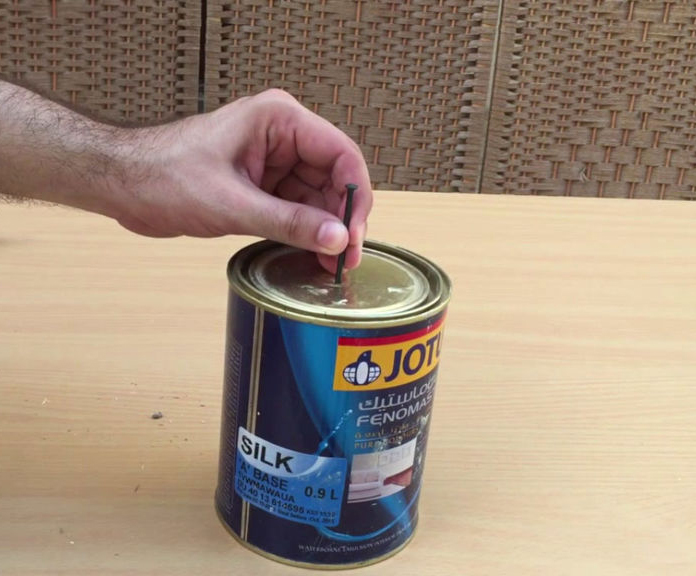
It's pretty easy to make your own charcoal. Collect a range of wooden pieces, willow is best for drawing on paper but any type of wood will make charcoal, some will make good soft black marks, others will be scratchy and more brown in colour, but every wood has a distinctive mark that can be used in interesting ways. Make sure the wood is very dry, so leave it inside somewhere warm for a while. Then get a large tin can with a push on lid, clean it out and wash the insides. Fill the can to the rim with your wood pieces.
Now use a nail to punch a hole in the centre of the lid.
Either build a small fire or use a gas hob if you don't have access to anywhere you can make a fire. Once it is roaring, place your can of wood in the centre of the fire, or place on a low flame on your gas hob, let it cook for a while. Only use a gas hob as a last resort and never leave it unsupervised.
After a while smoke will begin to come out of the hole.
You can then light the gases coming out of the tin.What this is doing is making sure the wood is burning with as little oxygen as possible getting to it, which means that the wood wont just burn away into ash.
After an hour, remove the can from the fire or gas hob, but be careful.
Prise the lid offand hopefully the wood has been reduced to charcoal. If it hasn't, it usually means that it needs longer in the fire. Remember to use proper heat resistant gloves, or just wait for things to cool down.
The earliest examples of charcoal drawing we have come down to us preserved in animal or vegetable fats.
These lions from the Chauvet Cave were drawn over 20,000 years ago, using a charcoal/animal fat mix. To make a similar charcoal paint, use a mortar and pestle to grind your charcoal up into powder and then gradually mix into it oil or fat. Try smearing this paste with your fingers, feel the grit in the oil as you push it around on a sheet of thick rough watercolour paper, it's really satisfying. By doing this you can perhaps catch a glimpse of what it felt like to draw animals on cave walls.
Once you have a collection of charcoal lumps, you have material that can be used in a variety of ways, and not just to draw with in the traditional sense.
Dragana Crnjak
For instance Dragana Crnjak creates site-specific drawings on the walls of galleries. Her abstract charcoal drawings she states ‘exist between discovery and contemplation,’ by this I presume she means she makes a mark/places a piece of charcoal, looks at what she has done, thinks about it and then responds to the decision by placing another mark or lump of charcoal. She uses charcoal's physical presence to excite the eye, each mark being an actual piece of charcoal, the process of fixing it to the wall sometimes leaves a slight dusting, this delicately plays off against the hardness of the broken shards of charcoal.
Cornelia Parker is an artist that always makes you think, her 'Mass', from 1997 consists of charcoaled fragments made when the Baptist Church of Lytle, in Texas was struck by lightning and burnt down. There are always pieces of wood that are not fully exposed to the air when a building burns down and these are 'charcoaled', Parker has then retrieved some of the pieces, 'resurrected' them by hanging them from wires and given them a new form as art. She suggests that our understanding of the world via the Christian Church is now outdated and new forms are needed. In science matter and energy are inseparable and Parker's work intimates perhaps a new ordered spatial structure for sculptural mass. Parker's 3D drawing is a perfect example of drawing as 'disegno' the intellectual driving force behind so many visual ideas.
Julie Tremblay, detail: powdered charcoal and varnish on paper
Julie Tremblay often uses crushed charcoal moving it around in varnish that also acts as a fixative. She is interested in the way it flows and congeals as the powder mixes and moves with the varnish. Often working on long rolls of paper, she sometimes hangs them in order to create installations. She seeks to echo in her drawing process both the large scale actions of geology and landscape and the more microscopic movements that occur when chemical exchanges happen. As liquid flows it carries material and deposits it, finding a natural extension to its activities, whether this be a river dissolving minerals into itself and washing these into the sea, or the flow of blood and carrying of nutrients into the body.
Julie Tremblay
I'm sure that Tremblay's work stems from the fact that she has at some time in her life experienced a badly fixed charcoal drawing. Once you have finished working on a charcoal drawing you would normally fix it. I say normally, because when it comes to doing anything in drawing an action changes the meaning of what you are doing. So if a charcoal drawing is left unfixed it is open to constant change and will rub off against any surface it comes into contact with. This is in itself interesting and suggests that work could be done that is left unfixed on purpose. For instance the drawing might be left in a space where people would always be brushing against it, so that gradually it would disappear, or become a ghost of its former self. Fixing a drawing implies fixing a moment in time.
Once it is decided that fixative is however needed, then several other factors are brought to the situation. The first is how to fix? If you use a compressed can of spray, using this close to the surface can disturb the charcoal surface, you can in fact 'draw' directly with the can of fix, especially if you have been using charcoal dust, the compressed air and moving fixative liquid can be moved around the surface of the paper and puddles of fixative can be built up and moved around by changing the direction of the spray can nozzle. It was perhaps when doing this that Tremblay realised a wider potential for the activity. However most people just want to use fixative to preserve their drawing. If this is the case then you need to think carefully about what sort of fixative you are using and how to use it. Fixatives come in transparent, gloss and matt finishes and they are also workable and non-workable. A workable fixative is designed to let you continue drawing, whilst non-workable means that you have finished drawing and now want to preserve it. The difference is that non-workable fixatives tend to be acrylic based and in effect entomb your charcoal drawings under a layer of plastic, workable fixatives tend to be resin based and provide a 'tooth' or 'grain' on which further layers of charcoal can be built. All of these fixatives need to be used carefully and you need to build the layers up gradually, most importantly do not try and fix all at once. If you do you will get pooling of fix and this will cause your image to run. (Try this on an image you don't like, it may improve it, as always doing things wrong can lead to a new right). Spray at least two feet away from the drawing's surface and each time you do spray, change the direction of movement, this will mean you get maximum coverage, the spray been able to access every side of the charcoal's grain. If you don't want to fix a drawing but have to put it away in a drawer, the standard solution is to put the drawing betweensheets of glassine paper.
Van Gogh used to use skimmed milk to fix his charcoal drawings, I'm surprised that Cornelia Parker hasn't done a work that reflects on that, but perhaps she has and I just haven't come across it. David Nash works with trees, both while alive and growing; by training them into various shapes and forms and when they are chopped down and felled; by cutting them into shapes with chainsaws. In particular he has often burnt the surface of his forms to give them a strong black texture. Charcoal from his burnings will also be used to make drawings of the situation.
David Nash
In the image above, Nash has used a chainsaw to cut a tree into three Platonic solids and has then subjected the forms to a controlled burning, (he would have had to cover the wooden forms with something as they were burnt, such as clay or earth, so that they didn't just burn away), or he may have controlled the burning by using a blow torch, but as he is an artist that celebrates wood craft I suspect he has used traditional techniques. See this link for the various types of approaches. Traditional charcoal manufacturing techniques are fascinating and I find the various earth mounds and structures made from stacking wood have powerful metaphorical potential. Under these earth mounds (these could be burial mounds) fire (remember the 4 old elements, earth, air, fire and water) is used to first of all drive off the dampness from wood and then eventually by excluding air, convert the wood to charcoal, which itself burns at a much higher temperature than wood, therefore it was essential to the smelting of metal. I find this whole process subject to an alchemic interpretation. Perhaps one of my readers might want to take up the possibilities inherent in the processes of charcoal making and fuse together concepts of drawing and making into a composite form.
A typical charcoal burner's mound
When producing charcoal in large quantities, you need to build a construction similar to the one above. Those of you who really want to open out your exploration of charcoal as medium to work with, could perhaps build your own, but beware it is a very smoky process and a mound will smoke for hours and wind changes direction.
All charcoal mounds need a chimney that also operates as a structural centre. How this is done will affect the overall design and shape of your structure.
Charcoal burners would all have slightly different ways of making their central vent, you could argue this was an aspect of their 'style'.
The cutaways above show how systematically the wood is stacked, and you can also clearly see how the whole structure is covered with earth. Before you shovel the earth onto the pile a layer of plant materials is usually put on, such as leaves and long grasses, you can use cut turf or apparently animal skins were also used to prevent the soil just dropping down into the wood pile. Clay, if available was often used instead of earth as it's stickiness made it much easier to spread over the surface.
The stacking of wood has to be very controlled and beautiful rhythmic structures were often created before the stacks were covered with earth.
Once lit the mound has to be carefully watched, charcoal-burners would watch their mound for hours until the smoke turned from white to blue, which was an indication that the charcoal was itself beginning to burn. They would then uncover the mound whist wetting it down to stop the charcoal re-igniting. The vine or willow charcoal you buy from art shops is not produced this way anymore, controlled industrial furnaces are used. However if you have access to willow or vine shoots, an old hinged lid tin will allow you to make charcoal in much the same way as the tin with a hole in the lid method explained at the start of this post. Make sure you strip the bark off the willow first and dry it thoroughly.
Fill your tin with dried willow sticks and then put into a fire for a few hours. Make sure you don't open the tin until cool, you don't want the charcoal to spontaneously combust. You don't need to make a hole in the lid because the air seal is pretty non existent in these sort of tins.
I'm emphasising the physical production issues surrounding charcoal not just because there is potential for someone to take their interest in this common drawing material out into the woods or at least into the back garden, but because of its chemical nature and the fact that because as carbon, it has a valency of 4, it has the capability of forming complex molecules with other chemicals. Carbon is vital to the way life has evolved, science fiction novels often refer to humans and other earth animals and plants as 'carbon based life forms', and black, the most iconic of mark making materials (the carbon based pigments lamp and bone black are also well worth investigating) is nearly always made from carbon. Life and art are always beautifully enmeshed.
So when drawing with charcoal, be it in more traditional methods such as Richard Bunkall's drawings of the buildings of New York or Dennis Creffield's drawings of cathedral spaces, gallery filling drawings such as Tony Sequence's dead trees or Joel Daniel Phillips large photo-realist meditations on the homeless, or Barbara Walker's similar reflections which she draws directly onto the gallery walls; try and remember that as a material it also has its own story, and no matter how powerful or significant your story is, you should also acknowledge the fact that your drawing material has it's own story too.
Richard Bunkall
Tony Sequence
Joel Daniel Phillips
Barbara Walker
Dennis Creffield
David Bomberg: School of Borough Polytechnic
Because of willow charcoal's ability to be constantly reworked it became the favourite drawing tool of artists seeking 'the spirit in the mass' as David Bomberg used to call it. Roy Oxlade, Dennis Creffield, Frank Auerbach and Leon Kossoff were influenced by these ideas and all of them have in their time produced very powerful charcoal drawings.
The white in this image was drawn using ash from the fire
Close up of charcoal emerging from the ash.
Ceramic boat made for charcoal burning
I have been making charcoal myself for some recent drawings. I made a ceramic (terracotta) boat based on those old Norse ones that were used for funeral rituals. This was embedded into my charcoal fire. The emergence of the smoke blackened vessel from the fire being part of the process of the image making, so it will be shown with or alongside the drawings. Once the charcoal was produced I used it to make drawings of the boat and in my mind it went back in time and floated on an imaginary sea. I have been thinking more and more about the role of ritual in art making and I think I will be returning to it at some point. See also post on graphite