David Nash 'Charred'
Charcoal is, like graphite, another carbon based material. It has been used for thousands of years by artists of many times and cultures. We often use it without being aware of it, for instance charcoal in its powdered form, carbon black, is used today in photocopier and laser printer toner.
It's pretty easy to make your own charcoal. Collect a range of wooden pieces, willow is best for drawing on paper but any type of wood will make charcoal, some will make good soft black marks, others will be scratchy and more brown in colour, but every wood has a distinctive mark that can be used in interesting ways. Make sure the wood is very dry, so leave it inside somewhere warm for a while. Then get a large tin can with a push on lid, clean it out and wash the insides. Fill the can to the rim with your wood pieces.
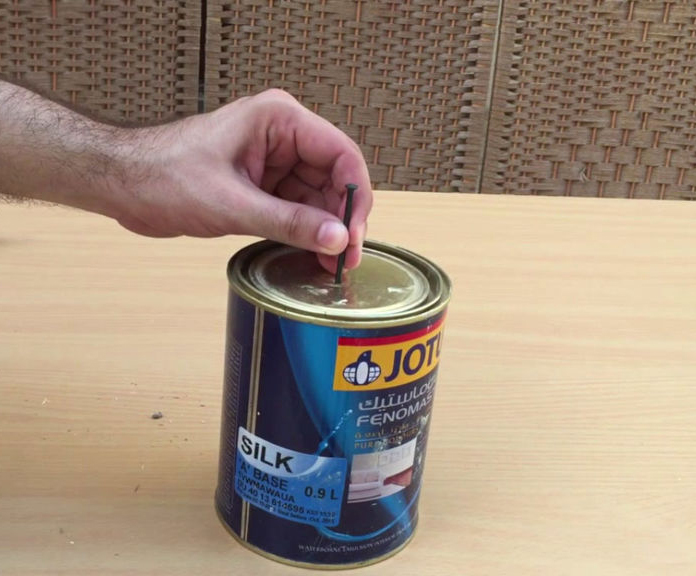
Now use a nail to punch a hole in the centre of the lid.
Either build a small fire or use a gas hob if you don't have access to anywhere you can make a fire. Once it is roaring, place your can of wood in the centre of the fire, or place on a low flame on your gas hob, let it cook for a while. Only use a gas hob as a last resort and never leave it unsupervised.
After a while smoke will begin to come out of the hole.
You can then light the gases coming out of the tin. What this is doing is making sure the wood is burning with as little oxygen as possible getting to it, which means that the wood wont just burn away into ash.
After an hour, remove the can from the fire or gas hob, but be careful.
Prise the lid off and hopefully the wood has been reduced to charcoal. If it hasn't, it usually means that it needs longer in the fire. Remember to use proper heat resistant gloves, or just wait for things to cool down.
The earliest examples of charcoal drawing we have come down to us preserved in animal or vegetable fats.
These lions from the Chauvet Cave were drawn over 20,000 years ago, using a charcoal/animal fat mix. To make a similar charcoal paint, use a mortar and pestle to grind your charcoal up into powder and then gradually mix into it oil or fat. Try smearing this paste with your fingers, feel the grit in the oil as you push it around on a sheet of thick rough watercolour paper, it's really satisfying. By doing this you can perhaps catch a glimpse of what it felt like to draw animals on cave walls.
Once you have a collection of charcoal lumps, you have material that can be used in a variety of ways, and not just to draw with in the traditional sense.
Dragana Crnjak
For instance Dragana Crnjak creates site-specific drawings on the walls of galleries. Her abstract charcoal drawings she states ‘exist between discovery and contemplation,’ by this I presume she means she makes a mark/places a piece of charcoal, looks at what she has done, thinks about it and then responds to the decision by placing another mark or lump of charcoal. She uses charcoal's physical presence to excite the eye, each mark being an actual piece of charcoal, the process of fixing it to the wall sometimes leaves a slight dusting, this delicately plays off against the hardness of the broken shards of charcoal.
Cornelia Parker is an artist that always makes you think, her 'Mass', from 1997 consists of charcoaled fragments made when the Baptist Church of Lytle, in Texas was struck by lightning and burnt down. There are always pieces of wood that are not fully exposed to the air when a building burns down and these are 'charcoaled', Parker has then retrieved some of the pieces, 'resurrected' them by hanging them from wires and given them a new form as art. She suggests that our understanding of the world via the Christian Church is now outdated and new forms are needed. In science matter and energy are inseparable and Parker's work intimates perhaps a new ordered spatial structure for sculptural mass. Parker's 3D drawing is a perfect example of drawing as 'disegno' the intellectual driving force behind so many visual ideas.
Julie Tremblay, detail: powdered charcoal and varnish on paper
Julie Tremblay often uses crushed charcoal moving it around in varnish that also acts as a fixative. She is interested in the way it flows and congeals as the powder mixes and moves with the varnish. Often working on long rolls of paper, she sometimes hangs them in order to create installations. She seeks to echo in her drawing process both the large scale actions of geology and landscape and the more microscopic movements that occur when chemical exchanges happen. As liquid flows it carries material and deposits it, finding a natural extension to its activities, whether this be a river dissolving minerals into itself and washing these into the sea, or the flow of blood and carrying of nutrients into the body.
Julie Tremblay
I'm sure that Tremblay's work stems from the fact that she has at some time in her life experienced a badly fixed charcoal drawing. Once you have finished working on a charcoal drawing you would normally fix it. I say normally, because when it comes to doing anything in drawing an action changes the meaning of what you are doing. So if a charcoal drawing is left unfixed it is open to constant change and will rub off against any surface it comes into contact with. This is in itself interesting and suggests that work could be done that is left unfixed on purpose. For instance the drawing might be left in a space where people would always be brushing against it, so that gradually it would disappear, or become a ghost of its former self. Fixing a drawing implies fixing a moment in time.
Once it is decided that fixative is however needed, then several other factors are brought to the situation. The first is how to fix? If you use a compressed can of spray, using this close to the surface can disturb the charcoal surface, you can in fact 'draw' directly with the can of fix, especially if you have been using charcoal dust, the compressed air and moving fixative liquid can be moved around the surface of the paper and puddles of fixative can be built up and moved around by changing the direction of the spray can nozzle. It was perhaps when doing this that Tremblay realised a wider potential for the activity. However most people just want to use fixative to preserve their drawing. If this is the case then you need to think carefully about what sort of fixative you are using and how to use it. Fixatives come in transparent, gloss and matt finishes and they are also workable and non-workable. A workable fixative is designed to let you continue drawing, whilst non-workable means that you have finished drawing and now want to preserve it. The difference is that non-workable fixatives tend to be acrylic based and in effect entomb your charcoal drawings under a layer of plastic, workable fixatives tend to be resin based and provide a 'tooth' or 'grain' on which further layers of charcoal can be built. All of these fixatives need to be used carefully and you need to build the layers up gradually, most importantly do not try and fix all at once. If you do you will get pooling of fix and this will cause your image to run. (Try this on an image you don't like, it may improve it, as always doing things wrong can lead to a new right). Spray at least two feet away from the drawing's surface and each time you do spray, change the direction of movement, this will mean you get maximum coverage, the spray been able to access every side of the charcoal's grain.
If you don't want to fix a drawing but have to put it away in a drawer, the standard solution is to put the drawing between sheets of glassine paper.
Van Gogh used to use skimmed milk to fix his charcoal drawings, I'm surprised that Cornelia Parker hasn't done a work that reflects on that, but perhaps she has and I just haven't come across it.
David Nash works with trees, both while alive and growing; by training them into various shapes and forms and when they are chopped down and felled; by cutting them into shapes with chainsaws. In particular he has often burnt the surface of his forms to give them a strong black texture. Charcoal from his burnings will also be used to make drawings of the situation.
David Nash
In the image above, Nash has used a chainsaw to cut a tree into three Platonic solids and has then subjected the forms to a controlled burning, (he would have had to cover the wooden forms with something as they were burnt, such as clay or earth, so that they didn't just burn away), or he may have controlled the burning by using a blow torch, but as he is an artist that celebrates wood craft I suspect he has used traditional techniques. See this link for the various types of approaches.
Traditional charcoal manufacturing techniques are fascinating and I find the various earth mounds and structures made from stacking wood have powerful metaphorical potential. Under these earth mounds (these could be burial mounds) fire (remember the 4 old elements, earth, air, fire and water) is used to first of all drive off the dampness from wood and then eventually by excluding air, convert the wood to charcoal, which itself burns at a much higher temperature than wood, therefore it was essential to the smelting of metal. I find this whole process subject to an alchemic interpretation. Perhaps one of my readers might want to take up the possibilities inherent in the processes of charcoal making and fuse together concepts of drawing and making into a composite form.
A typical charcoal burner's mound
When producing charcoal in large quantities, you need to build a construction similar to the one above. Those of you who really want to open out your exploration of charcoal as medium to work with, could perhaps build your own, but beware it is a very smoky process and a mound will smoke for hours and wind changes direction.
All charcoal mounds need a chimney that also operates as a structural centre. How this is done will affect the overall design and shape of your structure.
Charcoal burners would all have slightly different ways of making their central vent, you could argue this was an aspect of their 'style'.
The cutaways above show how systematically the wood is stacked, and you can also clearly see how the whole structure is covered with earth. Before you shovel the earth onto the pile a layer of plant materials is usually put on, such as leaves and long grasses, you can use cut turf or apparently animal skins were also used to prevent the soil just dropping down into the wood pile. Clay, if available was often used instead of earth as it's stickiness made it much easier to spread over the surface.
The stacking of wood has to be very controlled and beautiful rhythmic structures were often created before the stacks were covered with earth.
Once lit the mound has to be carefully watched, charcoal-burners would watch their mound for hours until the smoke turned from white to blue, which was an indication that the charcoal was itself beginning to burn. They would then uncover the mound whist wetting it down to stop the charcoal re-igniting.
The vine or willow charcoal you buy from art shops is not produced this way anymore, controlled industrial furnaces are used. However if you have access to willow or vine shoots, an old hinged lid tin will allow you to make charcoal in much the same way as the tin with a hole in the lid method explained at the start of this post. Make sure you strip the bark off the willow first and dry it thoroughly.
Fill your tin with dried willow sticks and then put into a fire for a few hours. Make sure you don't open the tin until cool, you don't want the charcoal to spontaneously combust. You don't need to make a hole in the lid because the air seal is pretty non existent in these sort of tins.

I'm emphasising the physical production issues surrounding charcoal not just because there is potential for someone to take their interest in this common drawing material out into the woods or at least into the back garden, but because of its chemical nature and the fact that because as carbon, it has a valency of 4, it has the capability of forming complex molecules with other chemicals. Carbon is vital to the way life has evolved, science fiction novels often refer to humans and other earth animals and plants as 'carbon based life forms', and black, the most iconic of mark making materials (the carbon based pigments lamp and bone black are also well worth investigating) is nearly always made from carbon. Life and art are always beautifully enmeshed.
So when drawing with charcoal, be it in more traditional methods such as Richard Bunkall's drawings of the buildings of New York or Dennis Creffield's drawings of cathedral spaces, gallery filling drawings such as Tony Sequence's dead trees or Joel Daniel Phillips large photo-realist meditations on the homeless, or Barbara Walker's similar reflections which she draws directly onto the gallery walls; try and remember that as a material it also has its own story, and no matter how powerful or significant your story is, you should also acknowledge the fact that your drawing material has it's own story too.
Richard Bunkall
Tony Sequence
Joel Daniel Phillips
Barbara Walker
Dennis Creffield
David Bomberg: School of Borough Polytechnic
Because of willow charcoal's ability to be constantly reworked it became the favourite drawing tool of artists seeking 'the spirit in the mass' as David Bomberg used to call it. Roy Oxlade, Dennis Creffield, Frank Auerbach and Leon Kossoff were influenced by these ideas and all of them have in their time produced very powerful charcoal drawings.
The white in this image was drawn using ash from the fire
Close up of charcoal emerging from the ash.
Ceramic boat made for charcoal burning
I have been making charcoal myself for some recent drawings. I made a ceramic (terracotta) boat based on those old Norse ones that were used for funeral rituals. This was embedded into my charcoal fire. The emergence of the smoke blackened vessel from the fire being part of the process of the image making, so it will be shown with or alongside the drawings. Once the charcoal was produced I used it to make drawings of the boat and in my mind it went back in time and floated on an imaginary sea. I have been thinking more and more about the role of ritual in art making and I think I will be returning to it at some point.
See also post on graphite