Showing posts with label ears. Show all posts

Friday, 9 May 2025

Our death is drawn

I have been suffering from blocked ears this last week or so and it has been accompanied by sore throat and cough, you know the type of thing. The stuff you shrug off when younger but which seems to hold on for too long as you get older. I thought that I would be recovered as soon as I could get in to see a specialist ear wax removal person, but after they had tried hard for a long time they gave up and I have to go back again, after another week of olive oil in the ear treatment. Apparently I have a very narrow ear canal and the wax could not be pulled through it. However it was not a totally bad experience because they did have a tiny camera operating at the same time to see what was happening, so i did get to see down into myself from an unusual angle. I was able to then enter my head imaginatively from a new direction. I was left with earache for several days afterwards and an accompanying tinnitus like sound in my head, not unlike a roaring sea, which of course I have tried to visualise. One advantage of working on the visualisation of interoceptual experiences is that my own are just as important as other people's and I now have more empathy with those people who have tinnitus. 

As I tried to visualise the experience, I also began writing about it, to see if the one communication system could inform the other. This is a transcription taken from the notebook I keep at my bedside, alongside the visual notes I drew at the same time. 

I'm dream/thinking around 'soar', a word that sounds the same as sore and saw. I see a bubble trapped, and now several, all trying to rise up, wanting to soar up and out into the sky above me, but they are held down by the massive weight of a granular blanket that sits over the whole of one side of my head. 

The dull ache of pressure goes into a hole at the centre of my vision and then begins to spread out, I feel the soreness radiating as white light out from this dark centre. 

The soreness spreads out into the jaw, it now becomes a saw, sawing into the bone. It sits just underneath the left ear, which was the one the ear specialist had spent an hour with, trying over and over again to suck out recalcitrant wax. I imagine it massed up inside, hard and brittle, resisting the oil that tries to soften it. As the awareness shifts to the bone, it is as if there was a transfer of energy from one state to another, as if from liquid to solid or from rotary to linear movement. A spiral begins to revolve around the growing white centre of my vision, and a sound that reminds me of the whistle we had on a kettle many years ago, begins to come into my awareness, as if from a distant room in the house. 

Something is trying to get through, I feel it, rather than see it. Those bubbles are pushing to be released but they are not strong enough, things are stuck down, but something is still trying to lift them, as if the glue that holds them in place was still drying and not quite able to hold anything firmly. Things are trying to be repositioned, olive oil, is trying to have its say. 

Occasionally my other ear comes into focus. It is also blocked but has not been prodded and pocked about so much, so it sits in the background, but very solidly, a huge full stop, emerging like an iceberg from the other side of my face, but dark, not white, exacting a huge pressure and singing a gravity tune, one that is vibrating my cheekbone, as well as eating into my forehead. 

The next day, I began to work from my notes in order to visualise what I had thought /dreamt about during the night. 

I initially created a diagram so I could think about the head as a whole rather than just the ears. The diagram helped me to think about how when something goes wrong it shifts things off balance. One ear was far more blocked than the other, so it visually intruded into the hollow space of the head more than the other; in fact I can hardly hear anything in my left ear. So I decide to make an image of what it feels like, based on my initial notebook drawings. In the diagram I rotated the notebook images by 90 degrees to the left and right, so I kept the new image sided, it seemed to make more sense. 

Blocked left ear

Between the digram and this new drawing there was something missing, so I returned to making a new image, much larger this time on a A0 sheet of watercolour paper. 

Interoceptual portrait with earache 

I used the written notes as well as my initial scribbles, to develop the next image. Although using information from 'inside' it of course still adheres to a remembered body plan.  I was also reminded of an old exercise from my pre-diploma course in Wolverhampton, whereby we had to draw our faces by touch. I did like the fact that the head seemed very alive in its pain and how a very literal response to what I had written, had given the image a certain unpredictable something, that kept it in the now. 

Even a non-life-threatening illness takes us off balance, even if by just a few degrees, shifting us away from the upright vertical that is part of the bi-lateral symmetry that signifies that we are healthy and full of life. Perhaps what I'm drawing is a premonition of a future that I have to face at some point; illness being a sort of mini-death. 

Blocked ears mean you are often confusing what people are saying to you, you mishear, a phrase such as, "A breath is drawn" can be heard as "Our death is drawn". A small difference in sound, but enough of.a conceptual difference to offer up a bucket full of associations. 

To draw breath can be about giving yourself a pause, allowing for a moment that is about gathering your thoughts together before having to take action. A last breath or dying gasp, signifies the end. I was what was called in my day a 'blue baby' on arrival into this world and for a few moments there was a worry I wouldn't survive, but after some hard slaps from a nurse, apparently I began to breathe and have continued to do so ever since. It feels as if I needed reminding that breathing was going to be central to my life, I was at the time probably still dreaming of the comforts of being inside mom, and not really wanting to take on the responsibility of life. 


 I recently put up a post on drawing the dead and the dying, but I don't think I managed to say anything particularly useful, well not in terms of where I think I'm going with my own work now; so perhaps a return to the subject is needed. One of the most moving images of death that I know of is Claude Monet's painting of his wife Camille. She had been ill for some time and although her death was expected, it was still a tragic loss for him. He painted her as if she is slipping back into the life stream, dissolving back into the waters she came from.

Monet: Camille Monet on her deathbed: 1879

Seven years later another impressionist painter Marie Bracquemond, painted 'Iris in a Vase', another image of death. She made an image that is in its own way as powerful a meditation on death as Monet's. Monet tells us that death can be an individually tragic experience, and even though it is something we all have to face, when we do it is always a difficult moment. When we do face up to it, hopefully we recognise that death is actually what makes life so special, and in doing so, we embrace it. Bracquemond reminds us that everything dies and that in that moment of death, life returns back into the materials out of which it emerged. She extends our sympathy out into the wider world of vegetable life, a reminder that plants are a life-form too and that like ourselves they have to follow a cycle of living and dying. She was reworking an old vanitas tradition, but within the conceptual reframing of Impressionism, a moment of cast light, being as monumental as a cathedral, the sight of a cast petal, as weighty as a stone. 

Iris in a Vase: Marie Bracquemond: 1886

This is a bitter lesson for myself, in terms of what I am doing and how I do it. It's not so much the recording of sensations that is important, my blocked ears are in fact inconsequential; more important is the fact that I'm trying to visualise the fact that sensations flow between inner constructions and outer perceptual experiences and that this flow, will at some point need to stop and be translated into another state. One that I should be more accepting of, because at some point I too will return into the flow of materiality. In making images of what I think, I leave something behind, if only for a short while, and if those images help someone think about their life and find comfort or meaning in that thinking, then that's fine and my work will have fulfilled a purpose, even though I would have no awareness of it. 

See also

Drawing the dead and the dying

Drawing as a model for life experience
John Berger

Drawing exercises 

Why draw ears?


Monday, 16 December 2019

Why draw ears?

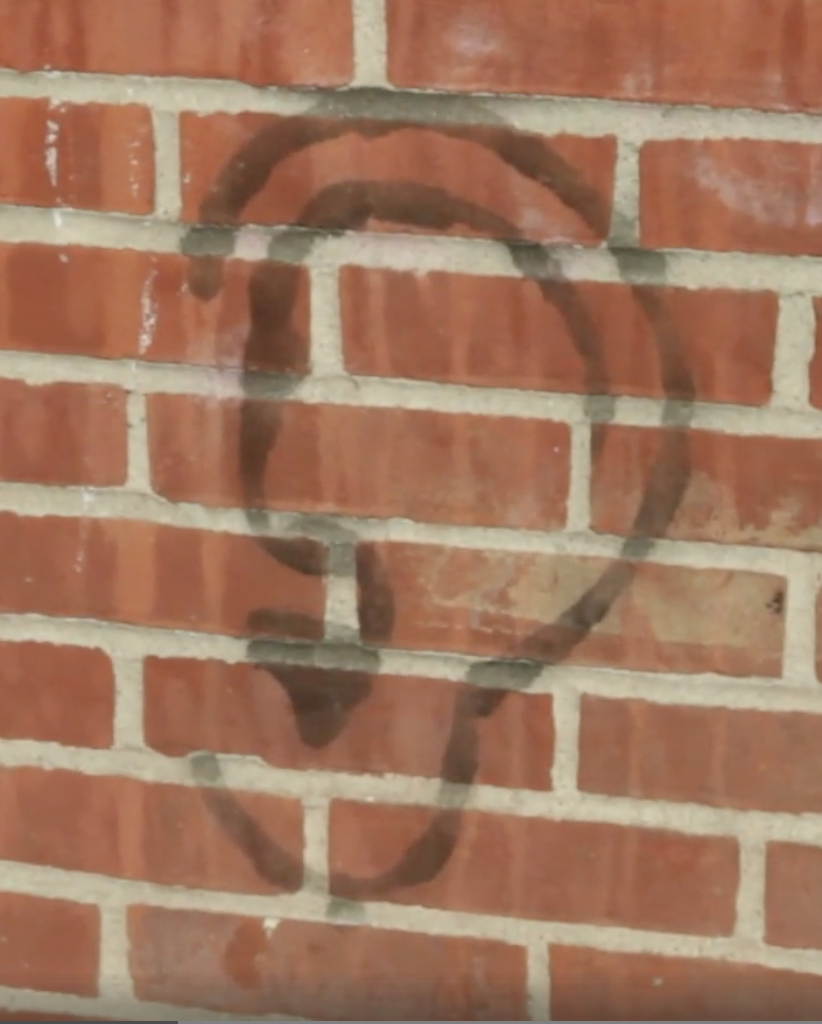
New York Graffiti ear


Take a good look at this graffiti ear, it's a really good one. Very economical with the line, just two curves, one inside the other and a little thickening to suggest the shadow of the deeper inner ear. Ears are a fascinating part of the body, but we rarely focus on them when drawing the head and tend to use eyes, mouth and nose formats. However sometimes it's useful to change focus and look at a different aspect of the head. 


Mozart: Drawing of his own ear in comparison with a normal ear


Mozart was as a musician fascinated by ears and his own in particular was slightly abnormal. This issue of what is normal and what is not, is itself fascinating. For an alien looking at creatures such as haplorrhine or ‘dry nosed’ primates, Mozart’s ears would be regarded as simply belonging to an animal of the ape like strand of mammal evolution and could perhaps have helped the alien sort out a classification difference between tarsiers, monkeys and apes.


The ear of a chimpanzee


Ears are often to be found on a class of early Egyptian reliefs called "ear-stelae." These stelae typically featured images of a god and a supplicant and to the side would be carved or painted several human looking ears. These ears were to aid the gods in hearing the prayers. So they were in effect something like celestial hearing aids. 


Obsidian left ear from a statue of Amenhotep III

The sculptor who carved the left ear of Amenhotep III, would have had to have a very clear idea of how the various elements of an ear fitted together, not unlike the understanding of topological flow lines that a present day Maya software user needs to have.

An ear constructed in Maya


“Ca ‘de l’Oreggia”


Designed by Adolfo Wildt, Lucio Fontana and Luigi Brogginiin in 1930, the sculpture above of an ear was used as an intercom, allowing visitors to announce their arrival. Once separated from its body the ear can operate in often unexpected ways. “Ca ‘de l’Oreggia” or “House of the Ear” in Milan, no longer has a working intercom system set in behind it, however it is now where people come to whisper their secrets, something that I suspect all cities need. I am therefore adapting one of my earlier large ear designs to become exactly that, a listening ear for those that don't have one. 
The Vacanti mouse was one of those viral images that came to inhabit my thinking back in the late 1990s.It was a mouse that looked as if it had had a human ear transplant, but which was actually a cartilage implant  
The Vacanti mouse

However, 20 years on, a university in Tokyo has announced that it has now grown a human ear on a rat, using stem cell technology.


I find an uncanny overlap between images that emerged from my own head as art and those that are emerging from the field of science as medical research.


Stelarc: Ear on Arm

Stelarc has of course 'grown' an ear on his arm. A model ear was implanted beneath the skin, so that the appearance of an extra ear is constructed, not unlike the Vacanti mouse.


Stelarc being operated upon


I would have been more interested if Stelarc had had non human animal ears embedded in his arm. It might have helped with that human animal divide. In many ways children already make the link, they have a fascination with animal/human hybrids and are still happy to become mixed up creatures, think of the number of different animal hats we can buy for our youngsters.


Is this such a long way from the old obsession with human / animal physiognomy?


We used to regard our various 'descents'  into animalistic behaviour as being 'failures', human beings slipping back into animal habits. Our beast like behaviour emerging when we are at our worst. However, this presupposes that we are superior to animals, and in earlier societies animal / human hybrids were regarded as essential bridges between us and the rest of the world. Our human capacity for self reflection, unfortunately also creating a perceived schism between ourselves and the rest of nature. This is not a real schism of course because we are part of nature and cannot remove ourselves from a set of issues that we are an integral part of, but our use of language can make for a way of thinking that appears as if it is not like the way other aspects of reality work. This 'consciousness' is both our special thing and what for many of us is our downfall. By being too self aware we fail to live in the 'now' and worry too much, perhaps we should listen more and talk less. 


Seth and Horus

It could be argued that Gods such as Seth and Horus are ghost memories of earlier shamanistic figures, and most of the folk tales of Europe and other continents will include stories of animal / human hybrids at one time or another, all of which could be trace memories of earlier shamanistic practices.


Dabbabi, the half-man half-bear, a not very bearish bear-human hybrid, as pictured in a 13th century bestiary by Zakariya al-Qazwini


Images of human/bear hybrids that have kept human ears


I seem to have drifted off subject again, but there is a method in my drift, ears are somehow more acceptable than noses or mouths when it comes to replacing them with animal ones, animal ears may even become 'cute', and 'sexy' as in Japanese anime figures.

The cute ear type

I find ears very sculptural and have made lots of drawings of them. They also represent an opening in the body, one that is focused on communication with others. However because we don't normally look closely at ears in isolation they can be very strange. So strange that I have drawn them in the past as undersea life forms, (they are often described as shell-like) and as plants or have embedded ceramic versions of them into walls or gardens. 


Ear installed in a wall in York

Ciprianii’s ‘Rudiments of Drawing
In drawing manuals ears were singled out for individual treatment and in doing so they become like living individual creatures, as if escaped from their role as the brain's listening tool.  
Some drawings of ears are used in reflexology and acupuncture, both “reflex” therapies in that they work with points on one part of the body that affect other parts of the body. As an ‘opening’ into the body the ear is particularly important in these types of therapies and what drawing can do is create map like images that create clear boundaries that are not seen by eye when we look at an ear, but which are deemed to be there by the acupuncture specialists. Again we encounter drawings that impose grid like structures over things that have no boundaries, and like on the sea, we impose a system of reference points that allow us to make actions more understandable to ourselves, in both the cases of the ear and areas of sea, we are able to navigate or find our way through very hard to read territories by using gridded maps. But we also need to remember whoever makes the maps also gets to own the territory. 


I'm also interested in ears because they are often an un-noticed feature and yet they are powerful symbols of our interconnectedness with the rest of the world.

Left over huge concrete 'ear' from WW2

When we were listening for the arrival of bomber planes during the war several giant concrete ears were built on the south coast, their forms like our own ears concave, and suggestive of much larger forms hidden below the ground on which they sit. 


I'm at that age when I'm beginning to lose my hearing. So I have been trying to visualise what it feels like, together with the fact that as I get older, my ears are getting larger, a fact that I can't disassociate from my failing hearing. Are they getting bigger so that they can work more like ear trumpets? My artist's logic is not very scientific, but it helps me when I'm trying to conjure up images about what something feels like. 


The ear when uncoupled from the head becomes something strange, but perhaps all objects become strange when you isolate them from their context. The constant slippage of meaning is in fact normal as we constantly renegotiate what things do for us. At one moment ears are for hearing, but then they become supports for eyeglasses or they are essential to our balance or they are things on which we hang jewellery. However as soon as they are separated from the totality from which they belong, something is not right. Better though that they remain 'strange', for if we ever take them for granted, we might begin to forget just how special they are. 

Anant Tavkar: An ear created using his fingernails working into the back of handmade paper

I did design what I called 'ear bricks' at one point. The idea was that they could be included in any wall that was built next to a quiet area. Then, hopefully when spotted, people would use that space to speak out or whisper the words they had trapped inside themselves; these spaces would listen but never judge or speak back, always accepting whatever was said, and in total confidentiality. 


A proposal for a listening wall

See also: