Showing posts with label rhythm. Show all posts

Wednesday, 25 September 2024

Interoceptual textures and surface flow

Nathalie Doyen

Nathalie Doyen is a ceramicist who is very interested in colour and surface and who I have been looking at because I wanted to develop some surfaces of my own ceramics that supported the way I had been treating the surface textures of recent drawings. I have been looking at exterior events, such as fallen trees, whereby 'inner' workings are revealed, just as much as drawing ideas emerging from inside my head about what bodies might feel like inside, so I'm looking for something that suggests moss as much as bone, a clump of dirt as much as muscle.

Sketchbook drawing of ceramic idea

Textural drawing of a fallen tree

The surfaces that evolve over Doyen's ceramics are made by texturing small pieces of coloured clay that she has tinted with oxides and pigments. Her palette is developed from colour studies made from her surroundings and is carefully controlled so that the pigments sit together harmoniously.  The surface that is constructed, feels as if the ceramic object has had a perfectly fitted cardigan knitted for itself, and it visually sucks you in, in the same way that any organic surface in nature does. These thoughts are now what I want to apply to ideas that came out of drawing.

I have been making images based on interoceptual imaginings and have been wanting to turn these into coloured ceramics, but have not as yet developed the right type of surface quality. Doyen's work has however helped me to think about either staining my clay or changing its chemical composition before applying it. 

Nathalie Doyen

Nathalie Doyen

Max Brodel: Illustration of the musculature of bladder and urethra

Bringing back the blood


Ceramic organs with blue and red glaze mixes

I had been using the 'wet' look of Max Brodel's illustrations as a reference point, but I now think the glazes are too slick, so I will have to return to making a series a tests that will enable me to make better choices. 

Doyen is a meticulous surface maker. She must spend hours developing these textures, obviously pricking the clay surface, but with a regularity that is very hard to control. This is why her surfaces feel as if they are woven, knitted or cross stitched, as they have been through a similar repetitive process, whereby a surface area gradually grows because of tiny repetitive actions. For myself, the link between the textures of woven or knitted clothing and energy flows, seems somehow intuitively important, as does the idea of a surface texture feeling as if it has emerged from inside the form, as opposed to being applied on top of it.

An idea for externalising interoceptual feelings

Body energy: A mood swing

I have been drawing images about closely woven topologies of inner feelings, such as those we might have if we were able to sense the world, like an animal, via the hair covering our body. This approach is one of my attempts to develop a more animist way into making, as well as being a recognition of various 19th century visualisations of invisible forces. 

Interoceptual feeling might, I thought to myself be not unlike Foucault currents, those electromagnetic eddy currents that occur when a magnet is moved towards a conductor loop. They are called 'eddy currents' because they are very like the eddies we see in flowing water, and I was therefore sucked into trying to get to grips with my poor grasp of physics again because I wanted to tie together my feelings about the flow of liquids inside the body, with a sense of electro-magnetic energy flow, something in my mind like the chakras that you find in tantric healing traditions.The chakras are often described as energy stations that correspond to special places within our bodies where bundles of nerves and/or organs or joints are focused on the proper flowing movement of energy, this being essential to both our physical and emotional well-being. Perhaps these energy flows are also like eddy currents.
Lenz's law states that a voltage induced by the change of a magnetic flux through a conductor loop generates a current in such a direction that the current running through the loop opposes the change of the magnetic flux causing the voltage. How does this work in the body in relation to my thoughts about flow and currents? Could we be like magnets passing through conductors? As we pass through for instance a forest, how does this change our internal energy in relation to walking through a room? What are the invisible energies surrounding us in the street? How do they enter and work with the forces already at work within the body? This is again not science but a sort of poetry, the mixture of the two being perhaps where I will find what I am looking for. 

If you have a ring shaped conductor it can be moved towards or away from a permanent magnet. In the drawing below the magnet lies on the x axis and the ring is situated on the plane that sits between the y and z axes. If the ring is moved in the direction of the x axis, it will eventually sit around the magnet, forming a ring that the magnet will pass through. Think of a human being about to walk through a door, as they approach it, they can see into a new room and already the incoming perceptions are changing the internal dynamics of the body and mind. 

The field lines of a permanent magnet run from the north to the south pole. The lines are continuous, forming closed loops without a beginning or end. In a diagram the field lines have arrowheads to show the direction of the force exerted by a magnetic north pole and the closer the lines are together, the stronger the magnetic field. The field lines never cross each other, meaning that the field is unique at any point in space. Because of the movement of the conductor in relation to the magnet, more and more field lines enter the loop at the right and leave it at the left side. Based on Lenz's law a magnetic field is created, whose field lines are trying to lessen the number of field lines entering the loop. The field lines of a current through a conductor run in concentric circles around the conductor. To lessen the field of the permanent magnet, the field lines of the induced current must run from the left to the right (contrary to those of the permanent magnet) inside of the conductor loop. In the case of the diagram below, the current has to exit at y and the current enters at x. As percepts enter the body, they are translated into electrical and chemical flows, which in turn effect changes in the way the body is responding to the environment surrounding it. 

Body energy

If you move the magnet to the right, away from the circular coil along axis x, the induced voltage then causes a current to flow. I.e. you will get a circulating current being induced as soon as the magnetic flux running through it varies. Actions made by changes in the electrical/chemical flow of information within the body will result in flowing movements, as muscles begin to contract and relax.

Circulating currents

The body begins to twist from the thigh

The shape of the conductor material doesn't matter - induced currents are always running through the material. However, a completely homogeneous magnetic field is more a statistical idea than a reality, in a normal case there are always inhomogeneous flux density allocations, which means that there won't be well defined areas with or without currents running. The pattern is more like a swirling water surface. That's why the induced current inside of three-dimensional conductors is called an eddy current. What's interesting is that diagrams can be used to separate out the current distribution from the magnetic field. 

Electric and magnetic field around a coil of rectangular cross section. Figure 1 shows the geometry of the coil, figure 2 the distribution of current (red) and figure 3 magnetic field (blue).

The distribution of the magnetic field in various sections, shows how as you move away from the centre, the lines of the electric field become circular.
The magnetic field, as you pull away, in cross section is seen to be more circular


The dynamics of muscle and bone

The various energy flows that our bodies are part of, are I believe subtly interconnected, and some scientists have stated that there are signs of humans having a subconscious magnetic sense. Many animals, from pigeons to turtles, use a magnetic sense to navigate and it has come to the attention of researchers that humans might also have the power of magnetoreception. As reported in the Guardian, Prof Joseph Kirschvink has stated he believes that, “We have not as a species lost the magnetic sensory system that our ancestors [millions of years ago] had,” he then goes on to state that, “We are part of Earth’s magnetic biosphere.”

The Earth’s magnetic biosphere

It is early days yet for any provable data to emerge from this type of research, but it suggests that in the past humans could tell directional difference in a similar way to certain other animals, perhaps due to a mechanism involving special cells containing iron-based crystals that could rotate rather like the needle of a compass, opening or closing openings in cells. Whether or not this is true, doesn't effect the imaginative possibilities that it induces, and for myself it gives me a way of fusing together possibilities for the intermingling of various other forms of flowing energy.  

The flow of leg muscles around bones

Can be compared with the flow of water in a stream around rocks

The flow of water in a stream

Oceanic currents and gyres

We emerged out of the sea and we are still psychically connected with it. The composition of our blood, shows a 98% match between it and sea water. Our bodies have been shaped and formed by water and in effect, we have an ocean inside us. In 1897 French physician Rene Quinton discovered a 98% match between our blood plasma and sea water, or what has been called 'ocean plasma'. The sea's energy flows have their own terminology. Ocean currents are coherent streams of water moving through the ocean and include both long, permanent features such as the Gulf Stream, as well as smaller, episodic flows in both coastal waters and the open ocean. They are formed primarily by wind blowing across the surface of the ocean and by differences in the temperature, density and pressure of water and are steered by Earth's rotation as well as the location of the continents and topography of the ocean bottom. Gyres are spiralling circulations thousands of miles in diameter and rimmed by large, permanent ocean currents, and eddies are smaller, temporary loops of swirling water that can travel long distances before dissipating.
All of these images seem to have something to do with what I'm searching for in relation to the surfaces of the objects I need to make. Knitted, flowing totalities that reference the wider interconnectedness of inner and outer realities, the fitting together of the body and the cosmos. All that stuff that old religions used to do, alongside a growing awareness of the fact that ancient Chinese thinkers viewed the cosmos as a complete and complex “organism.”


Daina Taimina

A while ago I posted some thoughts about Daina Taimina and her crocheted forms of hyperbolic geometry. Seeing Doyen's work reminded me of Taimina's surfaces, which must have been lying around in my subconscious for a while, waiting for an opportunity to be used in my ceramics. Taimina realised that we need to touch things in order to really grasp what they actually are. She understood how a line, generated by a fold, could operate in hyperbolic space. Drawing, as in geometry is vital to this understanding, but in this case it becomes clear that without the type of drawing we associate with drawing threads, she would not have been able to develop the idea. Perhaps I also need to look at how clay can be made into threads and how surfaces can be woven?

See also:


Thursday, 19 September 2024

Body cartography

Human embryonic development

I have been looking at the work of the body cartography project. This is something that has been underway for some time but I have only just discovered it. Perhaps this is because I have only recently begun to look more closely at how dancers work, however as artists of the body, they are finely tuned to somatic experiences. Body maps have interested me for a while, and the body cartography project bases its focus on the developing of experiential tools that are derived from somatics, (sensation-based movement practices), dance and choreography. The background scientific research they have done, because they are focused on movement and change rather than static facts, is focused upon embryology; the branch of animal biology that studies the prenatal development of gametes, fertilisation as well as the development of embryos and fetuses. 
Carla Bottiglieri, a project researcher for the body cartography project, has stated;
"With embryology, anatomy ceases being the static, achieved geography of structures – a stillness that is primarily borrowed from the cadaveric inertia of the dissected body – and reveals what moved and still moves our seemingly silent interiors. Learning through embodiment may start from a choreographic-like mind, the one that takes images as maps, maps as diagrams, and everything as scores. In the case of embryology, the term score seems almost to be closer to music than to dance, and in fact lines and directions describing the all too busy movement of the forming embryo, in order to be “correctly” read, need kinematics being paralleled with dynamics: a play of intensities, rhythms, simultaneous events, different speed rates."

This statement immediately drew my attention, because I have for a while been working to develop a way of making images about interoceptual experiences that are not reliant upon static anatomy illustrations from medical textbooks, or some sort of fixed map that tries to pin down where things occur. I have been looking for various ways to open up my own and others awareness of the body's kinetic inner perception of its own sensations, which hopefully might bring about a more nuanced sense of our presence in the world and the experience of being.


Embryology Sections

Tree with root system

The study of embryology also includes an awareness of the evolutionary history of the human body and the bodies and forms of other living creatures. For instance our cranial bones are developed in the mesenchymal tissue surrounding the head end of the notochord; a process that begins in the foetus by the end of the first month of pregnancy. Most of the cranial vault and a portion of the base of the skull arise as membranous bone. However there are two types of evolutionary origins or paths that are operating here and they occur simultaneously and complementary with each other in the formation of the completed cranium. We are a type of primate, and the development of the primate skull consists of neural and visceral (branchial) components. The neural portion consists of the brain case and the capsular enclosure of the special sense organs. The visceral portion is derived from the embryonic counterparts of the branchial arches, which, in fishes and tailed amphibia, support the oral and pharyngeal regions. These visceral components function in respiration and mastication. The formation of the primate palate being an innovation which permits infants to suck and the adult to chew while respiration continues. The neural and visceral components of the branchial arches include Branchial motor neurons that are located in the brainstem and which supply with nerves the muscles formed by the branchial arches. The branchial arches are a series of six paired arches that form in the head and neck of an embryo during the fourth week of gestation. The arches are made up of four tissue components: cartilage, aortic arch artery, nerve, and muscle and they will eventually develop into the face, neck, and oropharynx (soft pallet, tonsils, and part of the tongue).

Fetal skull

So why is this so important? The structure of the primate palate means we can't breathe and eat at the same time, but we can coordinate breathing and swallowing to allow for eating. The pharynx is the shared route for both functions, but it's used differently for each activity. When breathing, the pharynx dilates to keep the airway open, but when swallowing, it constricts to push food down the oesophagus. When at rest, the epiglottis is upright and allows air to pass into the lungs, but when swallowing, the epiglottis folds backward to cover the larynx's entrance, preventing food and liquid from entering the lungs. Swallowing is therefore a complex process that involves coordinating more than 26 muscles and 6 nerves. When swallowing, breathing temporarily stops, and becomes more irregular and this can lead to problems, some of which I have had to face myself at times. As part of my own process of self awareness, I have to make sure I am calm and relaxed when eating, if not I can easily find myself with muscle tension in the throat, which leads to a difficulty in swallowing due to a globus sensation (a persistent but painless feeling of having something stuck in your throat when there is nothing there). that I can experience because of anxiety. The complex interconnection of interoceptual experience, (somatic feelings) and the autonomic nervous system that mediates unconscious activities, is hard for me to understand and yet I have begun to think that it is very important. So for myself, my own body map has one of its focal points around the throat, and since I have had problems with plantar fasciitis, another is the base of my left foot.

Trying to visualise plantar fasciitis

By owning some sort of visualisation of these sensations, I can help myself move on and not be stopped in my tracks by them, as I have literally been in the past. I.e. I can to some extent try to adjust my mental state in order to maintain some sort of 'homeostasis'. (The process of keeping your body in balance by noticing changes and then acting upon them to regulate your systems). There are many ways to track your environment and spot any changes, some are very obvious, such as seeing something dangerous in the distance, or hearing a loud noise coming closer and then you can act appropriately, but an awareness of other more subtle changes can be more intuitive, and they may be 'felt' sensations, or beliefs, which are harder to pin down, but they are still perceived experiences. We have a wide range of equipment that extends our body's perceptual abilities, such as microphones, telescopes, microscopes and radar, all of which can be used to predict external changes, but as yet we have few mechanisms that can measure internal change and it is the complex arena of our inner lives that fascinates me and that I have been trying to visualise.

Anatomical diagram of the throat

Visualisation of interoceptual awareness of swallowing air

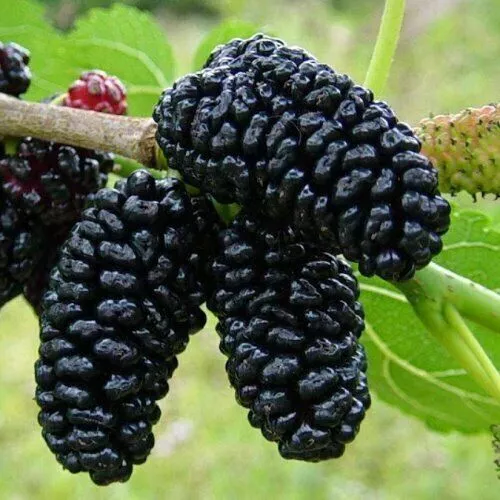
However, one of the most complex issues facing embodied awareness is the status of the other creatures that inhabit and make up what I think of as my body. As far back as 1991 Lynn Margulis had introduced the idea of the holobiont, a term used to describe a host organism and the microorganisms that live on or within it, such as bacteria, viruses, and fungi. The holobiont body, is a body, like our own, where over 50% of the cells are microbial symbionts that are integrated into the physiological, anatomical, developmental, and immunological processes of the body. Therefore the actualisation of the body only occurs through the support of teams of species and in consequence an idea like 'immunity' can be thought of as a holobiont function, wherein microbes and zygote-derived cells cooperate for mutual defence. The zygote cell undergoes cleavage, or cell division and when it does, the new cells are called blastomeres, which are smaller cells that form a compact mass called the morula, which is the solid ball of cells that form the early stages of embryonic development in mammals. There is an elliptic visual connection here in that the word "morula" comes from the Latin word morus, which means mulberry, fruits that do indeed look very like the blastomeres and this year our mulberry tree has fruited abundantly for the first time. As Shakespeare knew, you don't pick mulberries as they will break up in your hands, you put sheets down under the tree and shake it, then collect all the fruits that have fallen.

Now humble as the ripest mulberry
That will not hold the handling.
                                        Coriolanus

Mulberry

A: The morula.  B: A cross section of a blastula

If we die, all the creatures that live on and within us die too or have to move elsewhere, just as if and when the Earth dies, all the creatures that live on and within it will die too. In order to maintain some sort of 'homeostasis', an environment of co-habitation needs to be fostered, and this needs to be about mutual intra species processes of symbiosis, something that can be suggested by the processes of the visualisation of feelings, even if it cant be depicted from observation. The flow of movement that suggests the processes at work here is what the body cartography project is most interested in and it points out that the body is in its peak flow mode during the first few weeks of its life. Many of the signals that are sent out by an organising fetal entity are intra-species, a microbial life is being ushered in just as much as a mammalian one. The more we understand this, the less I would hope that we are bothered that some mammals are darker in skin tone than others.

The body cartography project uses dance as a form of embodied learning and communication. I posted recently on Katia Heitmann's work, whereby a dancer will observe others and then attempt to mimic their body movements as a form of archiving. The body cartography project is similar, in that a dancer wants 'to pay attention to and to move with things that are invisible yet also and therefore, invisible in the sense that you’re not seeing the same body structure and also invisible in the sense that things that are very patterned or repeated or are not very apparent sometimes, forgotten, like the sensation of wearing your clothes'...

Taken from a record of a conversation during the Fluid Spaces Event: Teknisk Museum, Oslo in 2022.

It seems to me that the dancer was searching for a way of communicating things that are on the edge of our awareness, in a similar way to how I am searching for a way of making myself and others aware of some sort of interconnected flow of energies, a flow that I could hopefully visualise in either drawing or ceramics.

From a developing animation

This way of thinking is not new, and if you have been reading my posts over the last few years, you will have seen that I am fascinated by the various theories that emerged during the 19th century as ways to explain what was going on in the world. The emergence around 1800 of the science of embryology was at the time a theory based on the epistemology of rhythm. At the time the concept of rhythm was crucial to many fields of knowledge, including the study of life and living processes. This led to an understanding of the living world in terms of rhythmic patterns, rhythmic movement and of course rhythmic representations, and it echoed Schlegel’s statement that, “All art should become science and all science art; poetry and philosophy should be made one.” The Romantic ideal was that the aesthetic approaches of art and literature could reveal patterns and meaning in nature that couldn’t be uncovered through rationalistic philosophy and science alone and this argument is something that I still have a great deal of faith in.

A link to more embryology images here

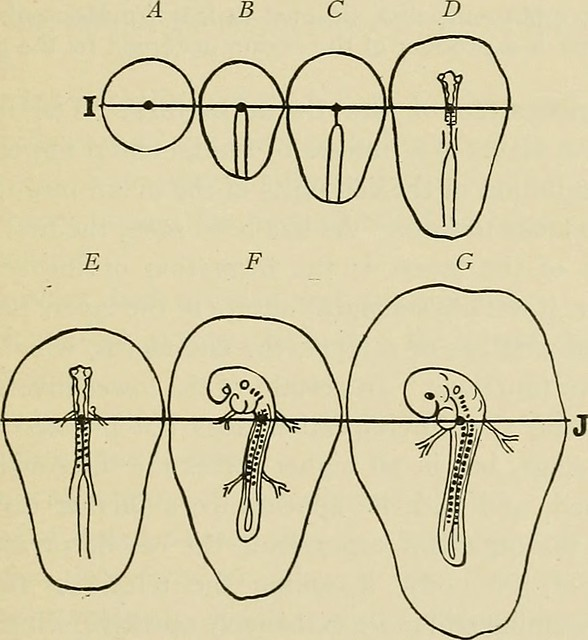
The illustration that describes the transition of a dot, as in drawing A, its extension and growth through to a recognisable form at point G, is as much poetry as science. At no point is a body ever either as it is represented at B or at G or at any other point, all the images above are figments of the imagination of an artist. 

B and G

Perhaps what I'm really interested in is the idea of 'becoming'. Becoming is a process that eludes observation and is hard to represent, which is why it is interesting to myself as an artist. Things that are directly analysable or measurable can reasonably easily be depicted, but there is a hard cognitive and perceptual struggle to be had, if we are to visualise processes that are continuous and often invisible and felt with senses other than the visual. This it seems to me is a worthwhile task, and it keeps driving me on to make the images I do and to believe that at some point these images might actually become useful.  

References:

Richards, R.J. (2010) The romantic conception of life: Science and philosophy in the age of Goethe. University of Chicago Press.

Wellmann, J. (2017) The form of becoming: embryology and the epistemology of rhythm, 1760–1830. Princeton University Press.

Wellmann, J. (2021). History of Embryology: Visualizations Through Series and Animation. In: McCallum, D. (eds) The Palgrave Handbook of the History of Human Sciences. Palgrave Macmillan, Singapore. https://doi.org/10.1007/978-981-15-4106-3_22-1

See also:

Maps made by our nervous systems

Drawings as aesthetic transducers

Katja Heitmann and embodied learning.

Eco awareness and OOO

Parascientific visions and Rayonism

Dr. Hippolyte Baraduc's theory of iconography,