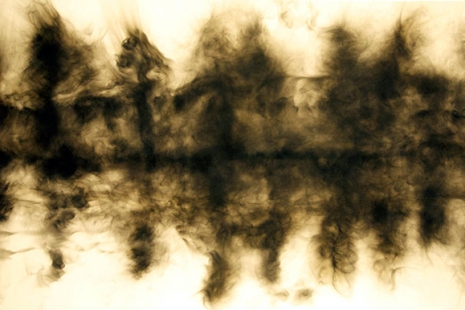
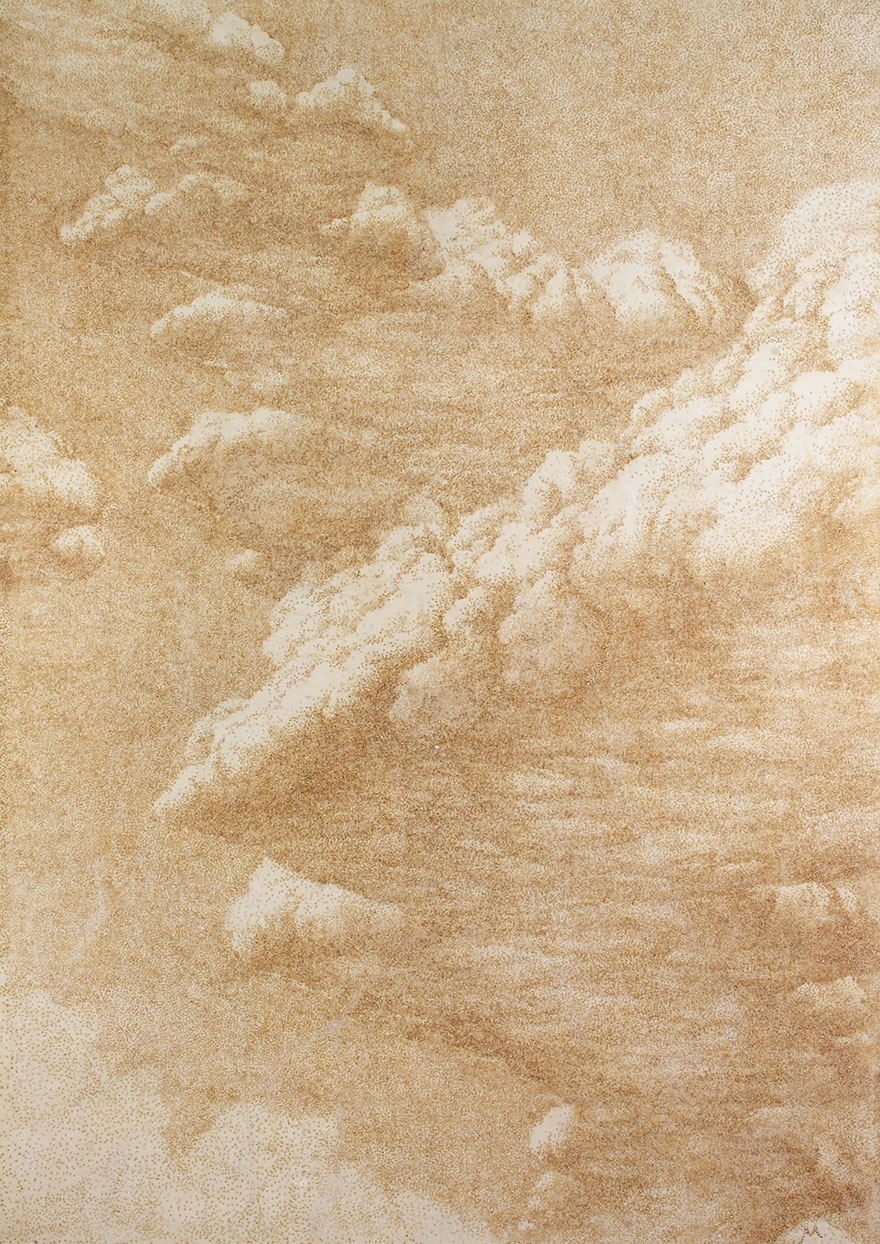
Sometimes ideas come full circle and when they do you either have to celebrate that their time has come, or despair that there will never be a right time for them and that human nature is such that we are doomed to make the same mistakes over and over again. The animated gif above was one of my responses to that feeling of 'stuckness' I had when thinking about the promise of The Diggers. It seems that for every shovelful of earth they removed, someone would have a spadeful of dirt to throw right back onto the pile.
To dig the earth is a powerful idea, one that is celebrated by the name 'The Diggers'. They were a group of people who way back in the middle of the 17th century envisioned the tight ecological interrelationship between humans and the rest of the world. They had the idea that connections between people and the land were deep and inseparable and they advocated for social and agrarian reforms including the common ownership of land. The Diggers was a name given to 'The True Levellers' because of their insistence on digging as a way of signalling that any plot of earth could be made into a productive garden. One of their leaders was Gerrard Winstanley, who declared that "true freedom lies where a man receives his nourishment and preservation, and that is in the use of the earth". They were one of the first political groups to write down ideas that we now associate with socialism or communism but more importantly they understood that humans were in an interrelationship with the land and that it should not be owned by anyone. As they started to cultivate common land, they began to be called the Diggers, but their aims were much wider than that, they were developing their manifesto at the same time as the English Civil War. King Charles the First had been executed and therefore the unquestioned concept that the country and its land had to be owned and ruled by an elite class of people had been broken. For the first time the idea was mooted that no one individual should own land; as Winstanley stated, "The Earth was made a common treasury for all." These words now ring truer than ever; but when we look at the statistics of present day land ownership what do we see?

In the book 'Who Owns England?' by Guy Shrubsole, we find that around 25,000 people, most of them still members of the aristocracy or owners of large companies, own approximately 48% of the nation’s land. The aristocracy and gentry accounting for around 30%, with the next 18% coming from corporations. However even the land technically owned by corporations, after looking at that in more detail, and exploring the labyrinthine legal ownership bureaucracy that covers up real ownership, he finds that much of the land that corporations hold is also essentially in the hands of the gentry. As Shrubsole puts it, “Land ownership in England is astonishingly unequal, heavily concentrated in the hands of a tiny elite.”
Almost a hundred years after The Diggers made their mark, in 1755 Jean-Jacques Rousseau in his 'Discourse on the Origin of Equality' had this to say, “The first man who, having enclosed a piece of ground, bethought himself of saying "This is mine", and found people simple enough to believe him, was the real founder of civil society. From how many crimes, wars and murders, from how many horrors and misfortunes might not any one have saved mankind, by pulling up the stakes, or filling up the ditch, and crying to his fellows, "Beware of listening to this impostor; you are undone if you once forget that the fruits of the earth belong to us all, and the earth itself to nobody.” If only someone had pulled up those stakes or filled up that ditch.
Perhaps now you can see what I mean by my concern that we are doomed to make the same mistakes over and over again.
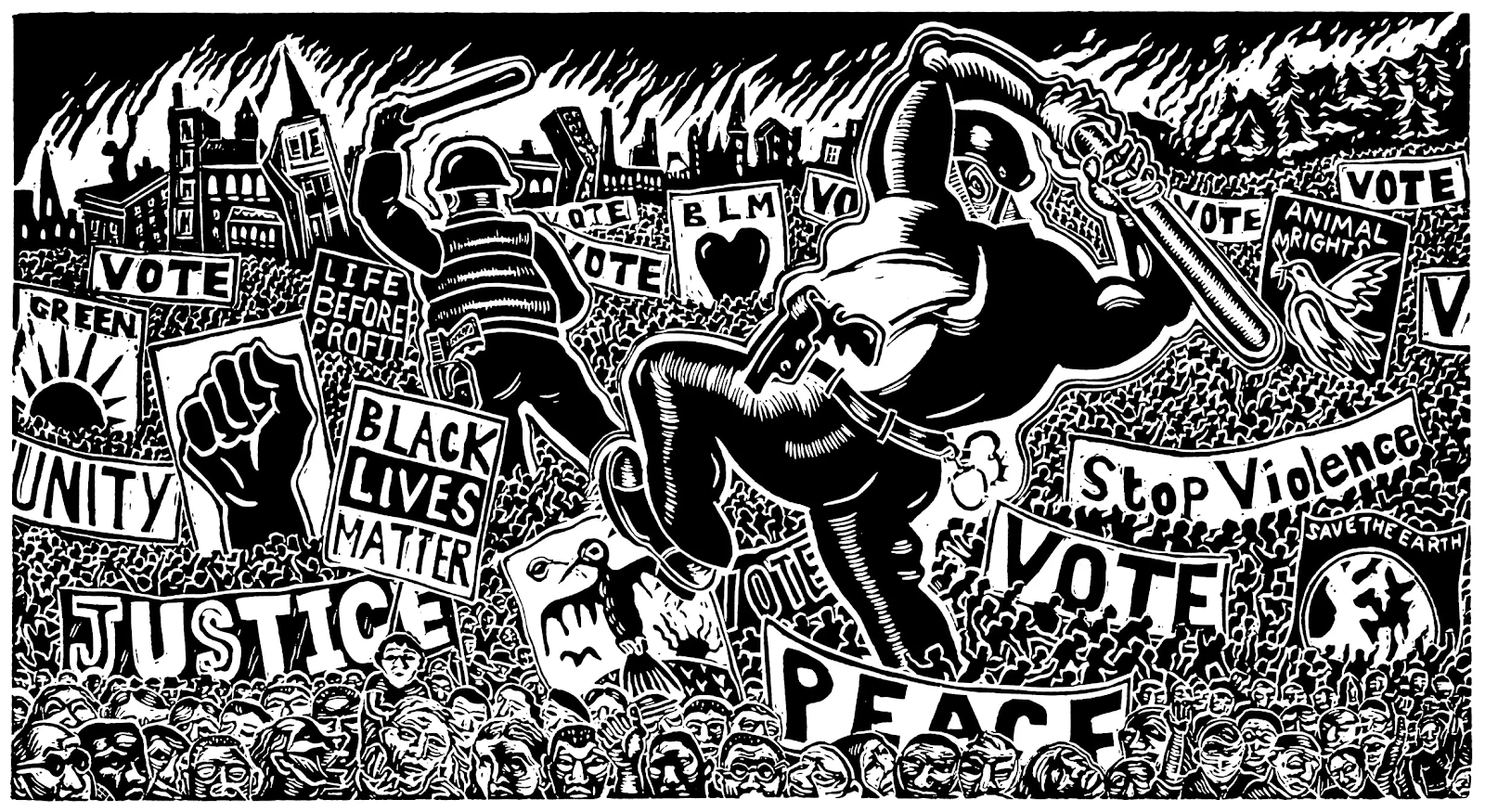
But if we don't continue trying to raise the flag of alternative possibilities, we become ethically compromised and we easily forget those artists who have for many years nailed their socialist credentials to their left leaning ship's mast, because by virtue of the questions they ask and the causes they celebrate, it is unlikely that their work will become widely known in the mainly right wing media or bought and sold within the capitalist dominated current art market.






'The Distant is Imminent' is a work by Camille Seaman, depicting her still and moving images from Antarctica and the Arctic.
Meant to be projected on the walls of cities most threatened by rising sea waters, a line in Seaman's video depicts where the water level would be in that particular location in 2050, if no action is taken to curb climate change – viscerally showing that while icebergs melting away might feel distant and abstract, climate change is indeed imminent and personal.
A living artwork, the piece initially covers four locations (more to be added in the coming months) – New York City, Tokyo, Amsterdam and Limerick, where the artist resides.
You can download the video files from here, and project the video on the walls of your city, to raise awareness about the climate crisis.